Department of Pharmacotherapy and Outcomes Sciences, School of Pharmacy, Virginia Commonwealth University, Richmond, Virginia, United States of America.
Department of Microbiology, School of Medicine, Virginia Commonwealth University, Richmond, Virginia, United States of America.
PLoS One. 2019 Jun 20;14(6):e0218153. doi: 10.1371/journal.pone.0218153. eCollection 2019.
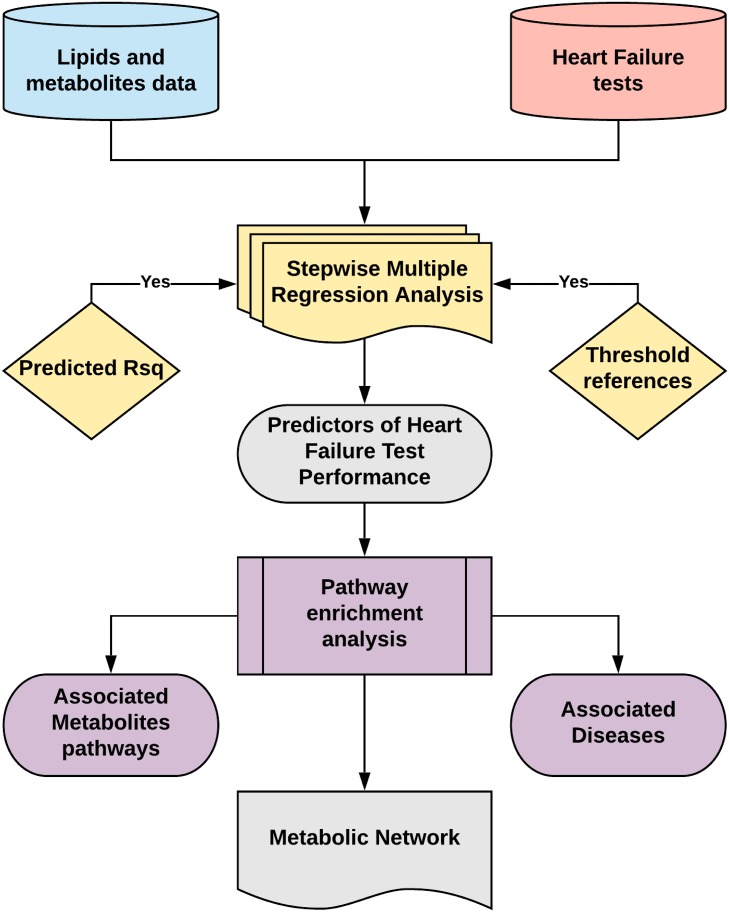
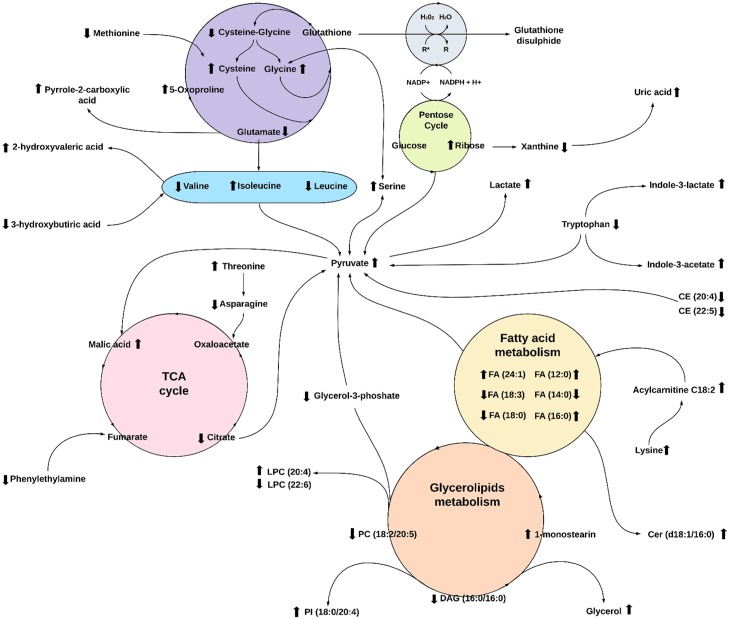
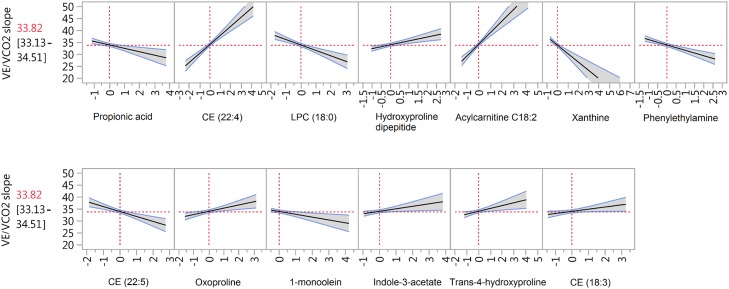
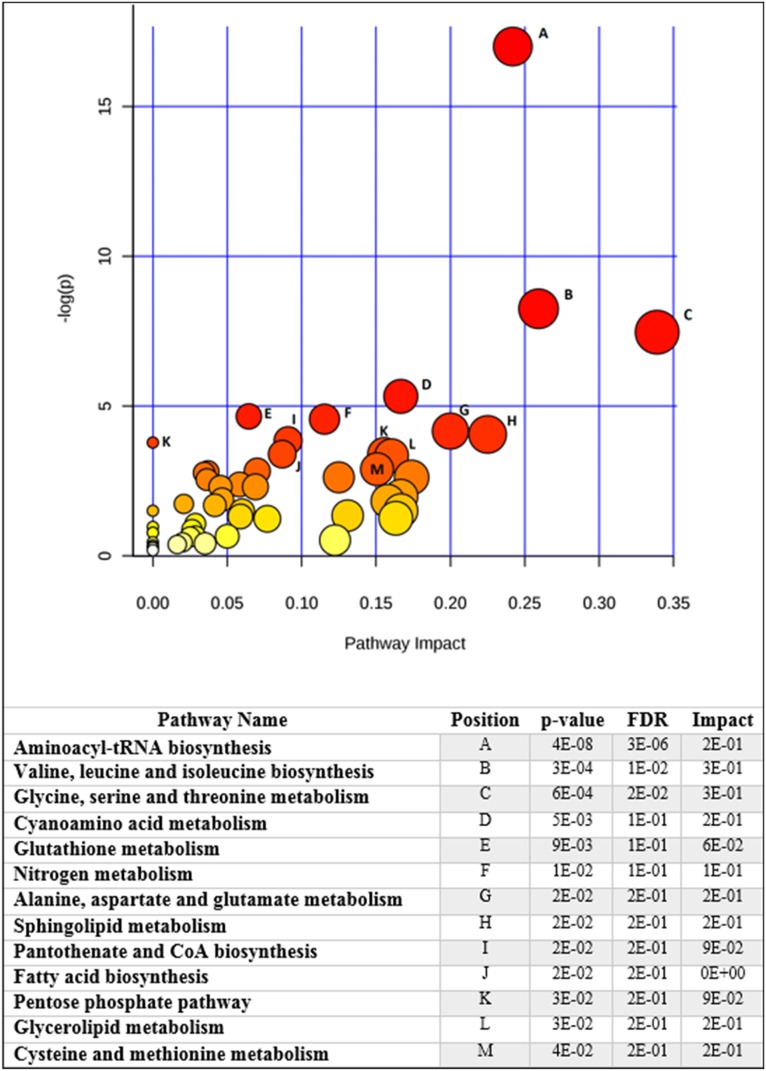
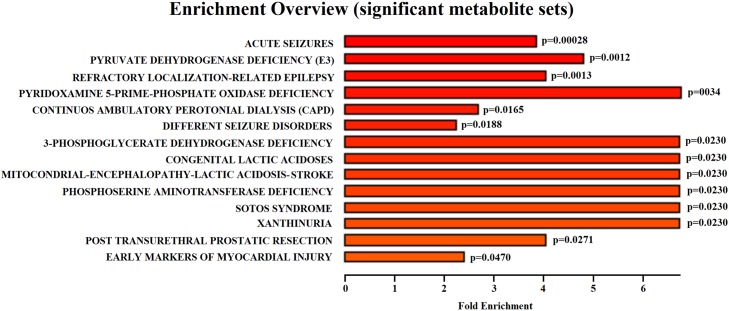
The metabolic changes that accompany changes in Cardiopulmonary testing (CPET) and heart failure biomarkers (HFbio) are not well known. We undertook metabolomic and lipidomic phenotyping of a cohort of heart failure (HF) patients and utilized Multiple Regression Analysis (MRA) to identify associations to CPET and HFBio test performance (peak oxygen consumption (Peak VO2), oxygen uptake efficiency slope (OUES), exercise duration, and minute ventilation-carbon dioxide production slope (VE/VCO2 slope), as well as the established HF biomarkers of inflammation C-reactive protein (CRP), beta-galactoside-binding protein (galectin-3), and N-terminal prohormone of brain natriuretic peptide (NT-proBNP)). A cohort of 49 patients with a left ventricular ejection fraction < 50%, predominantly males African American, presenting a high frequency of diabetes, hyperlipidemia, and hypertension were used in the study. MRA revealed that metabolic models for VE/VCO2 and Peak VO2 were the most fitted models, and the highest predictors' coefficients were from Acylcarnitine C18:2, palmitic acid, citric acid, asparagine, and 3-hydroxybutiric acid. Metabolic Pathway Analysis (MetPA) used predictors to identify the most relevant metabolic pathways associated to the study, aminoacyl-tRNA and amino acid biosynthesis, amino acid metabolism, nitrogen metabolism, pantothenate and CoA biosynthesis, sphingolipid and glycerolipid metabolism, fatty acid biosynthesis, glutathione metabolism, and pentose phosphate pathway (PPP). Metabolite Set Enrichment Analysis (MSEA) found associations of our findings with pre-existing biological knowledge from studies of human plasma metabolism as brain dysfunction and enzyme deficiencies associated with lactic acidosis. Our results indicate a profile of oxidative stress, lactic acidosis, and metabolic syndrome coupled with mitochondria dysfunction in patients with HF tests poor performance. The insights resulting from this study coincides with what has previously been discussed in existing literature thereby supporting the validity of our findings while at the same time characterizing the metabolic underpinning of CPET and HFBio.
心肺测试 (CPET) 和心力衰竭生物标志物 (HFbio) 变化所伴随的代谢变化尚不清楚。我们对一组心力衰竭 (HF) 患者进行了代谢组学和脂质组学表型分析,并利用多元回归分析 (MRA) 来确定与 CPET 和 HFBio 测试性能的关联(峰值耗氧量 (Peak VO2)、摄氧效率斜率 (OUES)、运动持续时间和分钟通气二氧化碳产生斜率 (VE/VCO2 斜率),以及炎症 C 反应蛋白 (CRP)、β-半乳糖苷结合蛋白 (半乳糖凝集素-3) 和脑钠肽前体 (NT-proBNP) 等已建立的心力衰竭生物标志物)。该研究使用了一组左心室射血分数 < 50%、主要为非洲裔美国男性的患者,他们患有糖尿病、高血脂和高血压的频率较高。MRA 显示,VE/VCO2 和 Peak VO2 的代谢模型是拟合度最高的模型,预测系数最高的是酰基辅酶 A C18:2、棕榈酸、柠檬酸、天冬酰胺和 3-羟基丁酸。代谢途径分析 (MetPA) 使用预测因子来识别与研究最相关的代谢途径,包括氨酰-tRNA 和氨基酸生物合成、氨基酸代谢、氮代谢、泛酸和 CoA 生物合成、鞘脂和甘油脂代谢、脂肪酸生物合成、谷胱甘肽代谢和戊糖磷酸途径 (PPP)。代谢物集富集分析 (MSEA) 发现,我们的研究结果与人类血浆代谢研究中的现有生物学知识有关,例如与酸中毒相关的脑功能障碍和酶缺乏。我们的结果表明,在 CPET 和 HFBio 测试表现不佳的心力衰竭患者中存在氧化应激、酸中毒和代谢综合征,同时伴有线粒体功能障碍。本研究的结果与现有文献中已经讨论过的结果一致,从而支持了我们研究结果的有效性,同时也描述了 CPET 和 HFBio 的代谢基础。