Oxford Centre for Clinical Magnetic Resonance Research (OCMR), Division of Cardiovascular Medicine, Radcliffe Department of Medicine, University of Oxford, John Radcliffe Hospital, Headley Way, Oxford, OX3 9DU, UK.
Diabetes Trials Unit, Oxford Centre for Diabetes, Endocrinology and Metabolism, Radcliffe Department of Medicine, University of Oxford, Oxford, UK.
ESC Heart Fail. 2021 Aug;8(4):2580-2590. doi: 10.1002/ehf2.13406. Epub 2021 May 6.
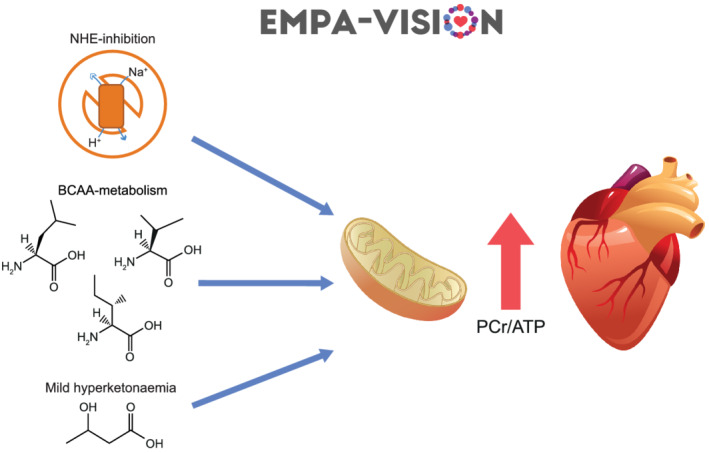
Despite substantial improvements over the last three decades, heart failure (HF) remains associated with a poor prognosis. The sodium-glucose co-transporter-2 inhibitor empagliflozin demonstrated significant reductions of HF hospitalization in patients with HF independent of the presence or absence of type 2 diabetes mellitus in the EMPEROR-Reduced trial and cardiovascular mortality in the EMPA-REG OUTCOME trial. To further elucidate the mechanisms behind these positive outcomes, this study aims to determine the effects of empagliflozin treatment on cardiac energy metabolism and physiology using magnetic resonance spectroscopy (MRS) and cardiovascular magnetic resonance (CMR).
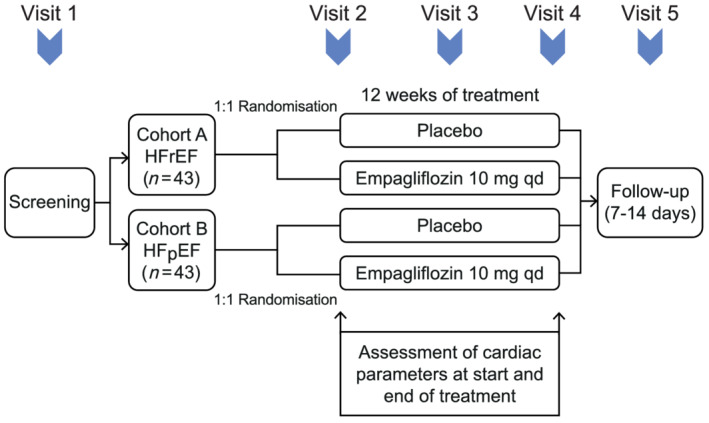
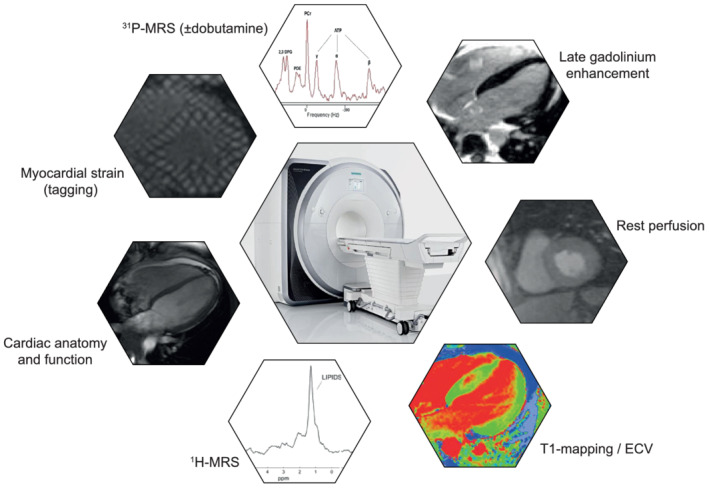
The EMPA-VISION trial is a double-blind, randomized, placebo-controlled, mechanistic study. A maximum of 86 patients with HF with reduced ejection fraction (n = 43, Cohort A) or preserved ejection fraction (n = 43, Cohort B), with or without type 2 diabetes mellitus, will be enrolled. Participants will be randomized 1:1 to receive either 10 mg of empagliflozin or placebo for 12 weeks. Eligible patients will undergo cardiovascular magnetic resonance, resting and dobutamine stress MRS, echocardiograms, cardiopulmonary exercise tests, serum metabolomics, and quality of life questionnaires at baseline and after 12 weeks. The primary endpoint will be the change in resting phosphocreatine-to-adenosine triphosphate ratio, as measured by Phosphorus-MRS.
EMPA-VISION is the first clinical trial assessing the effects of empagliflozin treatment on cardiac energy metabolism in human subjects in vivo. The results will shed light on the mechanistic action of empagliflozin in patients with HF and help to explain the results of the safety and efficacy outcome trials (EMPEROR-Reduced and EMPEROR-Preserved).
尽管在过去三十年中取得了重大进展,但心力衰竭(HF)仍然与预后不良相关。钠-葡萄糖协同转运蛋白 2 抑制剂恩格列净在 EMPEROR-Reduced 试验中显示出心力衰竭患者 HF 住院率显著降低,与是否存在 2 型糖尿病无关,在 EMPA-REG OUTCOME 试验中降低了心血管死亡率。为了进一步阐明这些积极结果的机制,本研究旨在使用磁共振光谱(MRS)和心血管磁共振(CMR)确定恩格列净治疗对心脏能量代谢和生理学的影响。
EMPA-VISION 试验是一项双盲、随机、安慰剂对照、机制研究。最多将招募 86 名射血分数降低的心力衰竭(HF;n=43,A 队列)或射血分数保留的心力衰竭(HF;n=43,B 队列)患者,伴或不伴 2 型糖尿病。参与者将以 1:1 的比例随机接受 10 毫克恩格列净或安慰剂治疗 12 周。符合条件的患者将在基线和 12 周后接受心血管磁共振、静息和多巴酚丁胺负荷 MRS、超声心动图、心肺运动试验、血清代谢组学和生活质量问卷评估。主要终点将是静息磷酸肌酸与三磷酸腺苷比的变化,通过磷 MRS 测量。
EMPA-VISION 是第一项评估恩格列净治疗对人体心力衰竭患者心脏能量代谢影响的临床试验。结果将阐明恩格列净在心力衰竭患者中的作用机制,并有助于解释安全性和疗效终点试验(EMPEROR-Reduced 和 EMPEROR-Preserved)的结果。