Department of Biology, Drexel University, Philadelphia, PA 19104, United States.
Department of Biology, Drexel University, Philadelphia, PA 19104, United States.
Brain Behav Immun. 2019 Oct;81:247-259. doi: 10.1016/j.bbi.2019.06.021. Epub 2019 Jun 17.
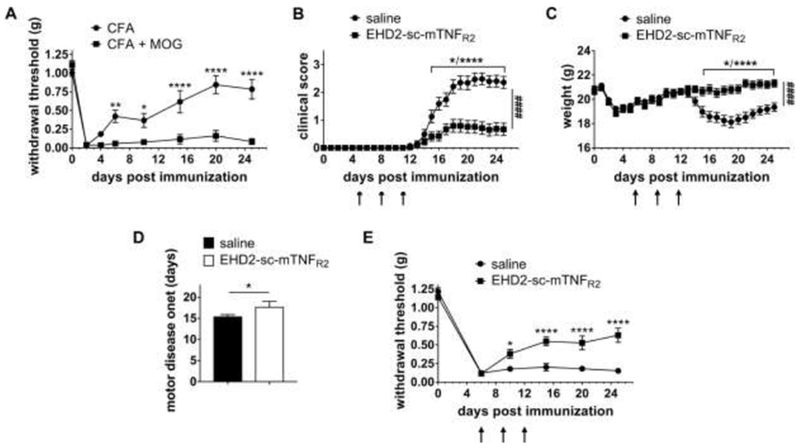
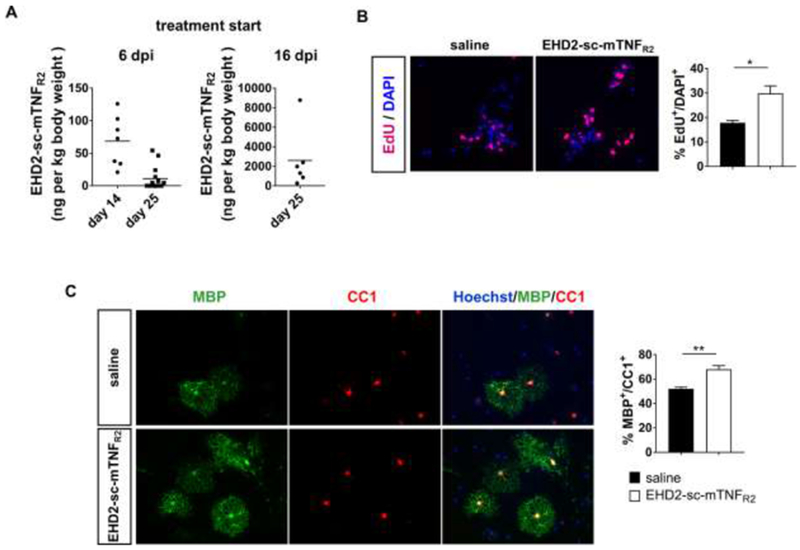
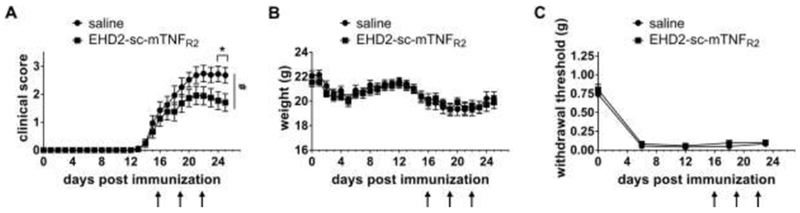
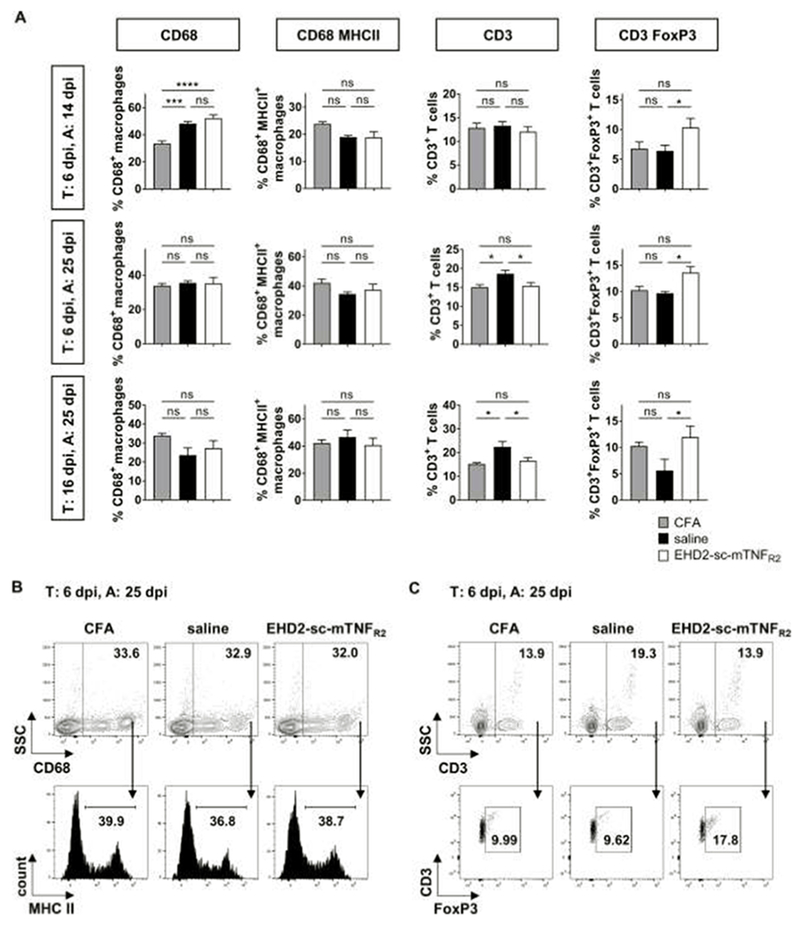
Tumor necrosis factor receptor 2 (TNFR2) is a transmembrane receptor that promotes immune modulation and tissue regeneration and is recognized as a potential therapeutic target for multiple sclerosis (MS). However, TNFR2 also contributes to T effector cell function and macrophage-TNFR2 recently was shown to promote disease development in the experimental autoimmune encephalomyelitis (EAE) model of MS. We here demonstrate that systemic administration of a TNFR2 agonist alleviates peripheral and central inflammation, and reduces demyelination and neurodegeneration, indicating that protective signals induced by TNFR2 exceed potential pathogenic TNFR2-dependent responses. Our behavioral data show that systemic treatment of female EAE mice with a TNFR2 agonist is therapeutic on motor symptoms and promotes long-term recovery from neuropathic pain. Mechanistically, our data indicate that TNFR2 agonist treatment follows a dual mode of action and promotes both suppression of CNS autoimmunity and remyelination. Strategies based on the concept of exogenous activation of TNFR2 therefore hold great promise as a new therapeutic approach to treat motor and sensory disease in MS as well as other inflammatory diseases or neuropathic pain conditions.
肿瘤坏死因子受体 2(TNFR2)是一种跨膜受体,可促进免疫调节和组织再生,被认为是多发性硬化症(MS)的潜在治疗靶点。然而,TNFR2 也有助于 T 效应细胞功能,最近研究表明,巨噬细胞上的 TNFR2 可促进 MS 的实验性自身免疫性脑脊髓炎(EAE)模型中的疾病发展。我们在此证明,TNFR2 激动剂的全身给药可减轻外周和中枢炎症,并减少脱髓鞘和神经退行性变,表明 TNFR2 诱导的保护信号超过了潜在的致病性 TNFR2 依赖性反应。我们的行为数据表明,TNFR2 激动剂对雌性 EAE 小鼠的全身治疗对运动症状具有治疗作用,并促进神经病理性疼痛的长期恢复。从机制上讲,我们的数据表明,TNFR2 激动剂治疗遵循双重作用模式,并促进中枢神经系统自身免疫的抑制和髓鞘再生。基于 TNFR2 外源性激活概念的策略因此有望成为治疗 MS 运动和感觉疾病以及其他炎症性疾病或神经病理性疼痛的新治疗方法。