Nguyen Linh Thanh, Lee Eun Yeol
Department of Chemical Engineering, Kyung Hee University, Yongin-si, Gyeonggi-do 17104 Republic of Korea.
Biotechnol Biofuels. 2019 Jun 15;12:147. doi: 10.1186/s13068-019-1490-z. eCollection 2019.
Methane is the primary component of natural gas and biogas. The huge abundance of methane makes it a promising alternative carbon source for industrial biotechnology. Herein, we report diamine compound, putrescine, production from methane by an industrially promising methanotroph 20Z.
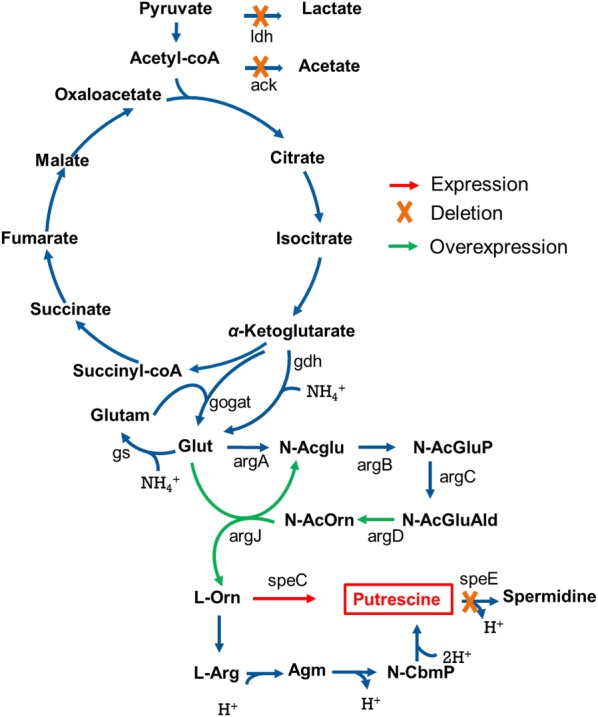
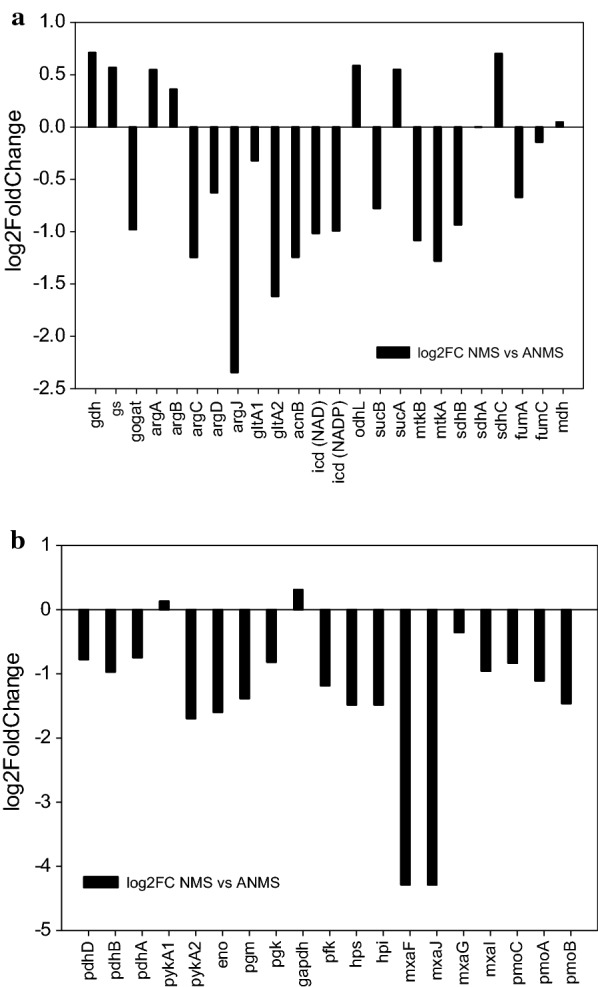
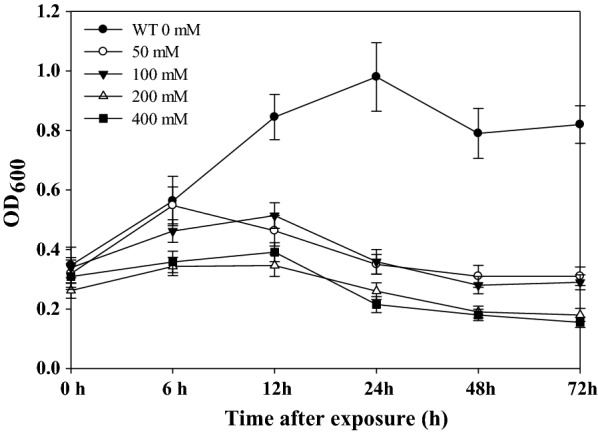
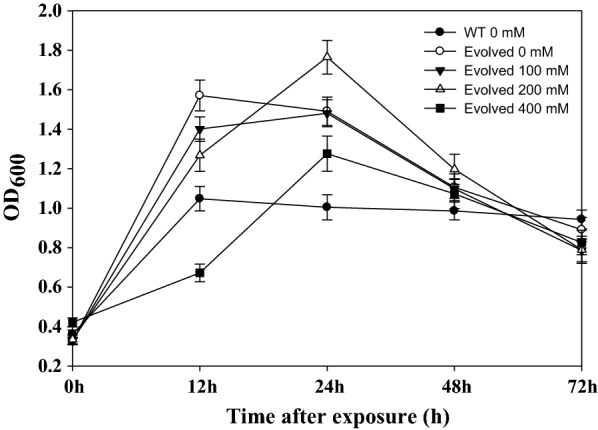
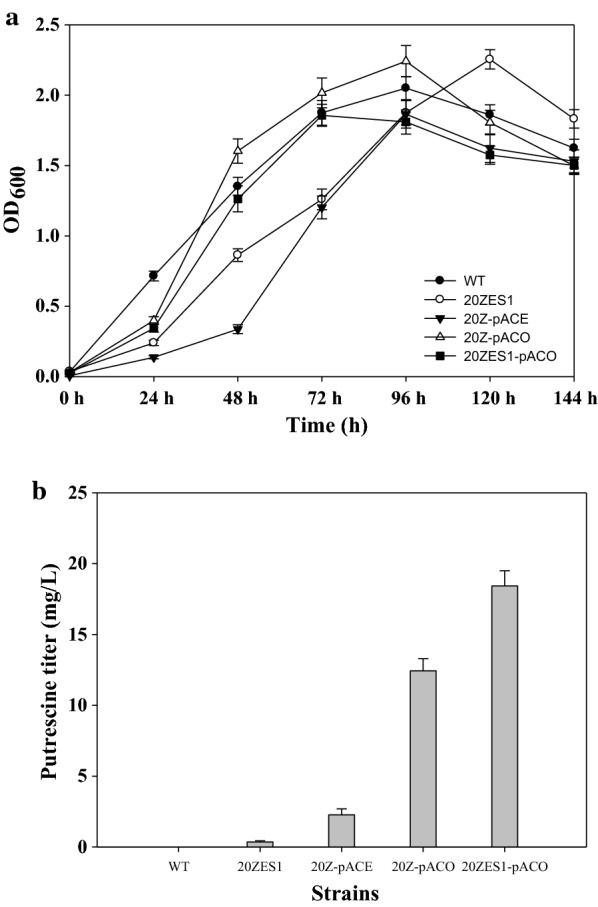
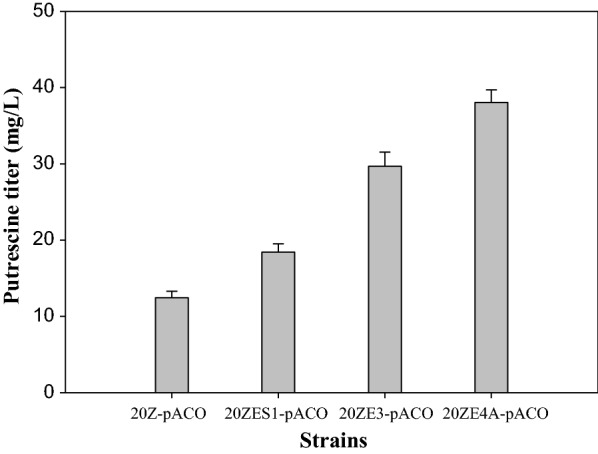
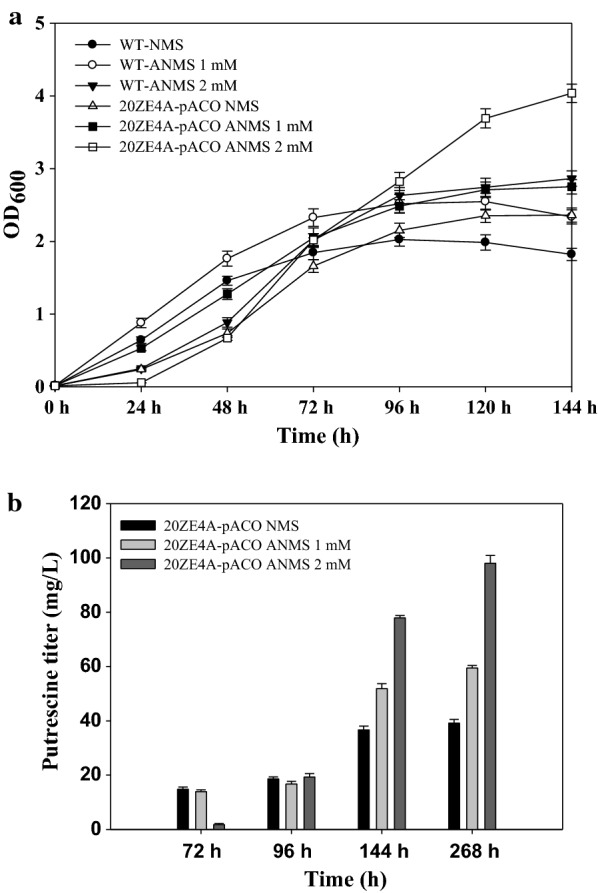
We conducted adaptive evolution to improve putrescine tolerance of 20Z because putrescine highly inhibits the cell growth. The evolved strain 20ZE was able to grow in the presence of 400 mM of putrescine dihydrochloride. The expression of linear pathway ornithine decarboxylase genes from and OB3b allowed the engineered strain to produce putrescine. A higher putrescine titer of 12.44 mg/L was obtained in the strain 20ZE-pACO with ornithine decarboxylase from OB3b. For elimination of the putrescine utilization pathway, spermidine synthase (MEALZ_3408) was knocked out, resulting in no spermidine formation in the strain 20ZES1-pACO with a putrescine titer of 18.43 mg/L. Next, a genome-scale metabolic model was applied to identify gene knockout strategies. Acetate kinase (MEALZ_2853) and subsequently lactate dehydrogenase (MEALZ_0534) were selected as knockout targets, and the deletion of these genes resulted in an improvement of the putrescine titer to 26.69 mg/L. Furthermore, the putrescine titer was improved to 39.04 mg/L by overexpression of key genes in the ornithine biosynthesis pathway under control of the pTac promoter. Finally, suitable nitrogen sources for growth of 20Z and putrescine production were optimized with the supplement of 2 mM ammonium chloride to nitrate mineral salt medium, and this led to the production of 98.08 mg/L putrescine, almost eightfold higher than that from the initial strain. Transcriptome analysis of the engineered strains showed upregulation of most genes involved in methane assimilation, citric acid cycle, and ammonia assimilation in ammonia nitrate mineral salt medium, compared to nitrate mineral salt medium.
The engineered 20ZE4-pACO strain was able to produce putrescine up to 98.08 mg/L, almost eightfold higher than the initial strain. This study represents the bioconversion of methane to putrescine-a high value-added diamine compound.
甲烷是天然气和沼气的主要成分。甲烷的巨大储量使其成为工业生物技术中一种有前景的替代碳源。在此,我们报道了具有工业应用前景的甲烷氧化菌20Z利用甲烷生产二胺化合物腐胺的情况。
由于腐胺对细胞生长有高度抑制作用,我们进行了适应性进化以提高20Z对腐胺的耐受性。进化后的菌株20ZE能够在400 mM盐酸腐胺存在的情况下生长。来自[未提及具体菌株名称]和OB3b的线性途径鸟氨酸脱羧酶基因的表达使工程菌株能够生产腐胺。在含有来自OB3b的鸟氨酸脱羧酶的20ZE-pACO菌株中获得了更高的腐胺产量,为12.44 mg/L。为了消除腐胺利用途径,敲除了亚精胺合酶(MEALZ_3408),导致在20ZES1-pACO菌株中不形成亚精胺,腐胺产量为18.43 mg/L。接下来,应用基因组规模代谢模型来确定基因敲除策略。选择乙酸激酶(MEALZ_2853)以及随后的乳酸脱氢酶(MEALZ_0534)作为敲除靶点,这些基因的缺失使腐胺产量提高到26.69 mg/L。此外,通过在pTac启动子控制下过表达鸟氨酸生物合成途径中的关键基因,腐胺产量提高到39.04 mg/L。最后,通过向硝酸盐矿物盐培养基中添加2 mM氯化铵优化了适合20Z生长和腐胺生产的氮源,这使得腐胺产量达到98.08 mg/L,几乎是初始菌株产量的八倍。与硝酸盐矿物盐培养基相比,对工程菌株的转录组分析表明,在硝酸铵矿物盐培养基中,大多数参与甲烷同化、柠檬酸循环和氨同化的基因上调。
工程菌株20ZE4-pACO能够生产高达98.08 mg/L的腐胺,几乎是初始菌株产量的八倍。本研究代表了甲烷到腐胺——一种高附加值二胺化合物的生物转化。