Bigan Erwan, Sasidharan Nair Satish, Lejeune François-Xavier, Fragnaud Hélissande, Parmentier Frédéric, Mégret Lucile, Verny Marc, Aaronson Jeff, Rosinski Jim, Neri Christian
Sorbonnes Université, Centre National de la Recherche Scientifique, Research Unit Biology of Adaptation and Aging (B2A), Team Compensation in Neurodegenerative Diseases and Aging (Brain-C), Paris F-75252, France.
CHDI Foundation, Princeton, NJ, USA.
Bioinformatics. 2020 Jan 1;36(1):186-196. doi: 10.1093/bioinformatics/btz514.
Huntington's disease (HD) may evolve through gene deregulation. However, the impact of gene deregulation on the dynamics of genetic cooperativity in HD remains poorly understood. Here, we built a multi-layer network model of temporal dynamics of genetic cooperativity in the brain of HD knock-in mice (allelic series of Hdh mice). To enhance biological precision and gene prioritization, we integrated three complementary families of source networks, all inferred from the same RNA-seq time series data in Hdh mice, into weighted-edge networks where an edge recapitulates path-length variation across source-networks and age-points.
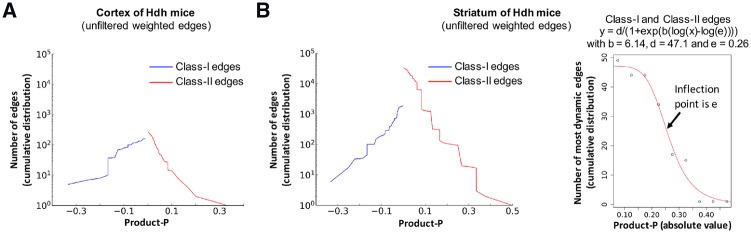
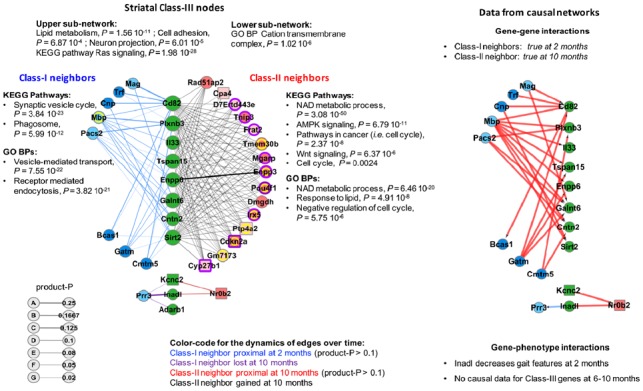
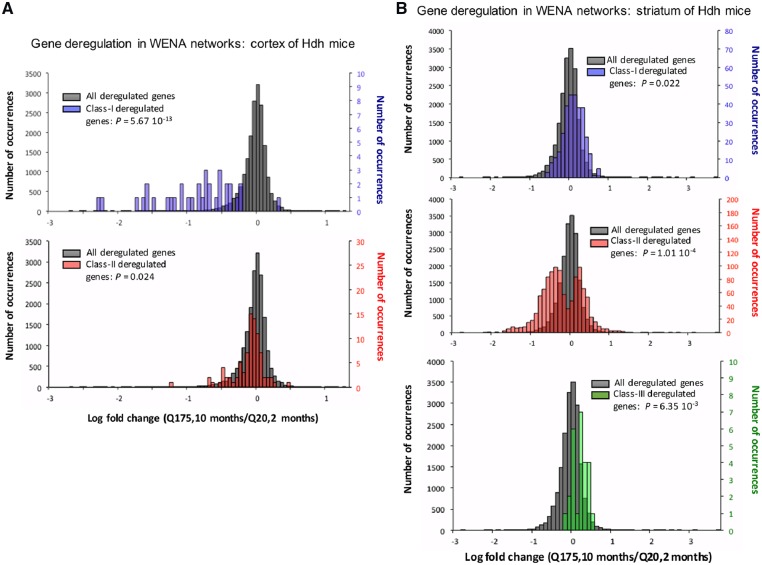
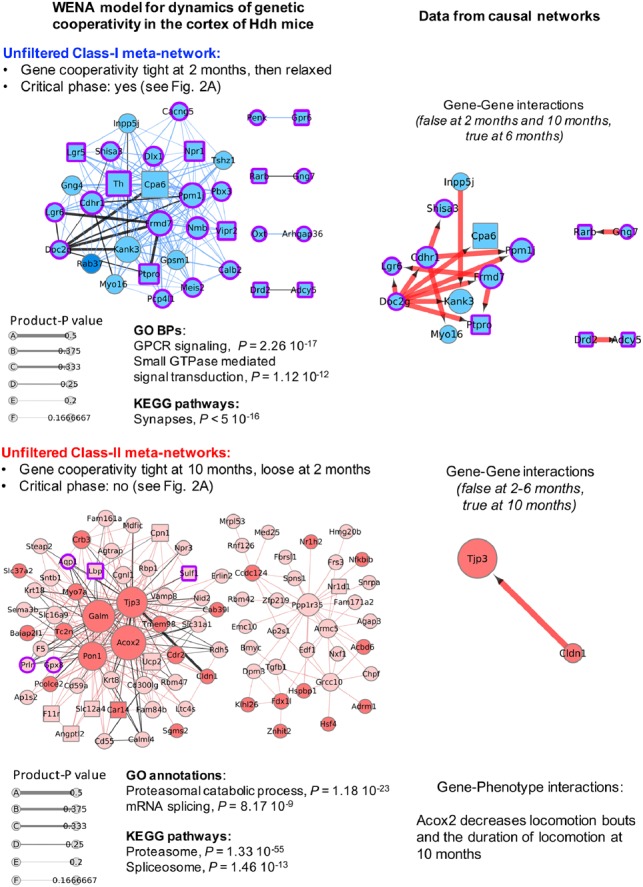
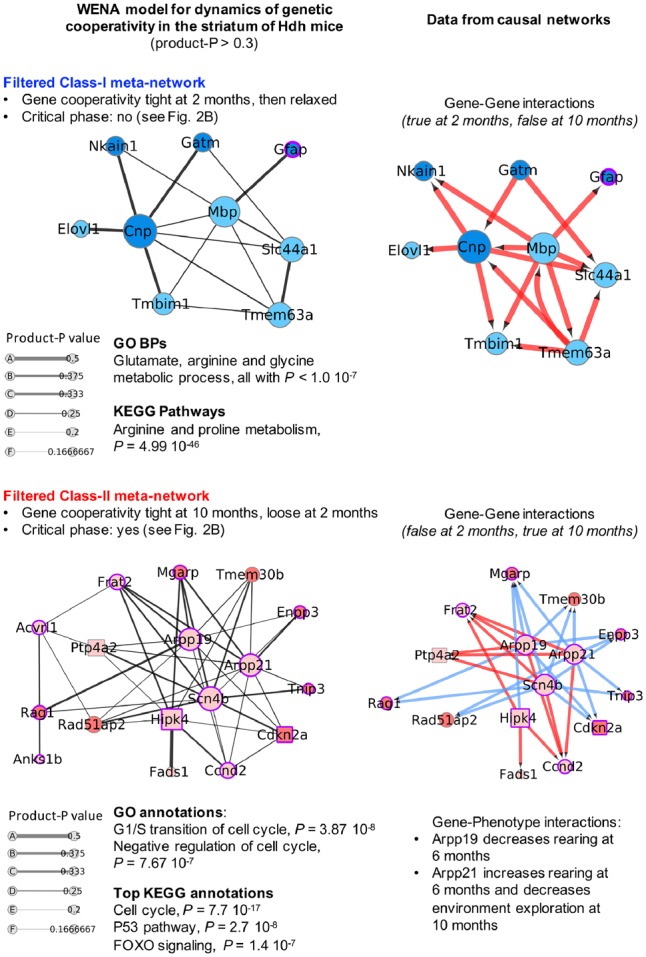
Weighted edge networks identify two consecutive waves of tight genetic cooperativity enriched in deregulated genes (critical phases), pre-symptomatically in the cortex, implicating neurotransmission, and symptomatically in the striatum, implicating cell survival (e.g. Hipk4) intertwined with cell proliferation (e.g. Scn4b) and cellular senescence (e.g. Cdkn2a products) responses. Top striatal weighted edges are enriched in modulators of defective behavior in invertebrate models of HD pathogenesis, validating their relevance to neuronal dysfunction in vivo. Collectively, these findings reveal highly dynamic temporal features of genetic cooperativity in the brain of Hdh mice where a 2-step logic highlights the importance of cellular maintenance and senescence in the striatum of symptomatic mice, providing highly prioritized targets.
Weighted edge network analysis (WENA) data and source codes for performing spectral decomposition of the signal (SDS) and WENA analysis, both written using Python, are available at http://www.broca.inserm.fr/HD-WENA/.
Supplementary data are available at Bioinformatics online.
亨廷顿舞蹈症(HD)可能通过基因失调而演变。然而,基因失调对HD中基因协同作用动态的影响仍知之甚少。在此,我们构建了一个HD基因敲入小鼠(Hdh小鼠等位基因系列)大脑中基因协同作用时间动态的多层网络模型。为了提高生物学精度和基因优先级,我们将三个互补的源网络家族整合到加权边网络中,所有这些源网络均从Hdh小鼠相同的RNA测序时间序列数据推断而来,其中一条边概括了跨源网络和年龄点的路径长度变化。
加权边网络识别出两波连续的紧密基因协同作用,这些协同作用在失调基因中富集(关键阶段),在症状出现前发生在皮层,涉及神经传递,在症状出现时发生在纹状体,涉及细胞存活(如Hipk4),并与细胞增殖(如Scn4b)和细胞衰老(如Cdkn2a产物)反应相互交织。纹状体顶部的加权边在HD发病机制的无脊椎动物模型中缺陷行为的调节因子中富集,验证了它们与体内神经元功能障碍的相关性。总体而言,这些发现揭示了Hdh小鼠大脑中基因协同作用的高度动态时间特征,其中两步逻辑突出了细胞维持和衰老在有症状小鼠纹状体中的重要性,提供了高度优先的靶点。
加权边网络分析(WENA)数据以及用于执行信号频谱分解(SDS)和WENA分析的源代码(均使用Python编写)可在http://www.broca.inserm.fr/HD-WENA/获取。
补充数据可在《生物信息学》在线版获取。