School of Life Sciences, Faculty of Science, The Chinese University of Hong Kong, Hong Kong.
J Alzheimers Dis. 2023;94(s1):S429-S451. doi: 10.3233/JAD-220203.
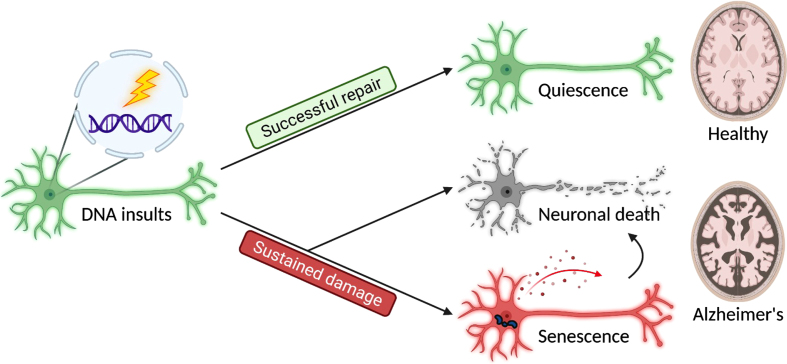
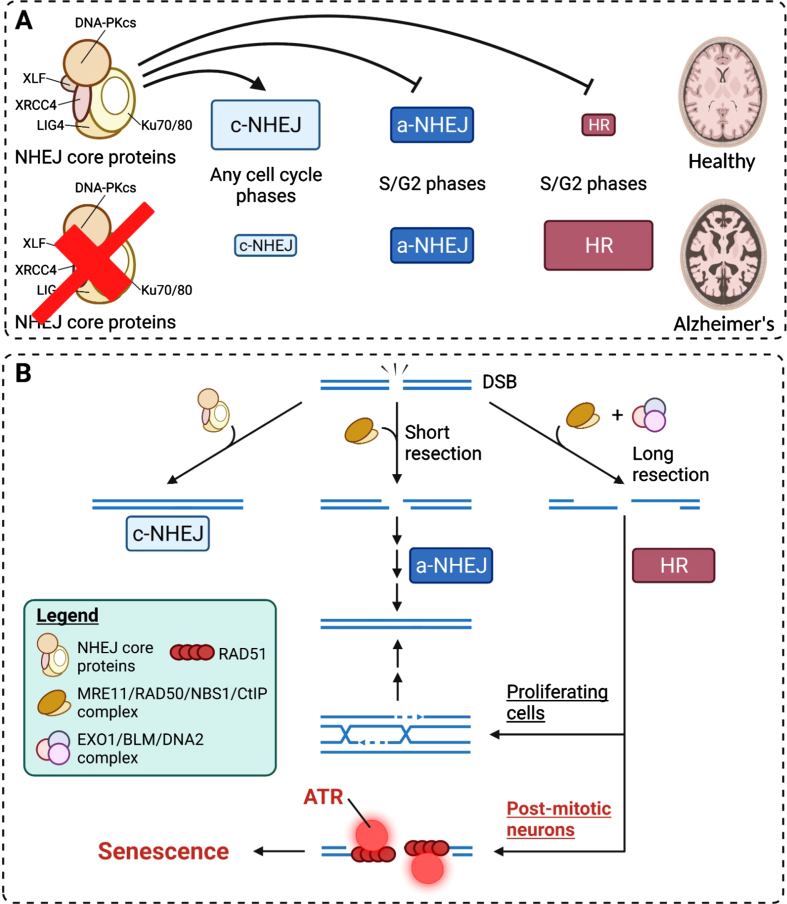
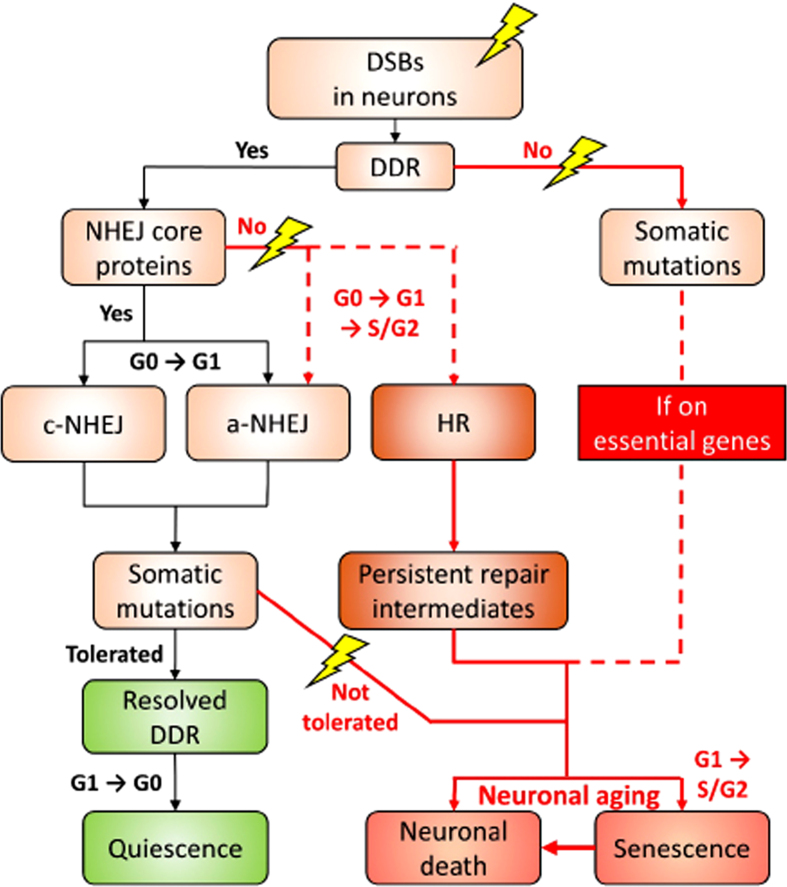
Chronological aging is by far the strongest risk factor for age-related dementia and Alzheimer's disease. Senescent cells accumulated in the aging and Alzheimer's disease brains are now recognized as the keys to describing such an association. Cellular senescence is a classic phenomenon characterized by stable cell arrest, which is thought to be applicable only to dividing cells. Emerging evidence indicates that fully differentiated post-mitotic neurons are also capable of becoming senescent, with roles in contributing to both brain aging and disease pathogenesis. The key question that arises is the identity of the upstream triggers and the molecular mechanisms that underly such changes. Here, we highlight the potential role of persistent DNA damage response as the major driver of senescent phenotypes and discuss the current evidence and molecular mechanisms that connect DNA repair infidelity, cell cycle re-entry and terminal fate decision in committing neuronal cell senescence.
迄今为止,与年龄相关的痴呆症和阿尔茨海默病的最强风险因素是时间相关的衰老。在衰老和阿尔茨海默病大脑中积累的衰老细胞现在被认为是描述这种关联的关键。细胞衰老(cellular senescence)是一种典型的现象,其特征是细胞稳定停滞,人们认为这种现象仅适用于有丝分裂细胞。新出现的证据表明,完全分化的有丝分裂后神经元也能够衰老,在促进大脑衰老和疾病发病机制方面发挥作用。出现的关键问题是上游触发因素的特性以及潜在的分子机制。在这里,我们强调持续的 DNA 损伤反应作为衰老表型的主要驱动因素的潜在作用,并讨论将神经元细胞衰老与 DNA 修复错误、细胞周期重新进入和终末命运决定联系起来的当前证据和分子机制。