Weidler Erica M, Linnaus Maria E, Baratz Arlene B, Goncalves Luis F, Bailey Smita, Hernandez S Janett, Gomez-Lobo Veronica, van Leeuwen Kathleen
Division of Pediatric Surgery, Phoenix Children's Hospital, Phoenix, Arizona.
Department of Surgery, Mayo Clinic, Phoenix, Arizona.
J Pediatr Adolesc Gynecol. 2019 Dec;32(6):605-611. doi: 10.1016/j.jpag.2019.06.005. Epub 2019 Jun 21.
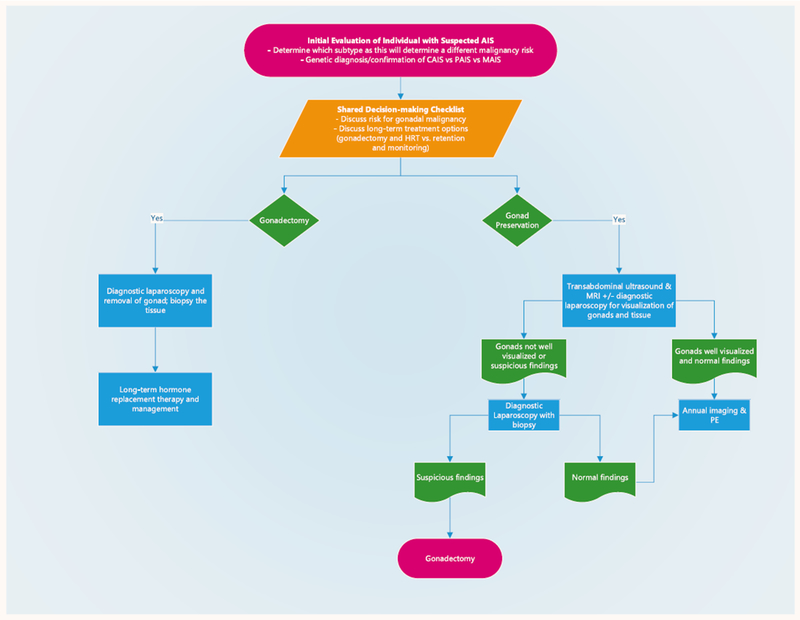
Historically, individuals with androgen insensitivity syndrome (AIS) were managed with removal of gonadal tissue at various ages to avert the risk of gonadal malignancy. Recently, clinical practice changed, with gonadectomy being postponed until late adolescence. Adolescents and adults with complete AIS have questioned this approach. Additionally, testicular germ cell tumors are increasingly believed to be quite rare with rates as low as 0% in molecularly confirmed individuals with AIS. Gonadectomy deprives patients of the benefits of their endogenous hormones and potential fertility. Furthermore, human rights organizations advocate for deferring irreversible surgery in conditions known as differences of sex development, which includes AIS, to allow patient autonomy in decision-making. Recent literature supports an approach that uses risk stratification to manage gonads in AIS. Herein we review what is known about malignancy risk in the different subtypes of AIS and propose a management protocol for gonad retention.
从历史上看,雄激素不敏感综合征(AIS)患者在不同年龄段都通过切除性腺组织来管理,以避免性腺恶性肿瘤的风险。最近,临床实践发生了变化,性腺切除术被推迟到青春期后期。完全性AIS的青少年和成年人对这种方法提出了质疑。此外,越来越多的人认为睾丸生殖细胞肿瘤在AIS患者中非常罕见,在分子确诊的AIS患者中发生率低至0%。性腺切除术剥夺了患者内源性激素的益处和潜在的生育能力。此外,人权组织主张在性发育差异(包括AIS)的情况下推迟不可逆手术,以允许患者自主决策。最近的文献支持一种使用风险分层来管理AIS患者性腺的方法。在此,我们回顾了关于AIS不同亚型恶性肿瘤风险的已知情况,并提出了性腺保留的管理方案。