Department of Neurosurgery, Xijing Hospital, Fourth Military Medical University, Xi'an, China.
Department of Biomedical Engineering, Fourth Military Medical University, Xi'an, China.
Cell Death Dis. 2019 Jun 24;10(7):496. doi: 10.1038/s41419-019-1731-x.
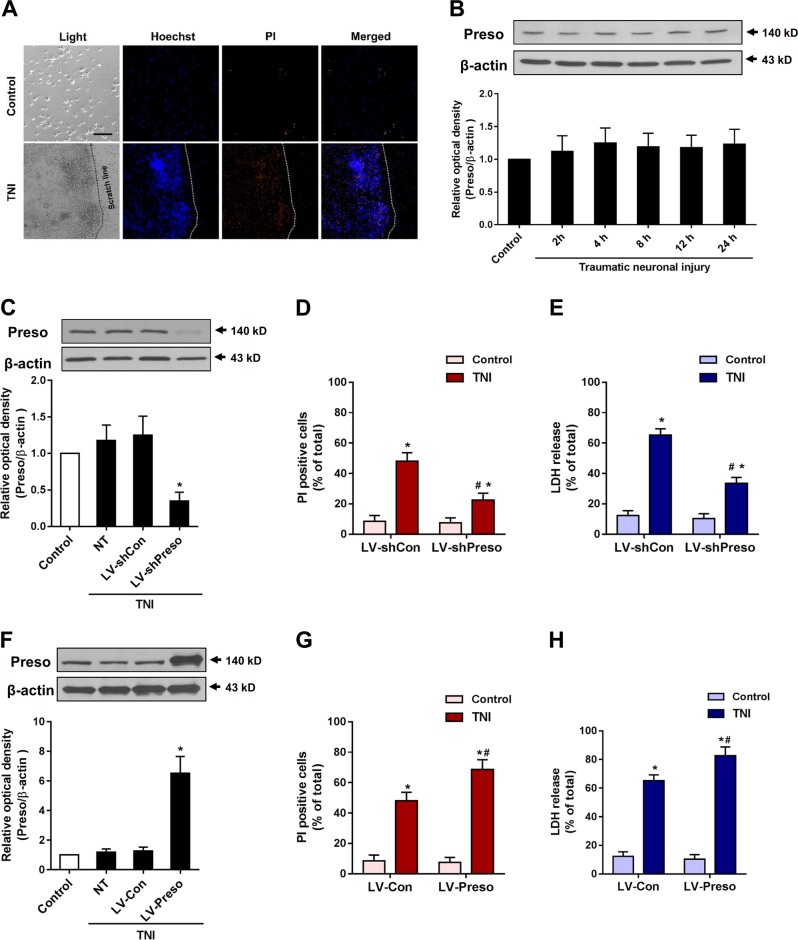
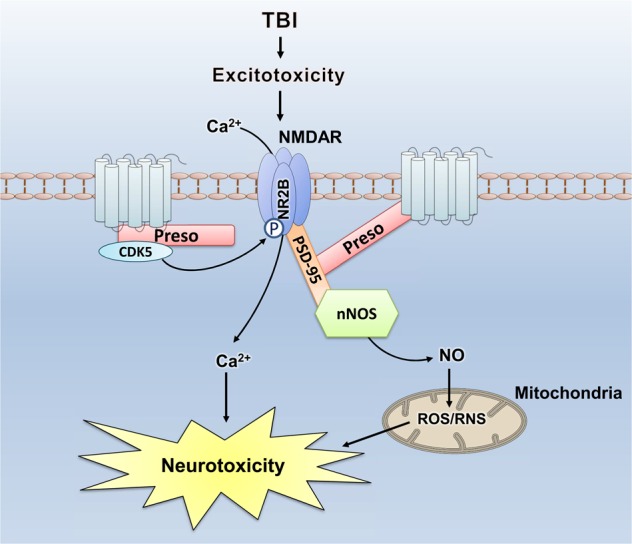
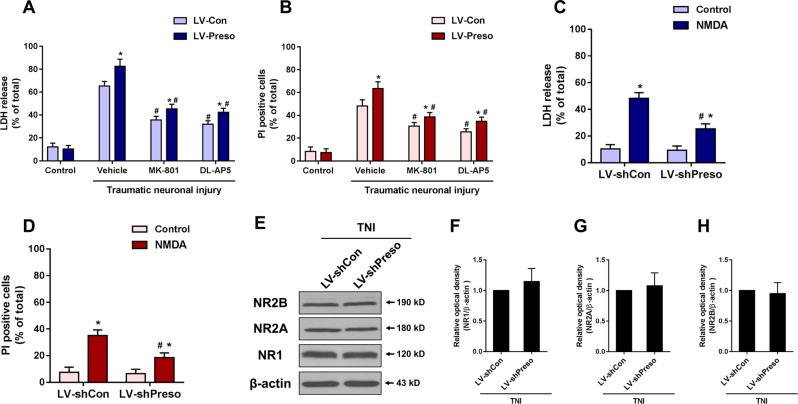
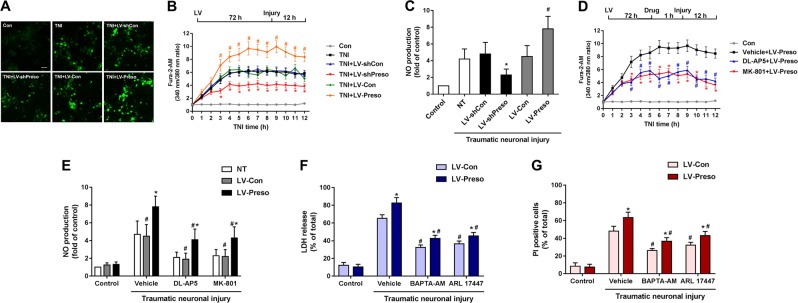
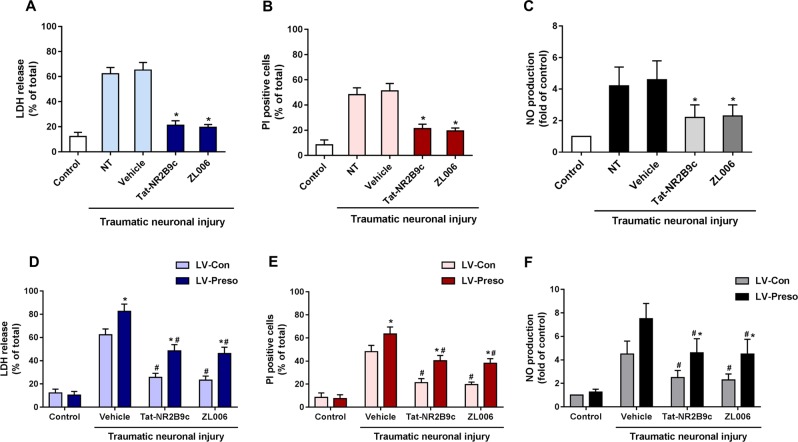
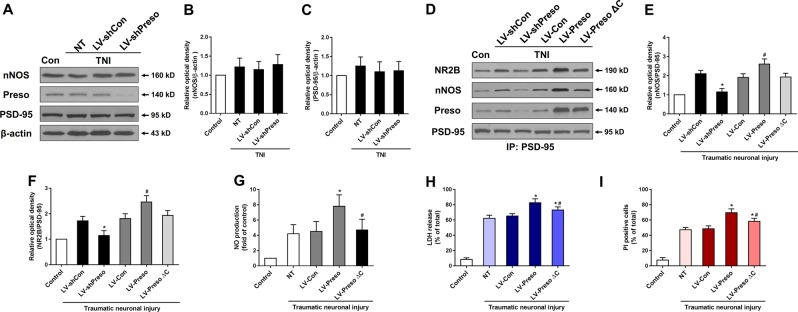
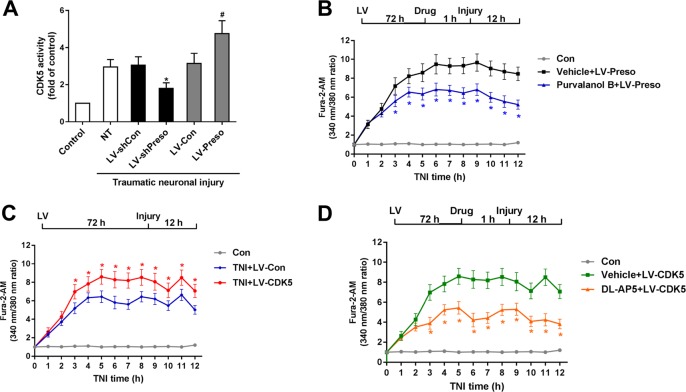
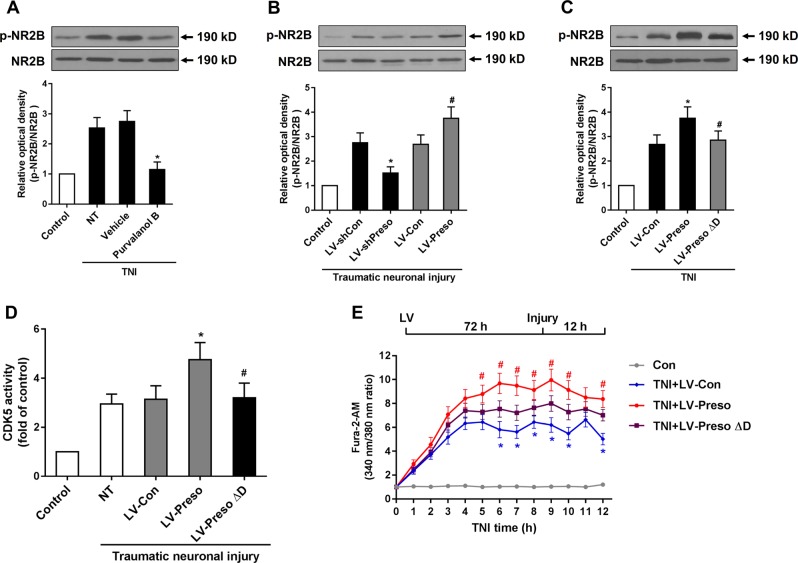
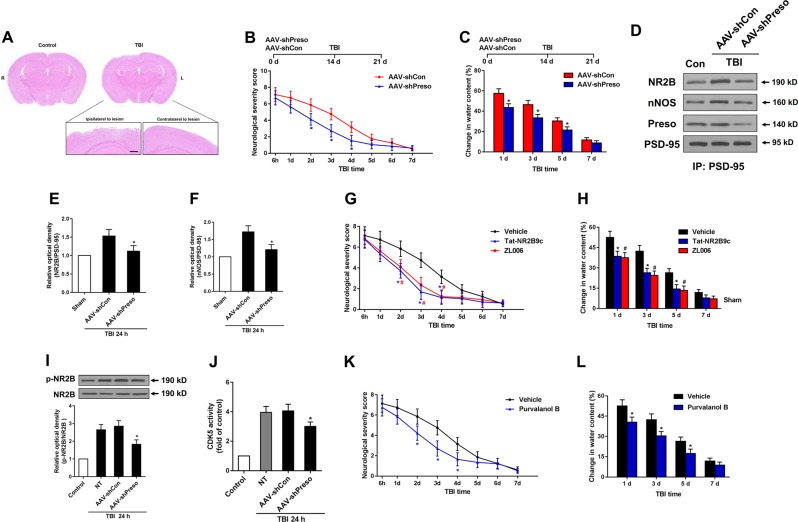
Traumatic brain injury (TBI) has become a major health concern worldwide, and the poor outcome of TBI increases the need for therapeutic improvement. Secondary injuries following TBI, including excitotoxicity, lead to synaptic dysfunction and provide potential targets for intervention. Postsynaptic scaffold proteins, which are involved in the regulation of excitotoxicity after neuronal injury, play a crucial role in modulating synaptic function. Therefore, exploring the role of postsynaptic scaffold proteins in TBI might uncover new treatments. In this study, we demonstrated that downregulated expression of the postsynaptic scaffold protein Preso protects against neuronal injury after TBI in vitro and in vivo, and these effects are related to the inhibition of N-methyl-D-aspartate receptor (NMDAR) function. Further study showed that Preso facilitates signaling from NMDAR to nitric oxide (NO) and calcium (Ca) responses. First, the complex constituting NMDAR, postsynaptic density-95 (PSD-95), and neuronal nitric oxide synthase (nNOS) was shown to be involved in the Preso regulation of the NO response. Uncoupling the linkage between Preso and PSD-95 attenuated the stability of this complex and suppressed the regulatory effect of Preso on the NO response. In addition, phosphorylation of NMDAR by cyclin-dependent kinase 5 (CDK5) was shown to be responsible for the Preso-mediated Ca response, which was dependent on the interaction between Preso and CDK5. These results suggested that the association of Preso with NMDAR signaling can serve as a target for neuroprotection against TBI.
创伤性脑损伤(TBI)已成为全球主要的健康关注点,TBI 预后不良增加了治疗改善的需求。TBI 后的继发性损伤,包括兴奋性毒性,导致突触功能障碍,并为干预提供了潜在的目标。参与神经元损伤后兴奋性毒性调节的突触后支架蛋白在调节突触功能方面起着至关重要的作用。因此,探索突触后支架蛋白在 TBI 中的作用可能会发现新的治疗方法。在这项研究中,我们证明了突触后支架蛋白 Preso 的下调表达可预防体外和体内 TBI 后的神经元损伤,这些作用与抑制 N-甲基-D-天冬氨酸受体(NMDAR)功能有关。进一步的研究表明,Preso 促进了 NMDAR 向一氧化氮(NO)和钙(Ca)反应的信号传递。首先,构成 NMDAR 的复合物,即突触后密度蛋白-95(PSD-95)和神经元型一氧化氮合酶(nNOS),被证明参与了 Preso 对 NO 反应的调节。解开 Preso 与 PSD-95 之间的连接减弱了该复合物的稳定性,并抑制了 Preso 对 NO 反应的调节作用。此外,细胞周期蛋白依赖性激酶 5(CDK5)对 NMDAR 的磷酸化被证明是 Preso 介导的 Ca 反应的原因,该反应依赖于 Preso 与 CDK5 之间的相互作用。这些结果表明,Preso 与 NMDAR 信号的关联可以作为针对 TBI 的神经保护的靶点。