Institute of Basic Medical Sciences Chinese Academy of Medical Sciences, School of Basic Medicine Peking Union Medical College, Peking Union Medical College Hospital, Beijing Key Laboratory of New Drug Development and Clinical Trial of Stem Cell Therapy (BZ0381), 100005, Beijing, China.
Cell Death Dis. 2019 Jun 24;10(7):492. doi: 10.1038/s41419-019-1738-3.
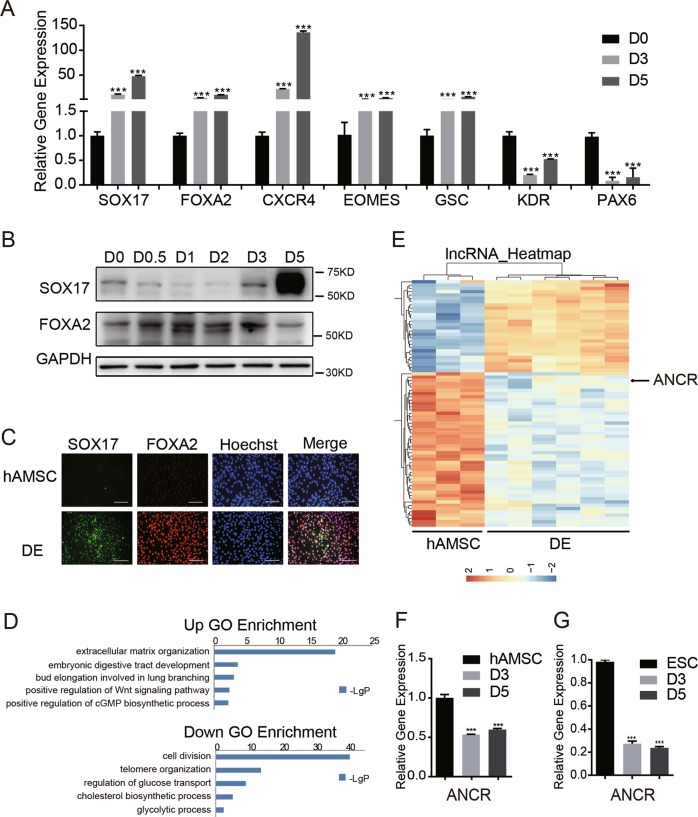
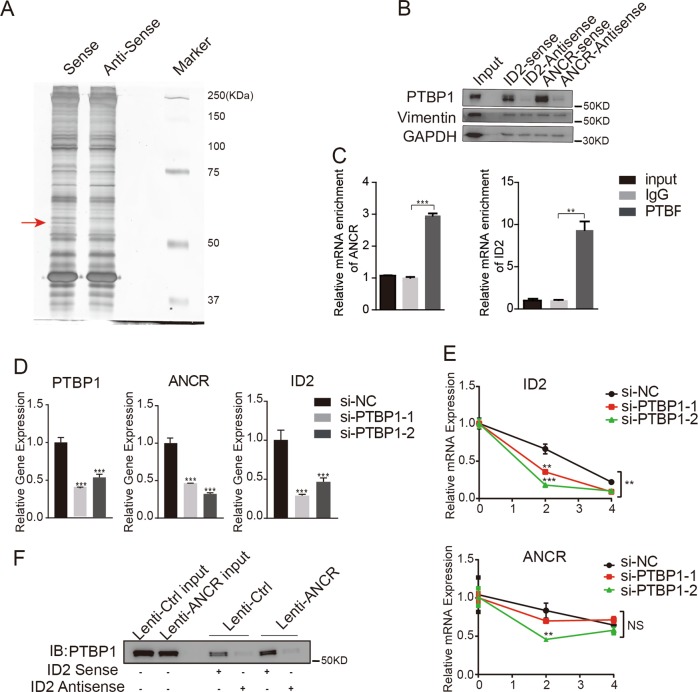
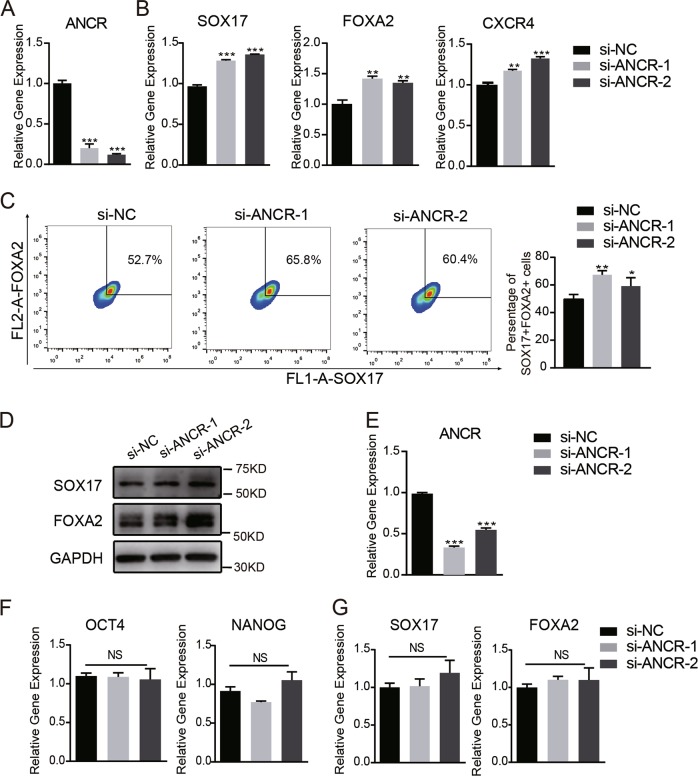
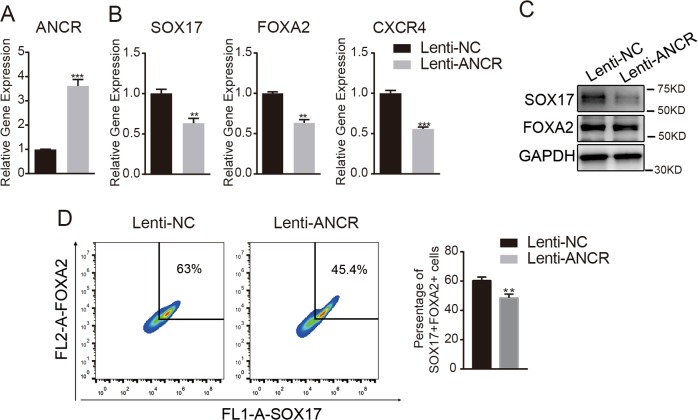
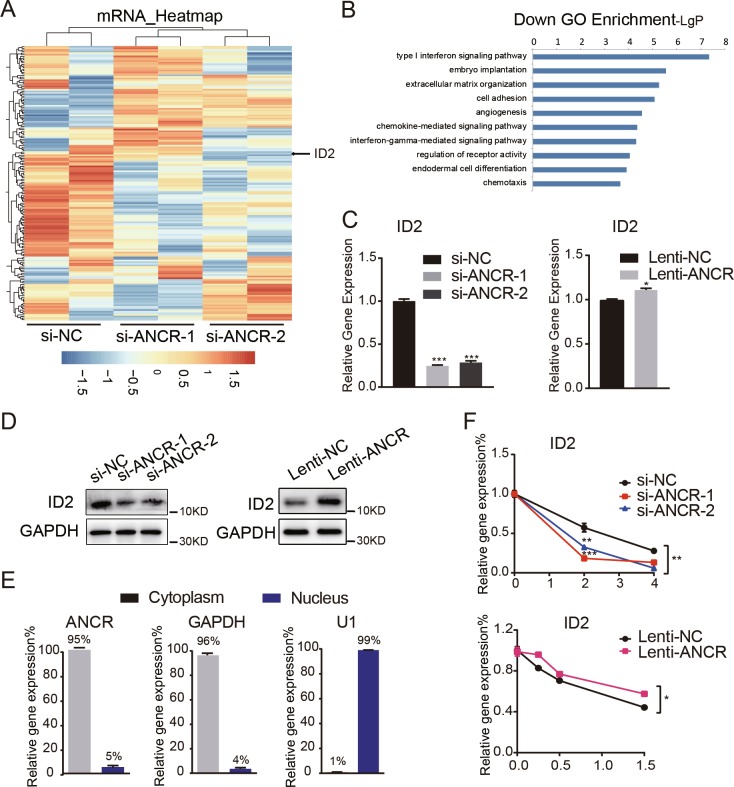
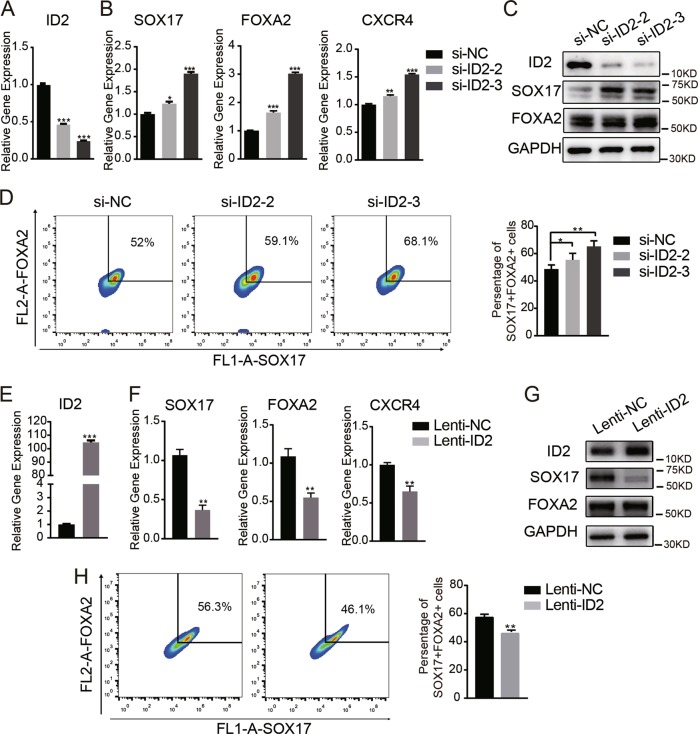
The generation of definitive endoderm (DE) cells in sufficient numbers is a prerequisite for cell-replacement therapy for liver and pancreatic diseases. Previously, we reported that human adipose-derived mesenchymal stem cells (hAMSCs) can be induced to DE lineages and subsequent functional cells. Clarifying the regulatory mechanisms underlying the fate conversion from hAMSCs to DE is helpful for developing new strategies to improve the differentiation efficiency from hAMSCs to DE organs. Long noncoding RNAs (lncRNAs) have been shown to play pivotal roles in developmental processes, including cell fate determination and differentiation. In this study, we profiled the expression changes of lncRNAs and found that antidifferentiation noncoding RNA (ANCR) was downregulated during the differentiation of both hAMSCs and embryonic stem cells (ESCs) to DE cells. ANCR knockdown resulted in the elevated expression of DE markers in hAMSCs, but not in ESCs. ANCR overexpression reduced the efficiency of hAMSCs to differentiate into DE cells. Inhibitor of DNA binding 2 (ID2) was notably downregulated after ANCR knockdown. ID2 knockdown enhanced DE differentiation, whereas overexpression of ID2 impaired this process in hAMSCs. ANCR interacts with RNA-binding polypyrimidine tract-binding protein 1 (PTBP1) to facilitate its association with ID2 mRNA, leading to increased ID2 mRNA stability. Thus, the ANCR/PTBP1/ID2 network restricts the differentiation of hAMSCs toward DE. Our work highlights the inherent discrepancies between hAMSCs and ESCs. Defining hAMSC-specific signaling pathways might be important for designing optimal differentiation protocols for directing hAMSCs toward DE.
生成足够数量的确定性内胚层 (DE) 细胞是肝和胰腺疾病细胞替代治疗的前提。以前,我们报道过人类脂肪间充质干细胞 (hAMSCs) 可以被诱导为 DE 谱系和随后的功能性细胞。阐明 hAMSCs 向 DE 转化的调控机制有助于开发新的策略来提高 hAMSCs 向 DE 器官分化的效率。长链非编码 RNA (lncRNA) 在发育过程中发挥着重要作用,包括细胞命运决定和分化。在这项研究中,我们对 lncRNA 的表达变化进行了分析,发现抗分化非编码 RNA (ANCR) 在 hAMSCs 和胚胎干细胞 (ESCs) 向 DE 细胞分化过程中下调。ANCR 敲低导致 hAMSCs 中 DE 标志物的表达升高,但在 ESCs 中没有。ANCR 过表达降低了 hAMSCs 分化为 DE 细胞的效率。在 ANCR 敲低后,DNA 结合抑制因子 2 (ID2) 明显下调。ID2 敲低增强了 DE 分化,而 ID2 的过表达则损害了 hAMSCs 中的这一过程。ANCR 与 RNA 结合多嘧啶 tract 结合蛋白 1 (PTBP1) 相互作用,促进其与 ID2 mRNA 结合,从而增加 ID2 mRNA 的稳定性。因此,ANCR/PTBP1/ID2 网络限制了 hAMSCs 向 DE 的分化。我们的工作强调了 hAMSCs 和 ESCs 之间的固有差异。定义 hAMSC 特异性信号通路对于设计最佳的分化方案以指导 hAMSCs 向 DE 分化可能是重要的。