Clark Anne, Merrigan Christine, Crushell Ellen, Hughes Joanne, Knerr Ina, Monavari Ardeshir A, Treacy Eileen, Coughlan Aoife
National Centre for Inherited Metabolic Disorders Temple Street Children's University Hospital Dublin Ireland.
Department of Research Temple Street Children's University Hospital Dublin Ireland.
JIMD Rep. 2019 Mar 14;46(1):70-74. doi: 10.1002/jmd2.12019. eCollection 2019 Mar.
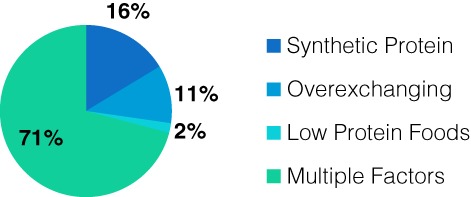
Phenylketonuria (PKU) is an inherited metabolic disorder affecting phenylalanine metabolism. The Irish incidence is 1:4500. Currently, there are 500 patients under the care of the National Centre for Inherited Metabolic Disorders in Temple Street Children's University Hospital. Current practice is to admit PKU patients with phenylalanine (phe) levels that are consistently out of range despite an intensive multidisciplinary team input on an outpatient basis. The aim of this study was to evaluate changes in phe levels pre, during, and post admissions and to examine if there was a sustained impact post discharge. Fifty-six patients were admitted between January 2003 and December 2013. Patients were all <18 years of age. Greater than 70% (n = 39) of the reasons for admission were due to multiple issues. Average admission time was 5 days. There was a significant decrease in median phe levels from prior to the admission to during the admission. However, there was a significant increase in median phe levels from during the admission (505 μmol/L) to both the 1-6 months' and 7-12 months' time points (618 and 651 μmol/L, respectively). The results highlight that while inpatient admissions can stabilize levels within the acute setting, this is not sustained long term. The ward environment does not accurately replicate home circumstances. This study highlighted that the reasons for admission are most often multifactorial, which is less likely to be resolved during a brief admission period.
苯丙酮尿症(PKU)是一种影响苯丙氨酸代谢的遗传性代谢紊乱疾病。爱尔兰的发病率为1:4500。目前,有500名患者在坦普尔街儿童医院大学医院的国家遗传性代谢紊乱中心接受治疗。目前的做法是,对于尽管门诊有强化多学科团队干预但苯丙氨酸(phe)水平仍持续超出范围的PKU患者,予以收治入院。本研究的目的是评估入院前、入院期间和入院后phe水平的变化,并检查出院后是否有持续影响。2003年1月至2013年12月期间,共有56名患者入院。患者均未满18岁。超过70%(n = 39)的入院原因是多种问题。平均住院时间为5天。入院前至入院期间,phe水平中位数显著下降。然而,入院期间(505μmol/L)至1 - 6个月和7 - 12个月时间点(分别为618和651μmol/L),phe水平中位数显著升高。结果表明,虽然住院可以在急性期稳定水平,但这种稳定并非长期持续。病房环境无法准确模拟家庭环境。本研究强调,入院原因通常是多因素的,在短暂的住院期间不太可能得到解决。