Department of Veterinary Preventive Medicine, College of Veterinary Medicine, The Ohio State University, Columbus, Ohio, United States of America.
Department of Veterinary Clinical Sciences, College of Veterinary Medicine, The Ohio State University, Columbus, Ohio, United States of America.
PLoS One. 2019 Jun 26;14(6):e0218650. doi: 10.1371/journal.pone.0218650. eCollection 2019.
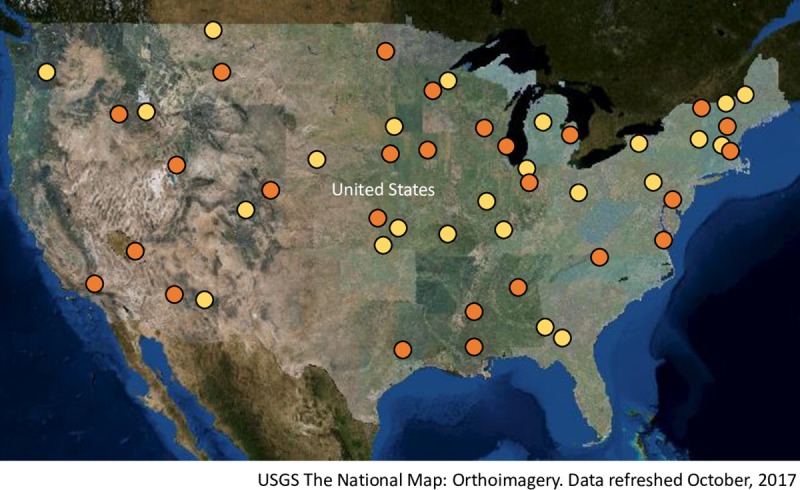
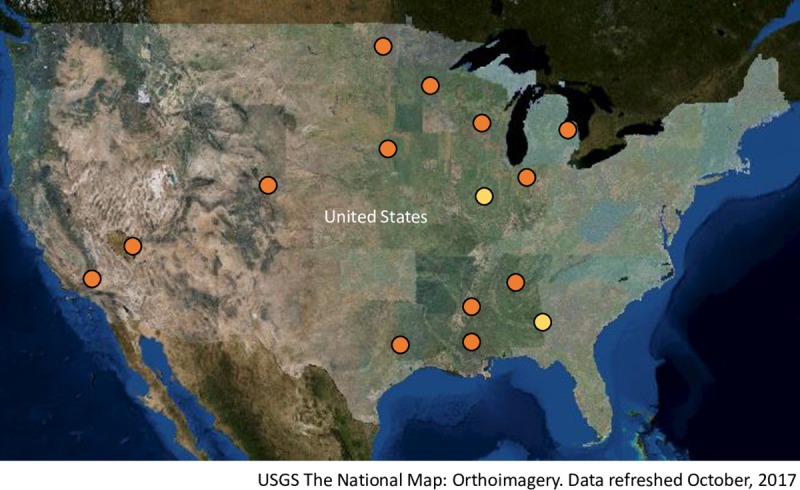
Carbapenemase-producing bacteria (CPB) are rare, multidrug resistant organisms most commonly associated with hospitalized patients. Metropolitan wastewater treatment plants (WWTP) treat wastewater from large geographic areas which include hospitals and may serve as epidemiologic reservoirs for the maintenance or expansion of CPB that originate from hospitals and are ultimately discharged in treated effluent. However, little is known about the potential impact of these WWTP CPB on the local surface water and their risk to the public health. In addition, CPB that are present in surface water may ultimately disseminate to intensively-managed animal agriculture facilities where there is potential for amplification by extended-spectrum cephalosporins. To better understand the role of WWTPs in the dissemination of CPB in surface waters, we obtained samples of treated effluent, and both upstream and downstream nearby surface water from 50 WWTPs throughout the US. A total of 30 CPB with clinically-relevant genotypes were recovered from 15 WWTPs (30%) of which 13 (50%) serviced large metropolitan areas and 2 (8.3%) represented small rural populations (P < 0.05). Recovery of CPB was lowest among WWTPs that utilized ultraviolet radiation for primary disinfection (12%), and higher (P = 0.11) for WWTPs that used chlorination (42%) or that did not utilize disinfection (50%). We did not detect a difference in CPB recovery by sampling site, although fewer CPB were detected in upstream (8%) compared to effluent (20%) and downstream (18%) samples. Our results indicate that WWTP effluent and nearby surface waters in the US are routinely contaminated with CPB with clinically important genotypes including those producing Klebsiella pneumoniae carbapenemase (KPC) and New Delhi metallo-beta-lactamase (NDM). This is a concern for both public health and animal agriculture because introduction of CPB into intensively managed livestock populations could lead to their amplification and foodborne dissemination.
产碳青霉烯酶细菌(CPB)是一种罕见的、多药耐药菌,通常与住院患者有关。城市污水处理厂(WWTP)处理来自大型地理区域的废水,其中包括医院,并且可能是维持或扩大 CPB 的流行病学储库,这些 CPB 源自医院,最终排放到处理后的废水中。然而,人们对这些 WWTP 中 CPB 对当地地表水的潜在影响以及对公众健康的风险知之甚少。此外,存在于地表水的 CPB 最终可能传播到集约化管理的动物农业设施,在这些设施中,通过扩展谱头孢菌素,可能会放大 CPB。为了更好地了解 WWTP 在地表水 CPB 传播中的作用,我们从美国各地的 50 个 WWTP 中获得了处理后的废水以及上下游附近地表水的样本。从 15 个 WWTP 中(30%)共回收了 30 株具有临床相关基因型的 CPB,其中 13 个(50%)服务于大型大都市区,2 个(8.3%)代表小农村人口(P<0.05)。在主要采用紫外线消毒的 WWTP 中 CPB 的回收率最低(12%),而采用氯化消毒(42%)或不采用消毒(50%)的 WWTP 中 CPB 的回收率较高(P=0.11)。虽然在上下游(8%)相比废水(20%)和下游(18%)样本中检测到的 CPB 较少,但我们没有检测到采样地点对 CPB 回收率的差异。我们的研究结果表明,美国的 WWTP 废水和附近地表水经常受到 CPB 的污染,这些 CPB 具有临床重要的基因型,包括产生肺炎克雷伯菌碳青霉烯酶(KPC)和新德里金属β-内酰胺酶(NDM)的 CPB。这不仅对公共卫生,而且对动物农业也是一个担忧,因为 CPB 引入集约化管理的牲畜种群可能导致其扩增和食源性传播。