Stead Family Department of Pediatrics, University of Iowa, Iowa City, IA, USA.
Department of Pediatrics, Washington University School of Medicine, St Louis, MO, USA.
Pediatr Res. 2020 Jul;88(1):66-76. doi: 10.1038/s41390-019-0472-y. Epub 2019 Jun 26.
Preterm infants are susceptible to unique pathology due to their immaturity. Mouse models are commonly used to study immature intestinal disease, including necrotizing enterocolitis (NEC). Current NEC models are performed at a variety of ages, but data directly comparing intestinal developmental stage equivalency between mice and humans are lacking.
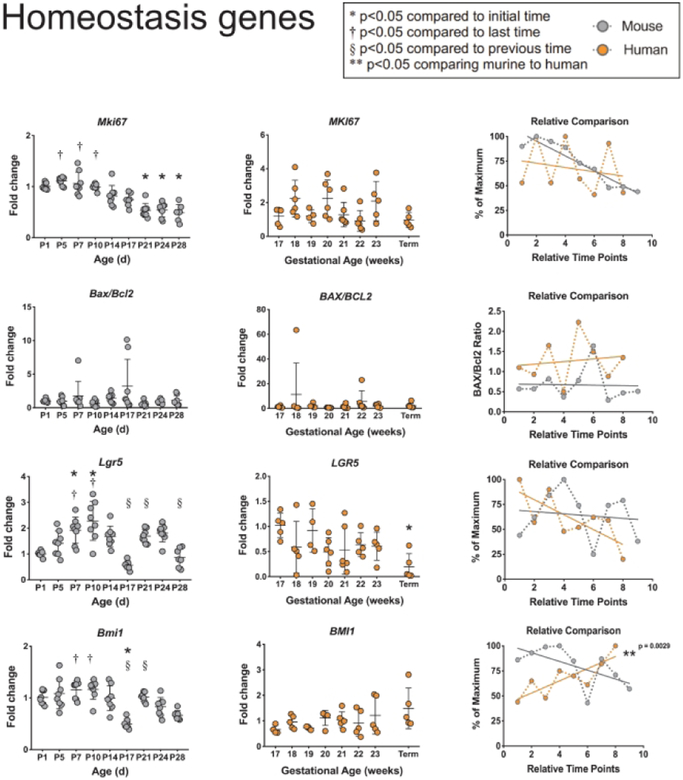
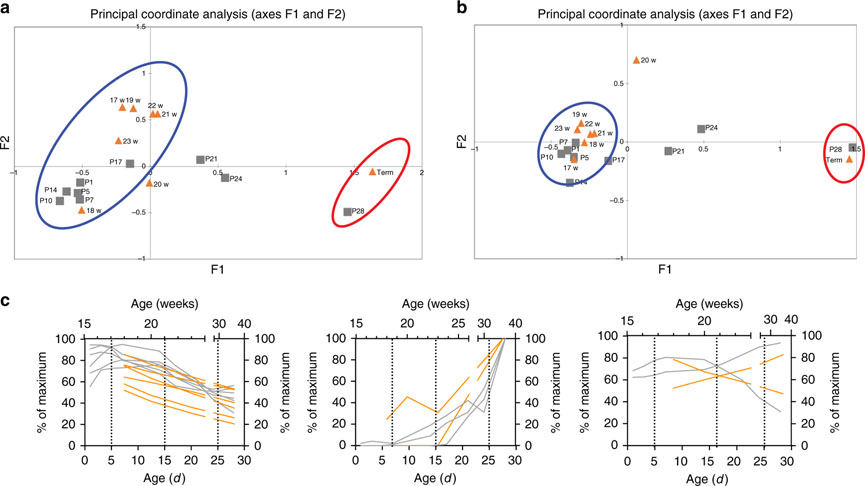
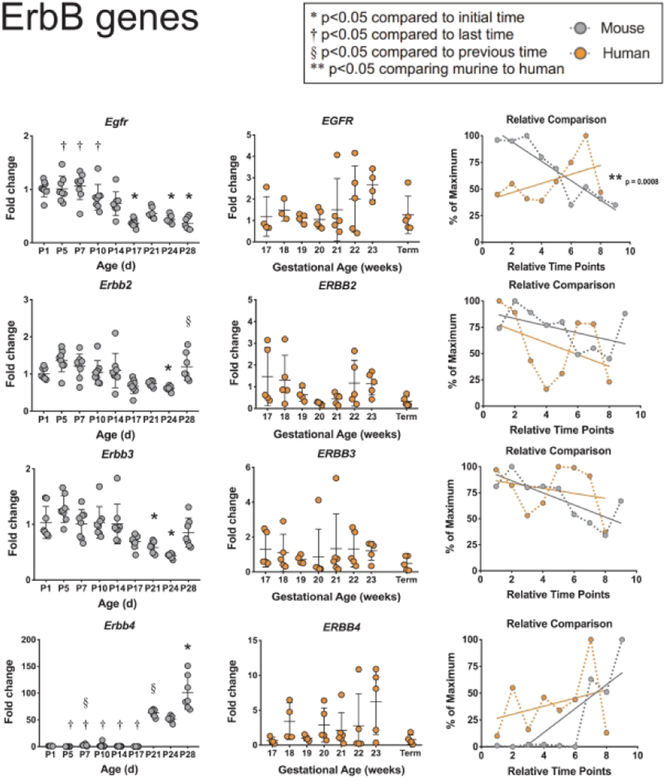
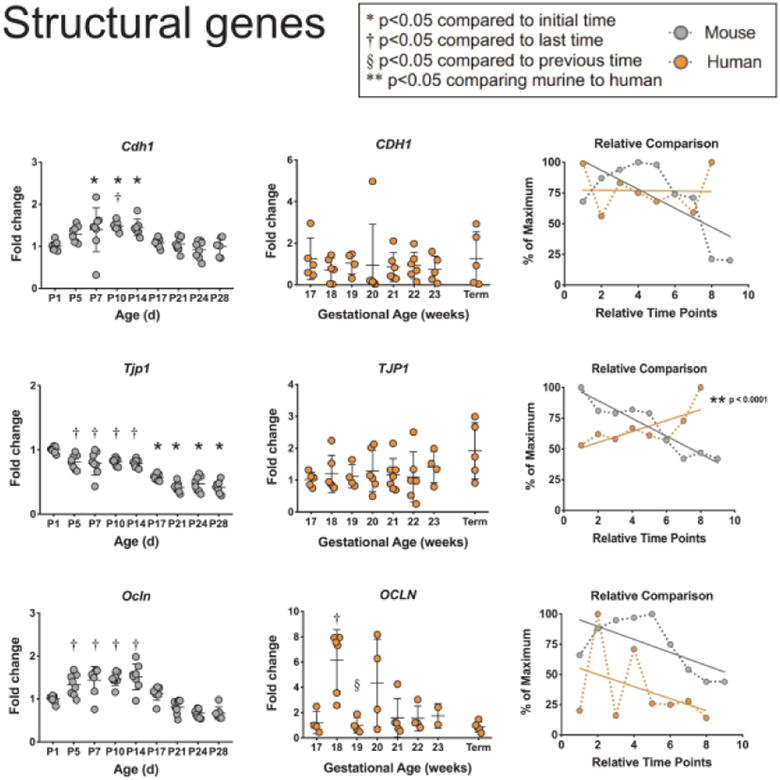
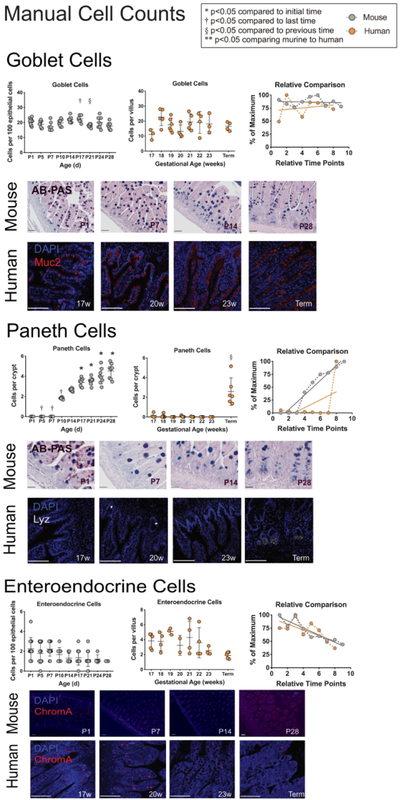
Small intestines were harvested from C57BL/6 mice at 3-4 days intervals from birth to P28 (n = 8 at each age). Preterm human small intestine samples representing 17-23 weeks of completed gestation were obtained from the University of Pittsburgh Health Sciences Tissue Bank, and at term gestation during reanastamoses after resection for NEC (n = 4-7 at each age). Quantification of intestinal epithelial cell types and messenger RNA for marker genes were evaluated on both species.
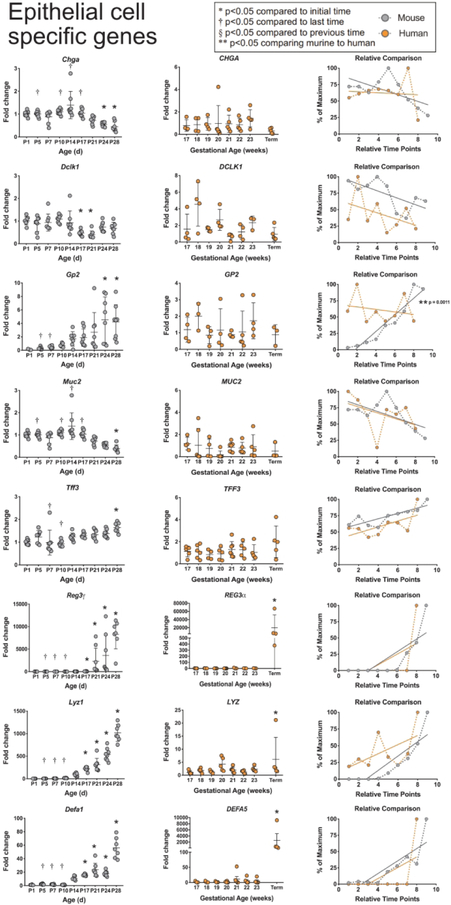
Overall, murine and human developmental trends over time are markedly similar. Murine intestine prior to P10 is most similar to human fetal intestine prior to viability. Murine intestine at P14 is most similar to human intestine at 22-23 weeks completed gestation, and P28 murine intestine is most similar to human term intestine.
Use of C57BL/6J mice to model the human immature intestine is reasonable, but the age of mouse chosen is a critical factor in model development.
早产儿由于其不成熟而容易患上独特的疾病。鼠类模型常用于研究不成熟的肠道疾病,包括坏死性小肠结肠炎(NEC)。目前的 NEC 模型在多种年龄段进行,但缺乏直接比较小鼠和人类肠道发育阶段等效性的数据。
从小鼠出生后第 3 天至第 28 天,每隔 4 天采集一次 C57BL/6 小鼠的小肠(n=8 个年龄段)。从小肠组织库获取代表 17-23 周完全妊娠的早产儿人类小肠样本,以及 NEC 切除后再吻合术时的足月妊娠样本(n=4-7 个年龄段)。对两种物种的肠上皮细胞类型和标记基因的信使 RNA 进行定量评估。
总体而言,鼠类和人类随时间的发育趋势非常相似。在 P10 之前的小鼠肠道与具有生存能力之前的人类胎儿肠道最为相似。P14 时的小鼠肠道与 22-23 周完成妊娠的人类肠道最为相似,P28 时的小鼠肠道与人类足月肠道最为相似。
使用 C57BL/6J 小鼠来模拟人类不成熟的肠道是合理的,但选择的小鼠年龄是模型发展的关键因素。