Discipline of Surgery, College of Medicine and Public Health, Flinders University, Adelaide 5042, Australia.
Flinders Centre for Innovation in Cancer, Flinders University, Adelaide 5042, South Australia.
Medicina (Kaunas). 2019 Jun 25;55(6):306. doi: 10.3390/medicina55060306.
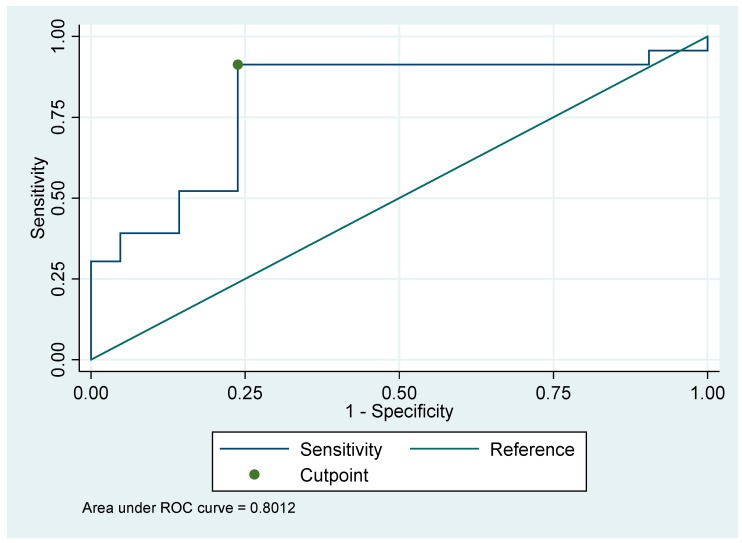
Head and neck squamous cell carcinoma (HNSCC) is the sixth most common form of cancer worldwide, with approximately 630,000 new cases diagnosed each year. The development of low-cost and non-invasive tools for the detection of HNSCC using volatile organic compounds (VOCs) in the breath could potentially improve patient care. The aim of this study was to investigate the feasibility of selected ion flow tube mass spectrometry (SIFT-MS) technology to identify breath VOCs for the detection of HNSCC. Breath samples were obtained from HNSCC patients (N = 23) and healthy volunteers (N = 21). Exhaled alveolar breath samples were collected into FlexFoil PLUS (SKC Limited, Dorset, UK) sampling bags from newly diagnosed, histologically confirmed, untreated patients with HNSCC and from non-cancer participants. Breath samples were analyzed by Selected Ion Flow Tube-Mass Spectrometry (SIFT-MS) (Syft Technologies, Christchurch, New Zealand) using Selective Ion Mode (SIM) scans that probed for 91 specific VOCs that had been previously reported as breath biomarkers of HNSCC and other malignancies. Of the 91 compounds analyzed, the median concentration of hydrogen cyanide (HCN) was significantly higher in the HNSCC group (2.5 ppb, 1.6-4.4) compared to the non-cancer group (1.1 ppb, 0.9-1.3; Benjamini-Hochberg adjusted p < 0.05). A receiver operating curve (ROC) analysis showed an area under the curve (AUC) of 0.801 (95% CI, 0.65952-0.94296), suggesting moderate accuracy of HCN in distinguishing HNSCC from non-cancer individuals. There were no statistically significant differences in the concentrations of the other compounds of interest that were analyzed. This pilot study demonstrated the feasibility of SIFT-MS technology to identify VOCs for the detection of HNSCC.
头颈部鳞状细胞癌(HNSCC)是全球第六种最常见的癌症,每年约有 63 万人被诊断出新病例。开发使用呼吸挥发性有机化合物(VOCs)的低成本、非侵入性工具来检测 HNSCC,可能会改善患者的护理。本研究旨在探讨选择离子流管质谱(SIFT-MS)技术识别呼吸 VOCs 以检测 HNSCC 的可行性。
从 HNSCC 患者(N = 23)和健康志愿者(N = 21)中采集呼气肺泡呼吸样本。从新诊断、组织学证实、未经治疗的 HNSCC 患者和非癌症参与者中采集呼出肺泡呼吸样本,并收集到 FlexFoil PLUS(SKC Limited,Dorset,英国)采样袋中。使用选择性离子流管质谱(SIFT-MS)(Syft Technologies,Christchurch,新西兰)分析呼吸样本,采用选择性离子模式(SIM)扫描,探测先前报道为 HNSCC 和其他恶性肿瘤呼吸生物标志物的 91 种特定 VOC。
在分析的 91 种化合物中,HNSCC 组的氢氰酸(HCN)中位数浓度明显高于非癌症组(2.5 ppb,1.6-4.4)比非癌症组(1.1 ppb,0.9-1.3;经 Benjamini-Hochberg 调整的 p < 0.05)。接收者操作曲线(ROC)分析显示曲线下面积(AUC)为 0.801(95%置信区间,0.65952-0.94296),表明 HCN 区分 HNSCC 与非癌症个体的准确性中等。分析的其他感兴趣化合物的浓度没有统计学差异。
这项初步研究表明,SIFT-MS 技术具有识别 HNSCC 检测 VOCs 的可行性。