Suppiah Subapriya, Didier Mellanie-Anne, Vinjamuri Sobhan
Centre for Diagnostic Nuclear Imaging, University Putra Malaysia, Serdang 43400, Selangor, Malaysia.
Department of Imaging, Faculty of Medicine and Health Sciences, University Putra Malaysia, Serdang 43400, Selangor, Malaysia.
Diagnostics (Basel). 2019 Jun 25;9(2):65. doi: 10.3390/diagnostics9020065.
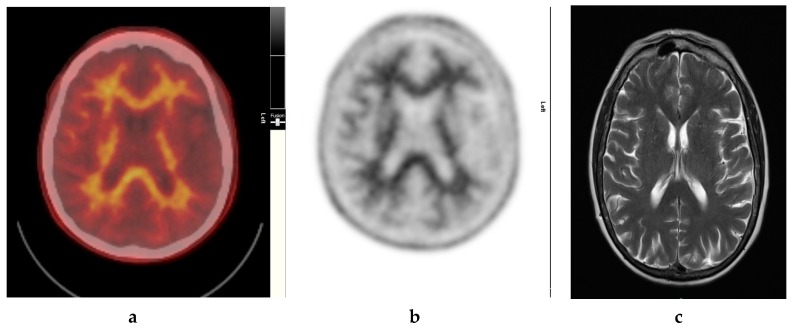
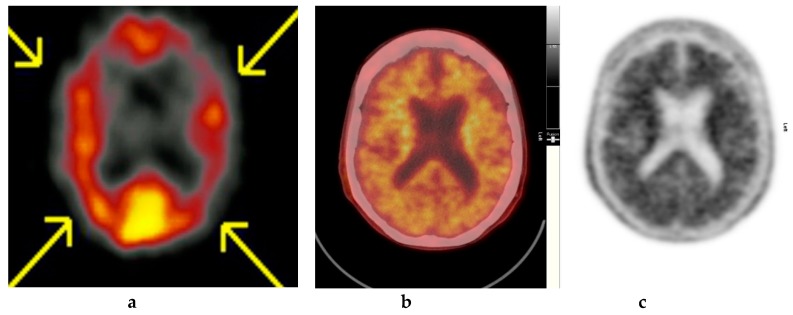
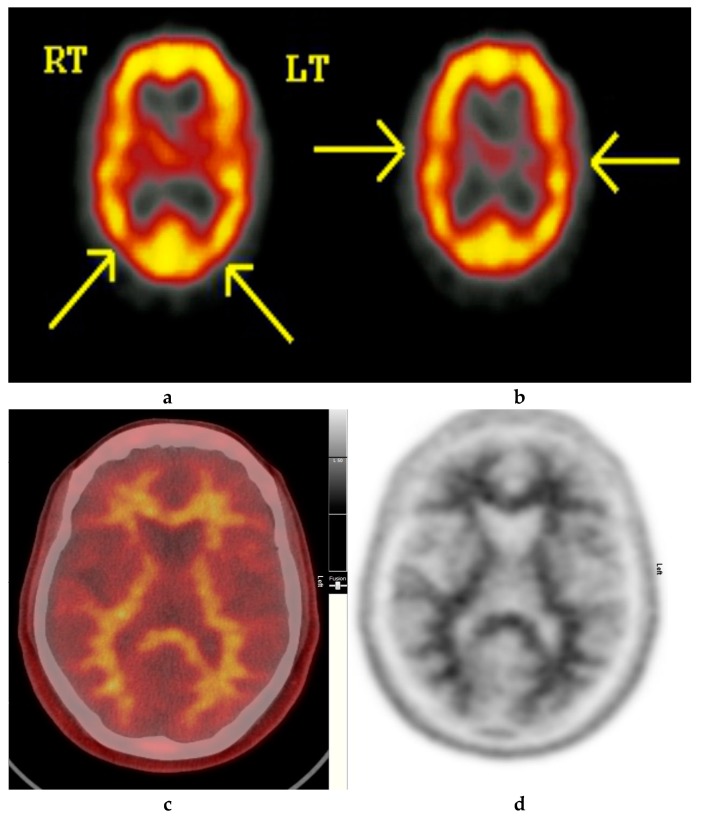
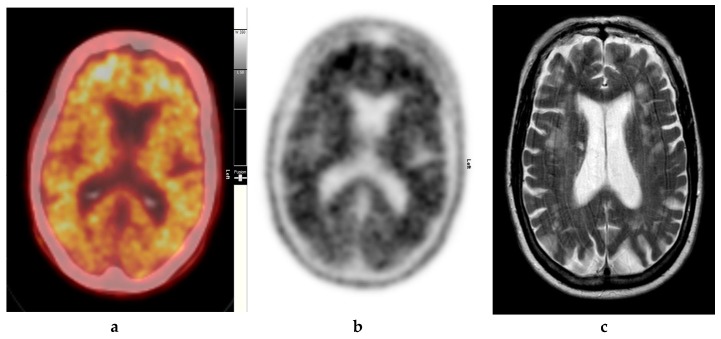
Amyloid imaging using positron emission tomography (PET) has an emerging role in the management of Alzheimer's disease (AD). The basis of this imaging is grounded on the fact that the hallmark of AD is the histological detection of beta amyloid plaques (Aβ) at post mortem autopsy. Currently, there are three FDA approved amyloid radiotracers used in clinical practice. This review aims to take the readers through the array of various indications for performing amyloid PET imaging in the management of AD, particularly using 18F-labelled radiopharmaceuticals. We elaborate on PET amyloid scan interpretation techniques, their limitations and potential improved specificity provided by interpretation done in tandem with genetic data such as apolipiprotein E (APO) 4 carrier status in sporadic cases and molecular information (e.g., cerebral spinal fluid (CSF) amyloid levels). We also describe the quantification methods such as the standard uptake value ratio (SUVr) method that utilizes various cutoff points for improved accuracy of diagnosing AD, such as a threshold of 1.122 (area under the curve 0.894), which has a sensitivity of 92.3% and specificity of 90.5%, whereas the cutoff points may be higher in APOE ε4 carriers (1.489) compared to non-carriers (1.313). Additionally, recommendations for future developments in this field are also provided.
使用正电子发射断层扫描(PET)进行淀粉样蛋白成像在阿尔茨海默病(AD)的管理中发挥着越来越重要的作用。这种成像的基础是基于这样一个事实,即AD的标志是在死后尸检中通过组织学检测到β淀粉样蛋白斑块(Aβ)。目前,有三种经美国食品药品监督管理局(FDA)批准的淀粉样蛋白放射性示踪剂用于临床实践。本综述旨在引导读者了解在AD管理中进行淀粉样蛋白PET成像的一系列不同适应证,特别是使用18F标记的放射性药物。我们详细阐述了PET淀粉样蛋白扫描的解读技术、其局限性以及与遗传数据(如散发性病例中的载脂蛋白E(APO)4携带者状态)和分子信息(如脑脊液(CSF)淀粉样蛋白水平)联合解读所提供的潜在提高的特异性。我们还描述了定量方法,如标准摄取值比率(SUVr)方法,该方法利用各种截断点来提高AD诊断的准确性,例如阈值为1.122(曲线下面积为0.894),其灵敏度为92.3%,特异性为90.5%,而与非携带者(1.313)相比,APOE ε4携带者的截断点可能更高(1.489)。此外,还提供了该领域未来发展的建议。