AO Research Institute, AO Foundation, 7270 Davos, Switzerland.
Equine Clinic, Free University of Berlin, 14163 Berlin, Germany.
Cells. 2019 Jun 25;8(6):636. doi: 10.3390/cells8060636.
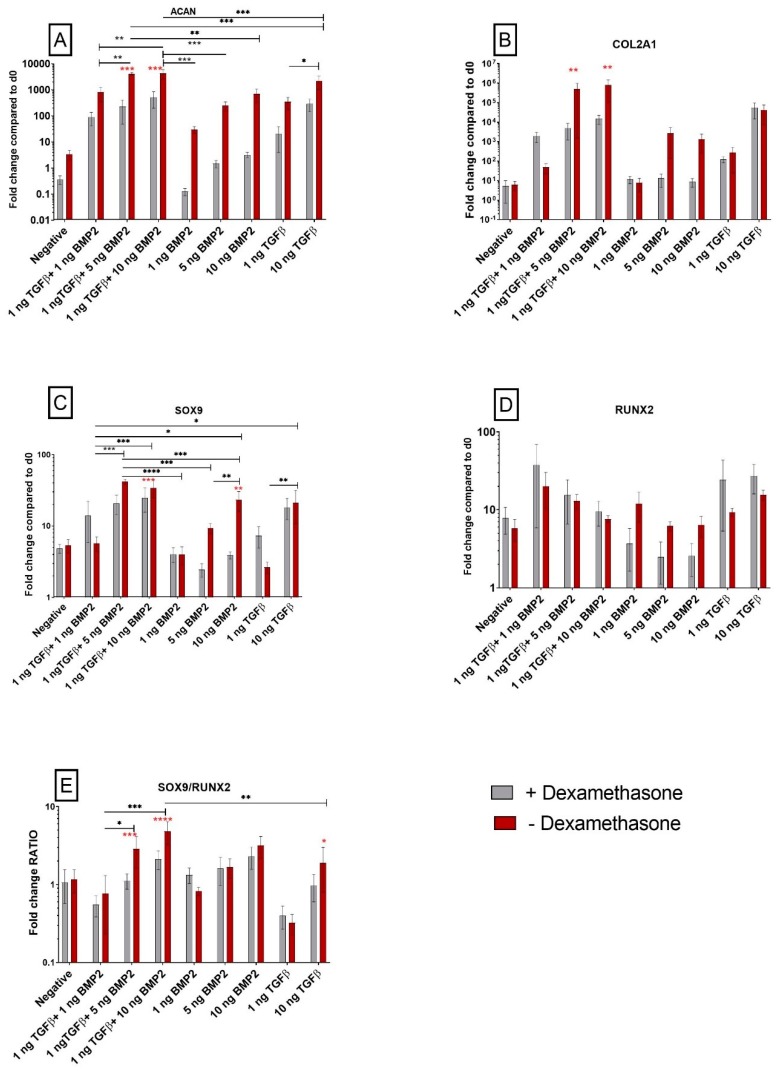
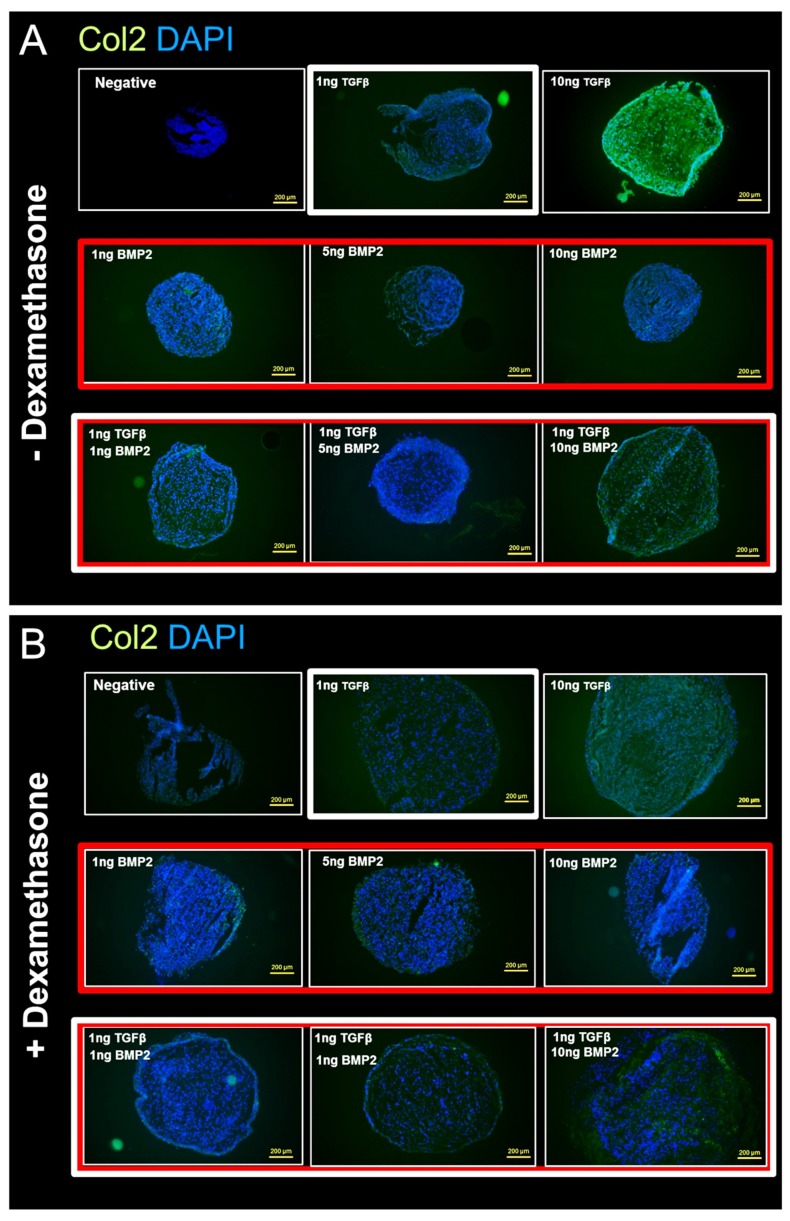
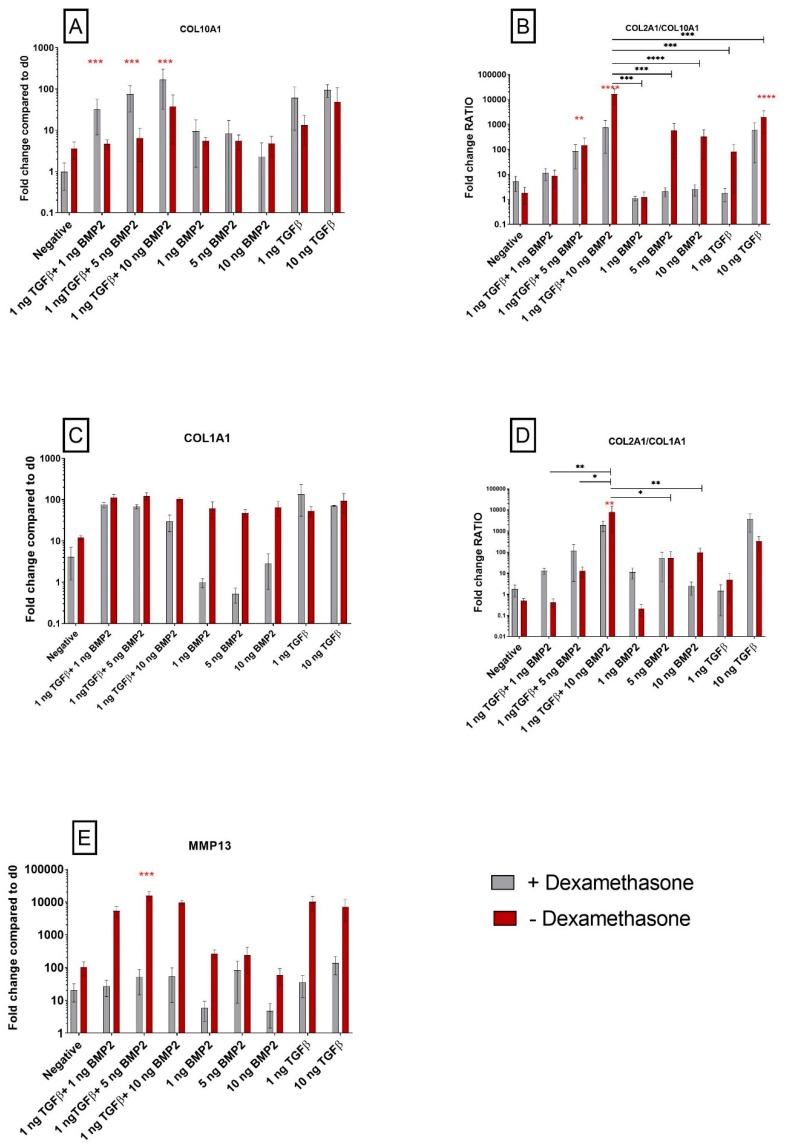
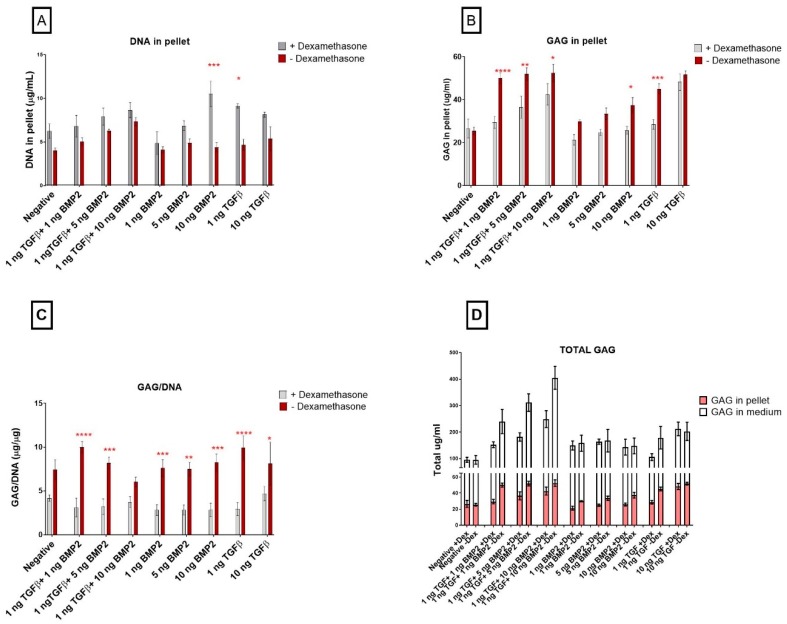
Recent studies highlighting mesenchymal stem cell (MSC) epigenetic memory suggest that a different differentiation medium may be required depending on the tissue of origin. As synovial-derived stem cells (SDSCs) attract interest we aimed to investigate the influence of TGF-β1, BMP-2 and dexamethasone on SDSC chondrogenesis in vitro. We demonstrate that dexamethasone-free medium led to enhanced chondrogenic differentiation at both the mRNA and matrix level. The greatest / ratio was detected in cells exposed to a combination medium containing 10 ng/mL BMP-2 and 1 ng/mL TGF-β1 in the absence of dexamethasone, and this was reflected in the total amount of glycosaminoglycans produced. In summary, dexamethasone-free medium containing BMP-2 and TGF-β1 may be the most suitable when using SDSCs for cartilage tissue regeneration.
最近的研究强调了间充质干细胞 (MSC) 的表观遗传记忆,表明根据组织来源,可能需要不同的分化培养基。由于滑膜来源的干细胞 (SDSC) 引起了人们的兴趣,我们旨在研究 TGF-β1、BMP-2 和地塞米松对 SDSC 体外软骨形成的影响。我们证明无地塞米松培养基可在 mRNA 和基质水平上增强软骨分化。在无地塞米松的情况下,暴露于含有 10ng/mL BMP-2 和 1ng/mL TGF-β1 的组合培养基中的细胞检测到最大 / 比值,这反映在产生的糖胺聚糖总量上。总之,在使用 SDSC 进行软骨组织再生时,无地塞米松培养基中含有 BMP-2 和 TGF-β1 可能是最合适的。