Cai Yu, Wu Cuixi, Ou Qianhua, Zeng Muhui, Xue Song, Chen Jieli, Lu Yao, Ding Changhai
Clinical Research Center, Zhujiang Hospital, Southern Medical University, Guangzhou, Guangdong, 510282, China.
Orthopedic Center, Zhujiang Hospital, Southern Medical University, Guangzhou, Guangdong, 510282, China.
Bioact Mater. 2022 May 2;19:444-457. doi: 10.1016/j.bioactmat.2022.04.021. eCollection 2023 Jan.
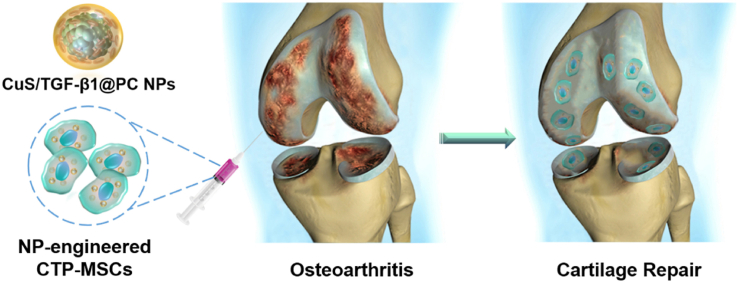
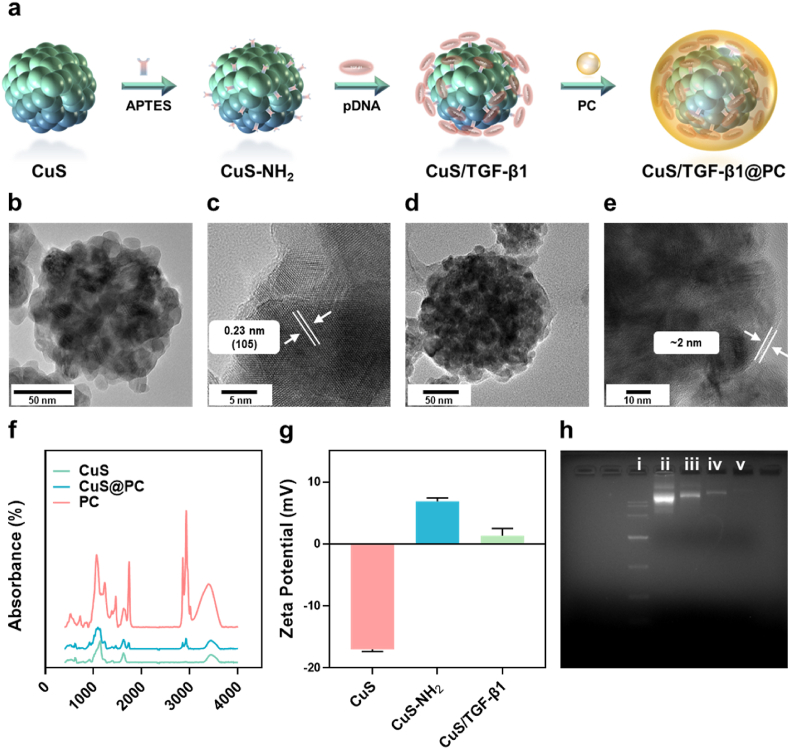
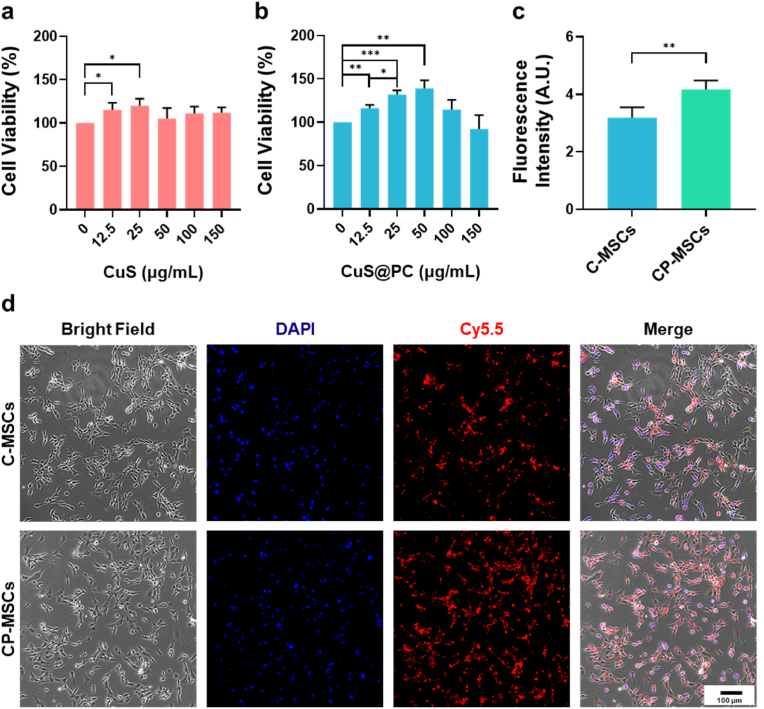
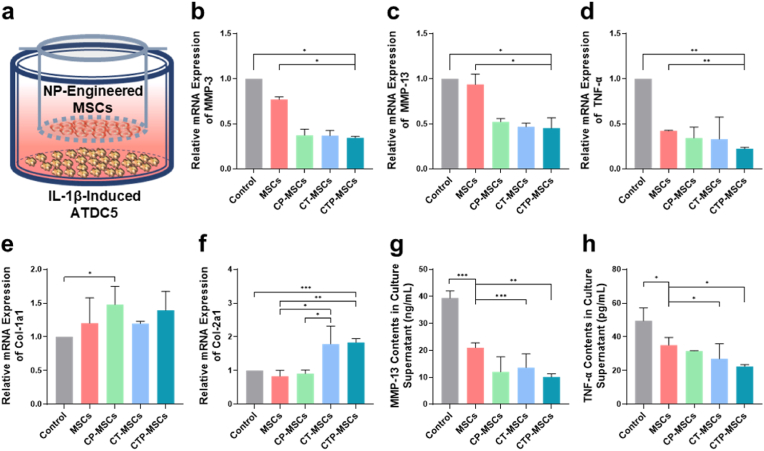
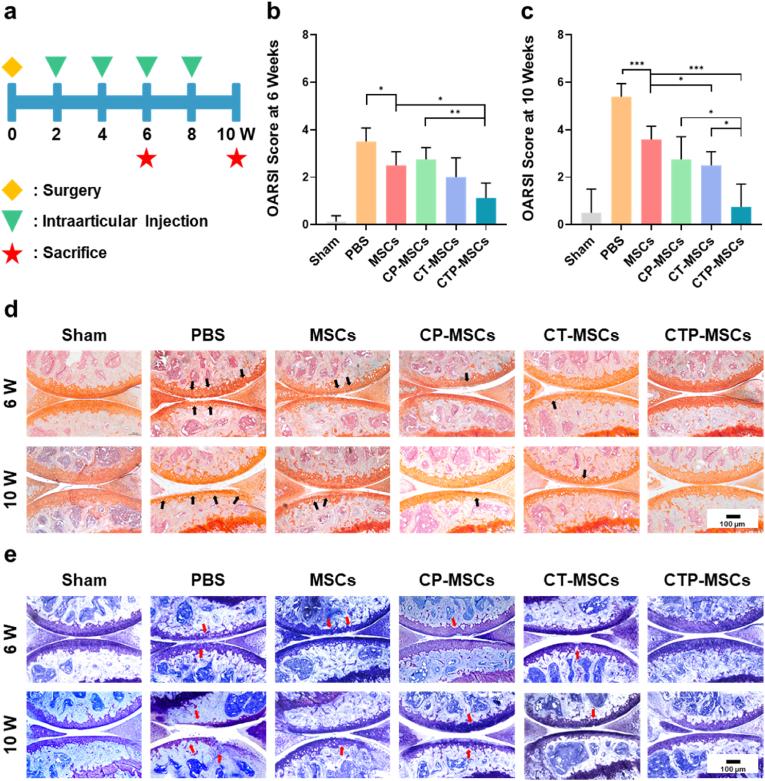
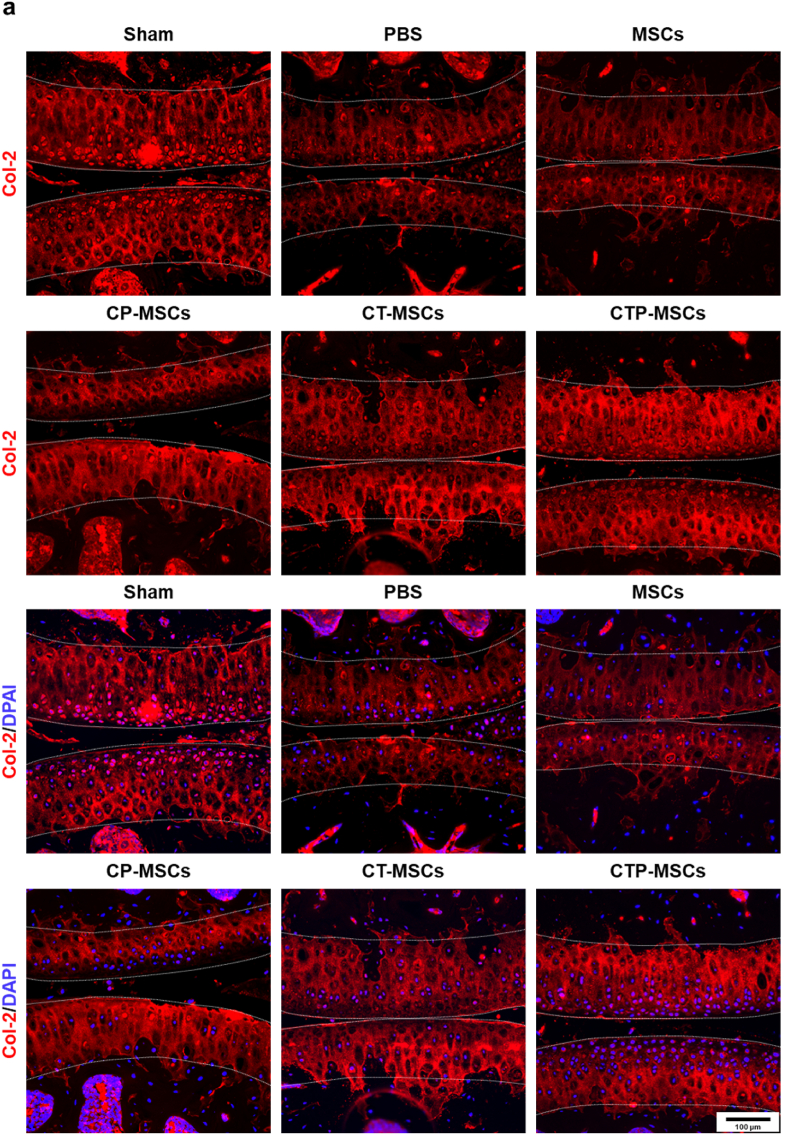
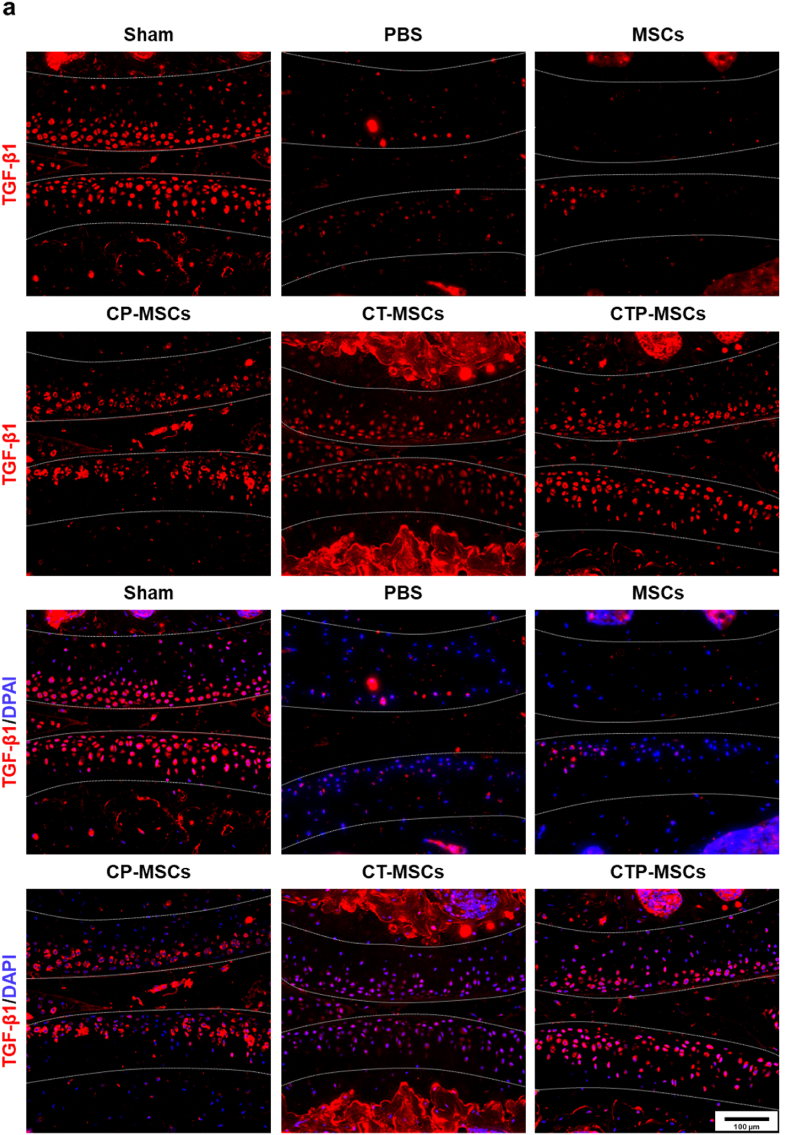
Mesenchymal stem cells (MSCs) therapy shows the potential benefits to relieve clinical symptoms of osteoarthritis (OA), but it is uncertain if it can repair articular cartilage lesions - the main pathology of OA. Here, we prepared biomimetic cupper sulfide@phosphatidylcholine (CuS@PC) nanoparticles (NPs) loaded with plasmid DNA (pDNA) encoding transforming growth factor-beta 1 (TGF-β1) to engineer MSCs for enhanced OA therapy via cartilage regeneration. We found that the NPs not only promoted cell proliferation and migration, but also presented a higher pDNA transfection efficiency relative to commercial transfection reagent lipofectamine 3000. The resultant CuS/TGF-β1@PC NP-engineered MSCs (termed CTP-MSCs) were better than pure MSCs in terms of chondrogenic gene expression, glycosaminoglycan deposition and type II collagen formation, favoring cartilage repair. Further, CTP-MSCs inhibited extracellular matrix degradation in interleukin-1β-induced chondrocytes. Consequently, intraarticular administration of CTP-MSCs significantly enhanced the repair of damaged cartilage, whereas pure MSCs exhibited very limited effects on cartilage regeneration in destabilization of the medial meniscus (DMM) surgical instability mice. Hence, this work provides a new strategy to overcome the limitation of current stem cell therapy in OA treatment through developing more effective nanoengineered MSCs.
间充质干细胞(MSCs)疗法显示出缓解骨关节炎(OA)临床症状的潜在益处,但它能否修复关节软骨损伤(OA的主要病理特征)尚不确定。在此,我们制备了负载编码转化生长因子-β1(TGF-β1)的质粒DNA(pDNA)的仿生硫化铜@磷脂酰胆碱(CuS@PC)纳米颗粒(NPs),以改造MSCs,通过软骨再生增强OA治疗效果。我们发现,这些NPs不仅促进细胞增殖和迁移,而且相对于商业转染试剂脂质体3000,还具有更高的pDNA转染效率。所得的CuS/TGF-β1@PC NP改造的MSCs(称为CTP-MSCs)在软骨生成基因表达、糖胺聚糖沉积和II型胶原蛋白形成方面优于纯MSCs,有利于软骨修复。此外,CTP-MSCs抑制白细胞介素-1β诱导的软骨细胞中的细胞外基质降解。因此,关节内注射CTP-MSCs显著增强了受损软骨的修复,而纯MSCs在内侧半月板不稳定(DMM)手术致不稳小鼠中对软骨再生的作用非常有限。因此,这项工作通过开发更有效的纳米工程化MSCs,为克服当前干细胞疗法在OA治疗中的局限性提供了一种新策略。