Centro de Investigaciones Biológicas, Consejo Superior de Investigaciones Científicas (CSIC), 28040 Madrid, Spain.
Centro de Investigación Biomédica en Red de Enfermedades Raras (CIBERER), 28040 Madrid, Spain.
Int J Mol Sci. 2019 Jun 25;20(12):3107. doi: 10.3390/ijms20123107.
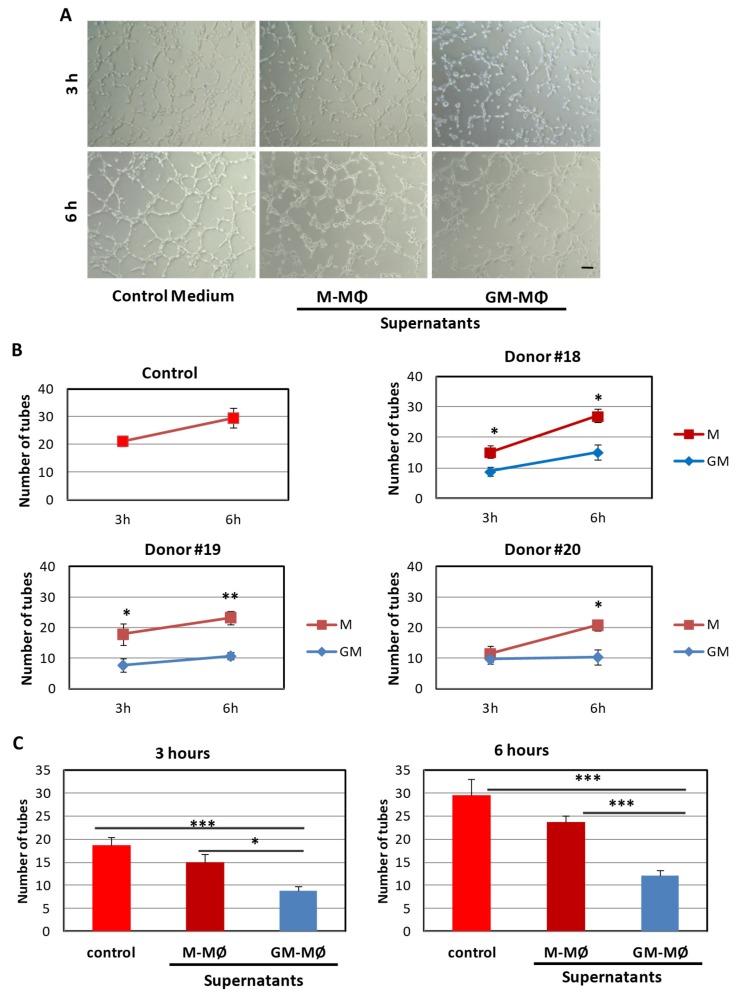
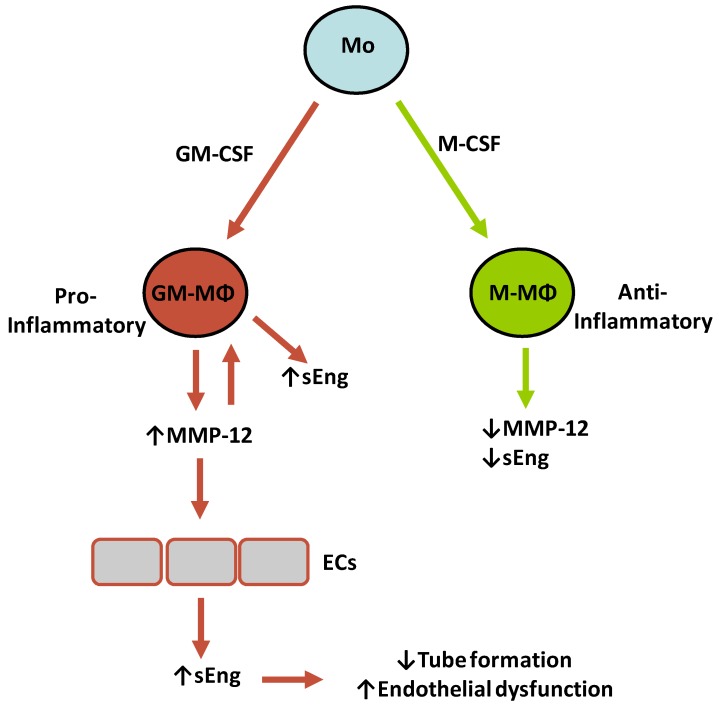
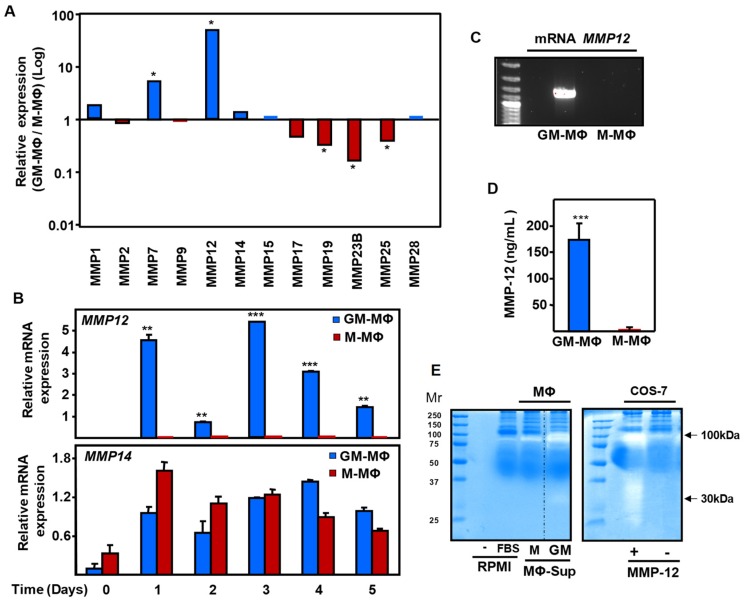
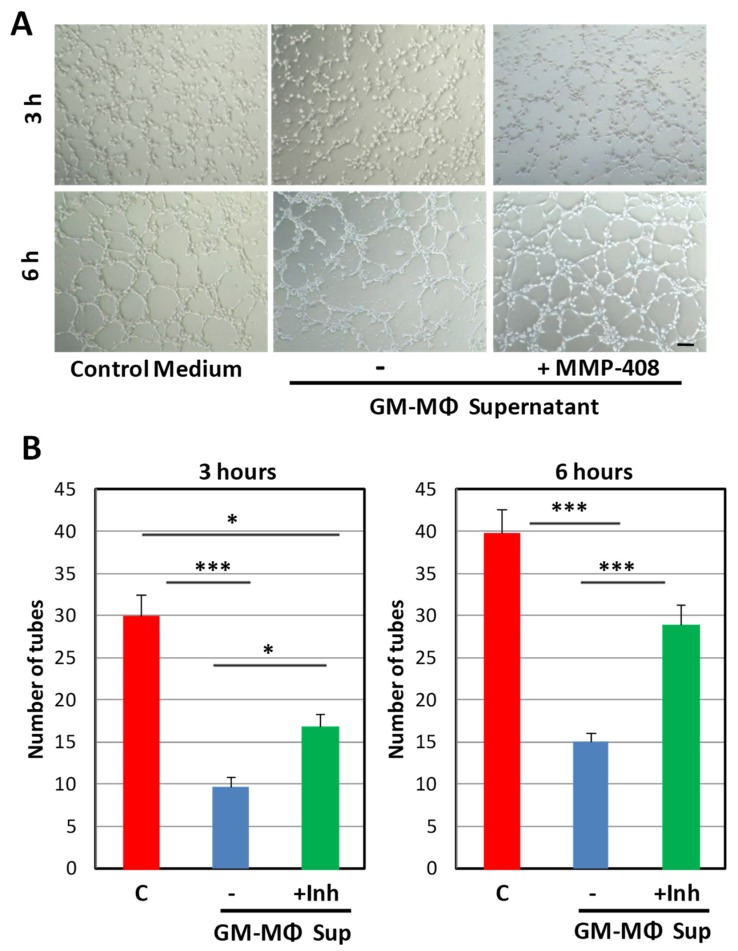
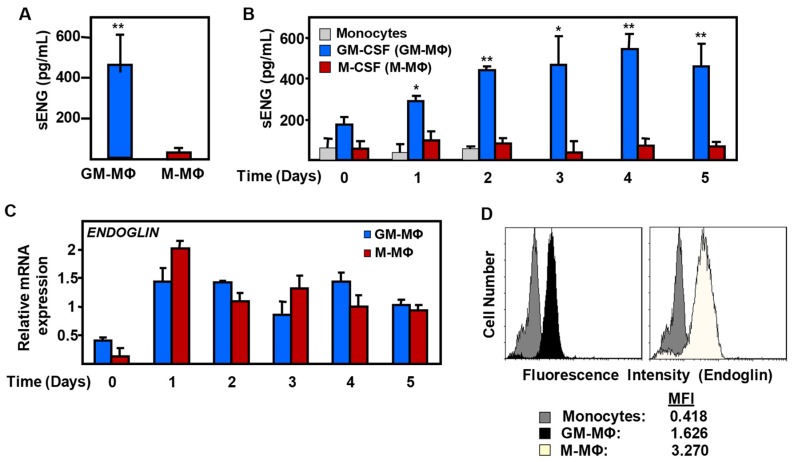
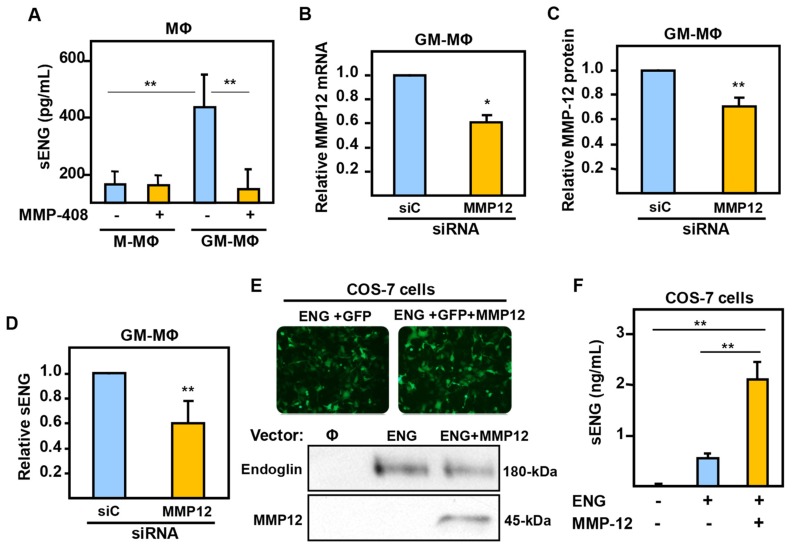
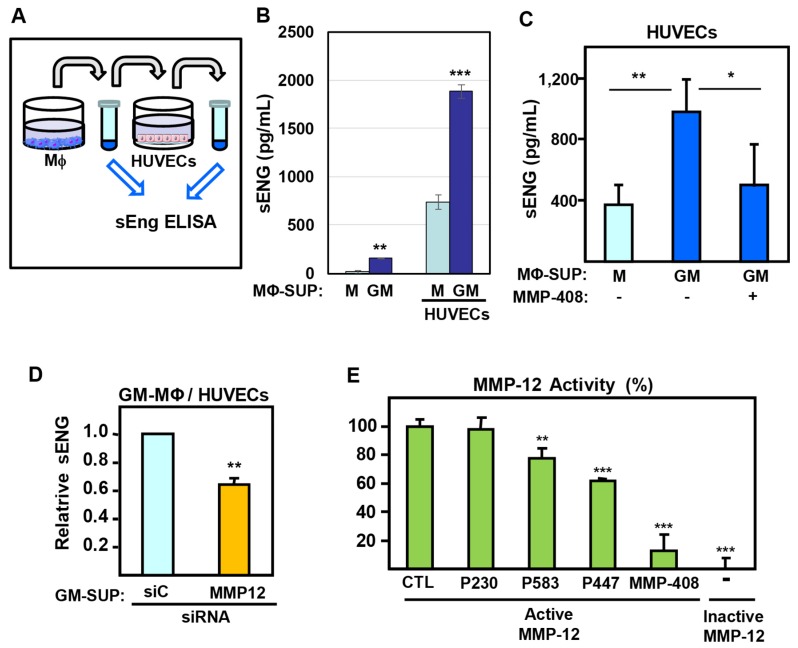
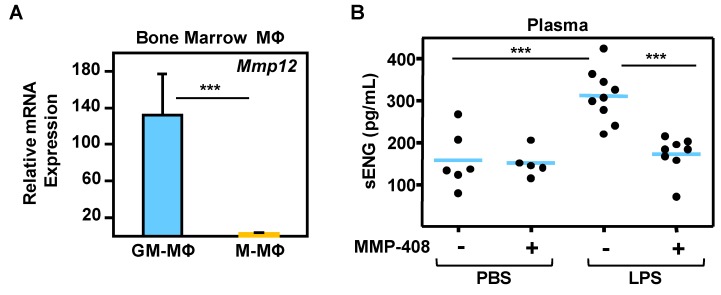
Upon inflammation, monocyte-derived macrophages (MΦ) infiltrate blood vessels to regulate several processes involved in vascular pathophysiology. However, little is known about the mediators involved. Macrophage polarization is crucial for a fast and efficient initial response (GM-MΦ) and a good resolution (M-MΦ) of the inflammatory process. The functional activity of polarized MΦ is exerted mainly through their secretome, which can target other cell types, including endothelial cells. Endoglin (CD105) is a cell surface receptor expressed by endothelial cells and MΦ that is markedly upregulated in inflammation and critically involved in angiogenesis. In addition, a soluble form of endoglin with anti-angiogenic activity has been described in inflammation-associated pathologies. The aim of this work was to identify components of the MΦ secretome involved in the shedding of soluble endoglin. We find that the GM-MΦ secretome contains metalloprotease 12 (MMP-12), a GM-MΦ specific marker that may account for the anti-angiogenic activity of the GM-MΦ secretome. Cell surface endoglin is present in both GM-MΦ and M-MΦ, but soluble endoglin is only detected in GM-MΦ culture supernatants. Moreover, MMP-12 is responsible for the shedding of soluble endoglin in vitro and in vivo by targeting membrane-bound endoglin in both MΦ and endothelial cells. These data demonstrate a direct correlation between GM-MΦ polarization, MMP-12, and soluble endoglin expression and function. By targeting endothelial cells, MMP-12 may represent a novel mediator involved in vascular homeostasis.
在炎症发生时,单核细胞衍生的巨噬细胞(MΦ)浸润血管,调节血管病理生理学中涉及的几个过程。然而,目前对于涉及的介质知之甚少。巨噬细胞极化对于快速有效的初始反应(GM-MΦ)和炎症过程的良好解决(M-MΦ)至关重要。极化的 MΦ 的功能活性主要通过它们的分泌组发挥作用,分泌组可以靶向其他细胞类型,包括内皮细胞。内皮细胞和 MΦ 表达的细胞表面受体内胚层(endoglin, CD105) 在炎症中明显上调,并且在内皮细胞增殖中起着关键作用。此外,在与炎症相关的病理中,已经描述了具有抗血管生成活性的可溶性内胚层形式。本工作的目的是鉴定参与可溶性内胚层脱落的 MΦ 分泌组成分。我们发现 GM-MΦ 的分泌组含有金属蛋白酶 12(MMP-12),这是一种 GM-MΦ 特异性标志物,可能解释了 GM-MΦ 分泌组的抗血管生成活性。细胞表面内胚层存在于 GM-MΦ 和 M-MΦ 中,但仅在 GM-MΦ 培养上清液中检测到可溶性内胚层。此外,MMP-12 负责体外和体内 GM-MΦ 和内皮细胞中膜结合内胚层的脱落,从而导致可溶性内胚层的脱落。这些数据表明 GM-MΦ 极化、MMP-12 和可溶性内胚层表达和功能之间存在直接相关性。通过靶向内皮细胞,MMP-12 可能代表一种新的参与血管稳态的介质。