Laboratório de Paleontologia, Faculdade de Filosofia, Ciências e Letras de Ribeirão Preto, Universidade de São Paulo, Av. Bandeirantes, 3900, 14040-901, Ribeirão Preto/SP, Brazil.
Museu de Paleontologia de Cruzeiro do Oeste, Rua João Ormino de Rezende, 686, 87400-000, Cruzeiro do Oeste/PR, Brazil.
Sci Rep. 2019 Jun 26;9(1):9379. doi: 10.1038/s41598-019-45306-9.
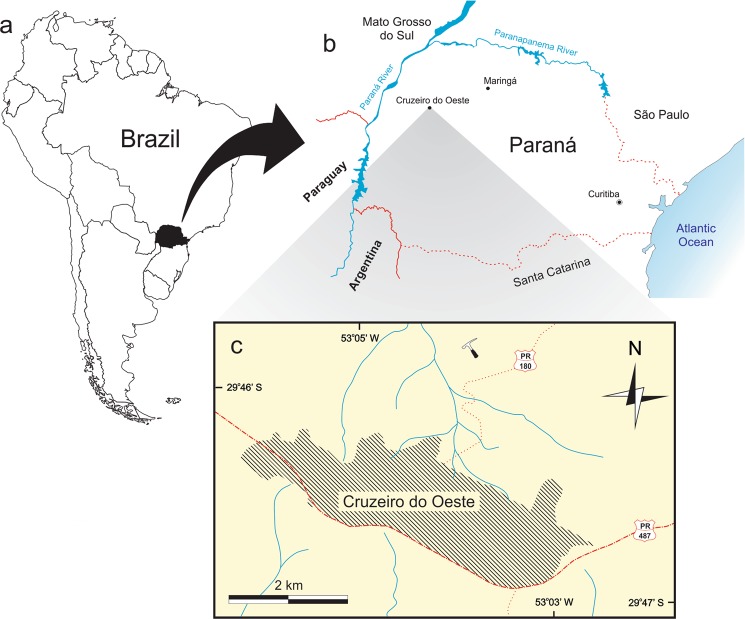
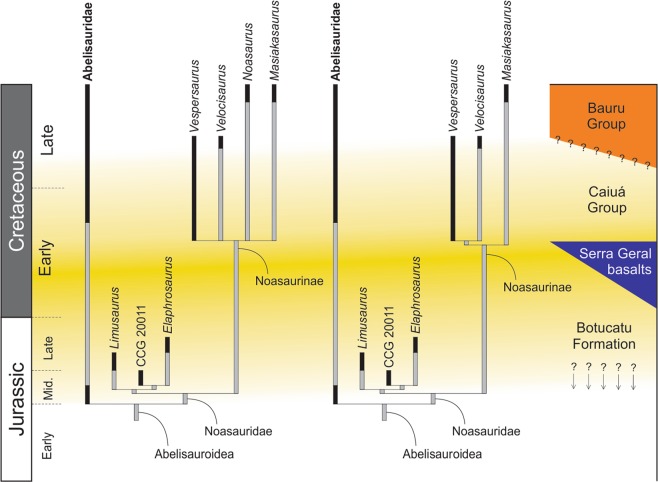
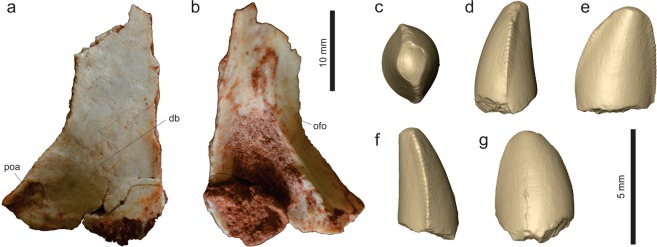
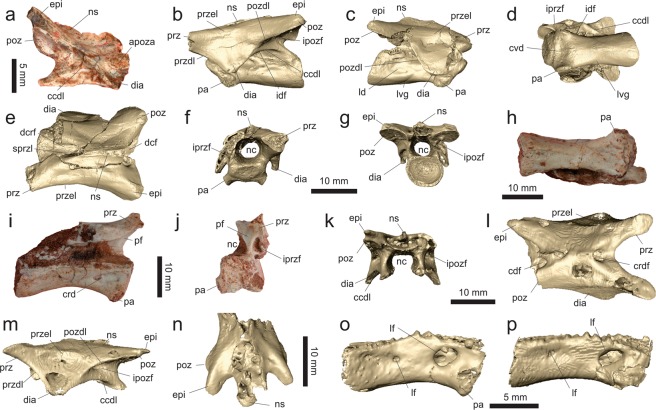
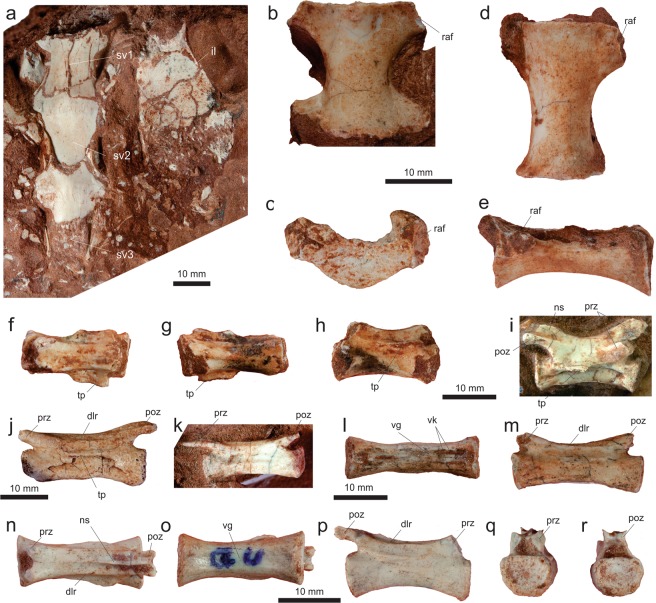
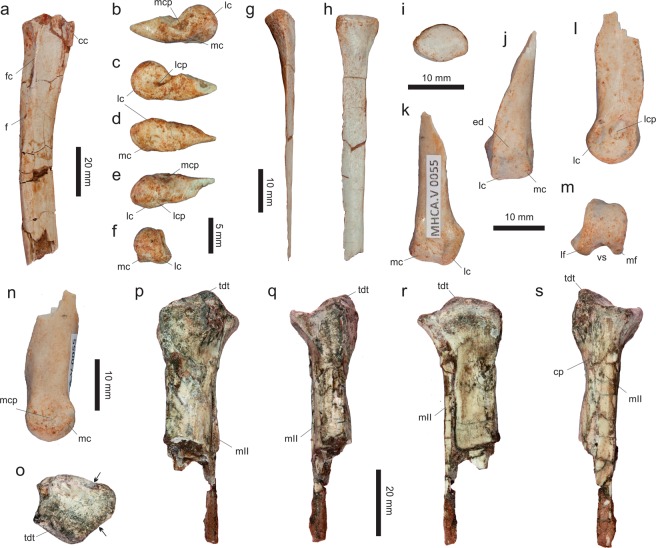
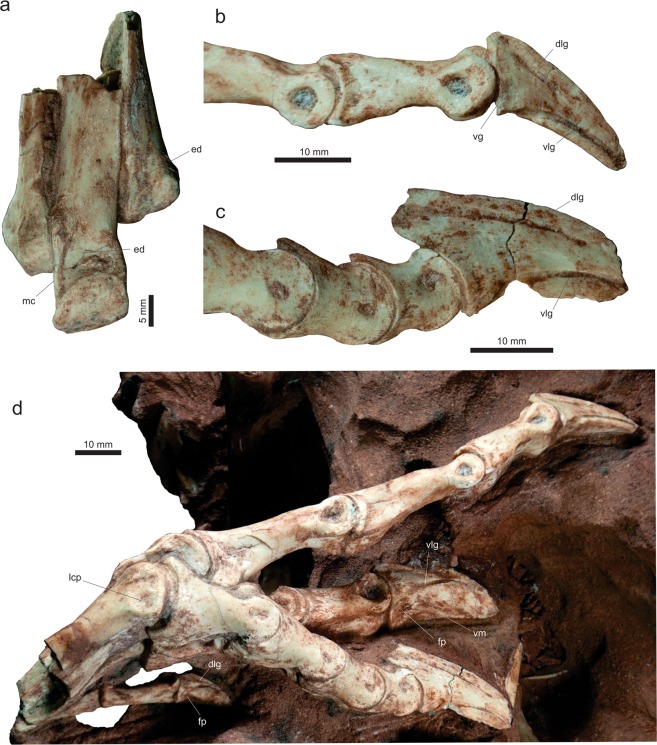
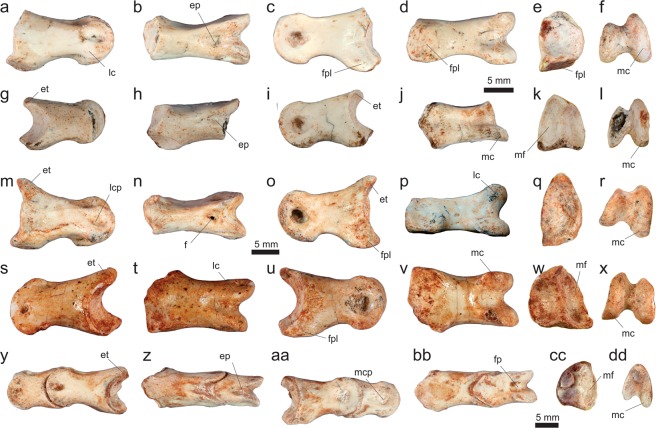
Noasaurines form an enigmatic group of small-bodied predatory theropod dinosaurs known from the Late Cretaceous of Gondwana. They are relatively rare, with notable records in Argentina and Madagascar, and possible remains reported for Brazil, India, and continental Africa. In south-central Brazil, the deposits of the Bauru Basin have yielded a rich tetrapod fauna, which is concentrated in the Bauru Group. The mainly aeolian deposits of the Caiuá Group, on the contrary, bear a scarce fossil record composed only of lizards, turtles, and pterosaurs. Here, we describe the first dinosaur of the Caiuá Group, which also represents the best-preserved theropod of the entire Bauru Basin known to date. The recovered skeletal parts (vertebrae, girdles, limbs, and scarce cranial elements) show that the new taxon was just over 1 m long, with a unique anatomy among theropods. The shafts of its metatarsals II and IV are very lateromedially compressed, as are the blade-like ungual phalanges of the respective digits. This implies that the new taxon could have been functionally monodactyl, with a main central weight-bearing digit, flanked by neighbouring elements positioned very close to digit III or even held free of the ground. Such anatomical adaptation is formerly unrecorded among archosaurs, but has been previously inferred from footprints of the same stratigraphic unit that yielded the new dinosaur. A phylogenetic analysis nests the new taxon within the Noasaurinae clade, which is unresolved because of the multiple alternative positions that Noasaurus leali can acquire in the optimal trees. The exclusion of the latter form results in positioning the new dinosaur as the sister-taxon of the Argentinean Velocisaurus unicus.
南美猎蜥龙类是一类神秘的小型兽脚亚目恐龙,已知来自冈瓦纳大陆的晚白垩世。它们相对较为罕见,在阿根廷和马达加斯加有显著的记录,在巴西、印度和非洲大陆也可能有报道。在巴西南中部,包鲁盆地的沉积物中产生了丰富的四足动物群,主要集中在包鲁组。相反,以风成沉积为主的凯乌阿组化石记录却很少,仅由蜥蜴、海龟和翼龙组成。在这里,我们描述了凯乌阿组的第一个恐龙,它也是迄今为止已知的整个包鲁盆地保存最完好的兽脚类恐龙。回收的骨骼部分(脊椎、腰带、肢体和稀少的头骨元素)表明,新的分类单元体长超过 1 米,具有独特的兽脚类解剖结构。其第二和第四跖骨的骨干非常内外侧压缩,相应的指爪状的趾骨也非常呈刀片状。这意味着新的分类单元可能具有功能性的单指,有一个主要的中央承重指,由相邻的元素侧翼支撑,这些相邻元素非常靠近第三指,甚至悬空不接触地面。这种解剖适应以前在恐龙中没有记录过,但以前从同一地层单位的足迹中推断出来过,这些足迹产生了新的恐龙。系统发育分析将新的分类单元置于南美猎蜥龙类的分支中,由于诺阿斯龙可以在最优树中获得多个替代位置,该分支仍未解决。排除后者的结果是将新恐龙定位为阿根廷 Velocisaurus unicus 的姐妹分类单元。