Gillespie Íde, Fletcher Daniel J, Stevenson Mark A, Boller Manuel
Faculty of Veterinary and Agricultural Sciences, Melbourne Veterinary School, University of Melbourne, Werribee, VIC, Australia.
Department of Clinical Sciences, College of Veterinary Medicine, Cornell University, Ithaca, NY, United States.
Front Vet Sci. 2019 Jun 11;6:181. doi: 10.3389/fvets.2019.00181. eCollection 2019.
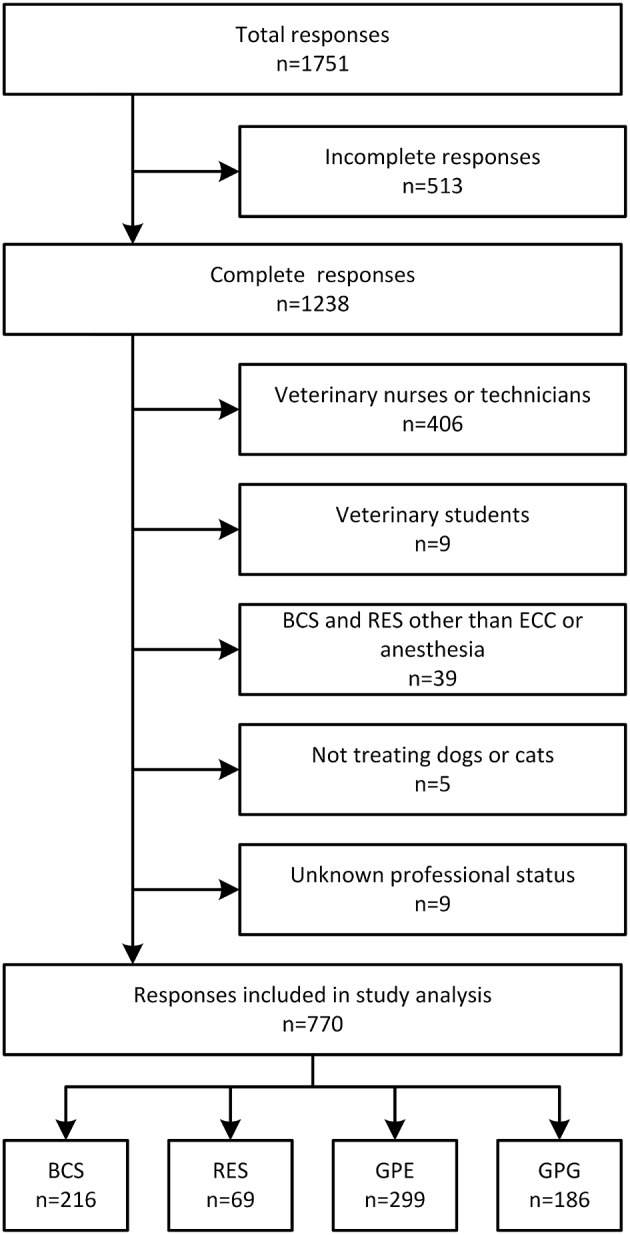
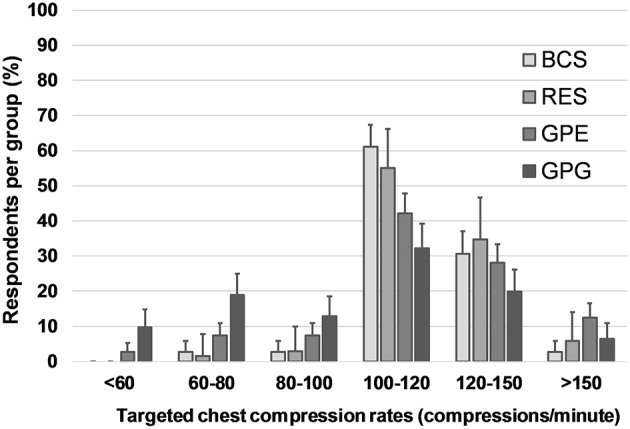
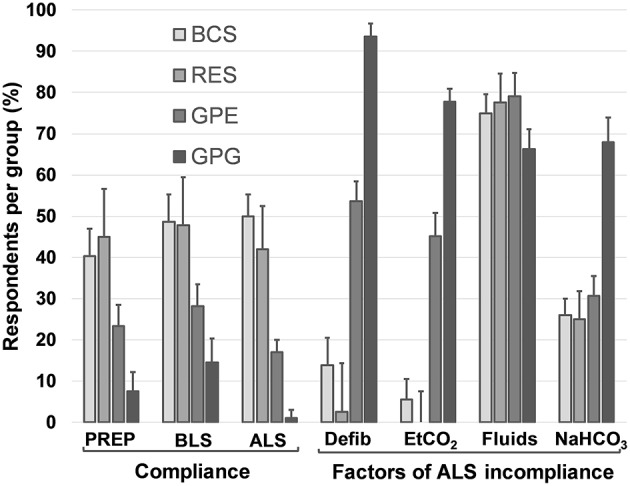
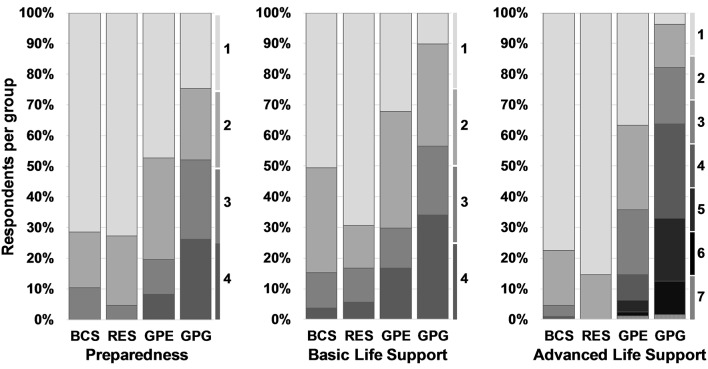
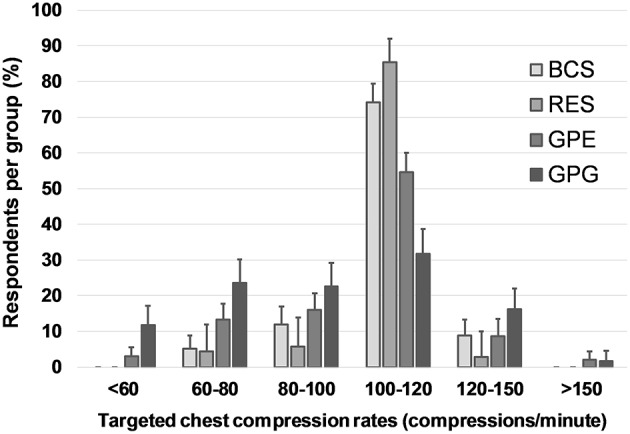
In 2012 the Reassessment Campaign on Veterinary Resuscitation (RECOVER) published evidence-based treatment recommendations for dogs and cats with cardiopulmonary arrest (CPA), to optimize the clinical practice of small animal CPR and positively impact outcomes. Six years after the release of these guidelines, we aimed to determine the compliance of small animal veterinary CPR practices with these RECOVER guidelines. To identify current CPR practices in clinically active small animal veterinarians and their awareness of the RECOVER guidelines, we conducted an internet-based survey. Survey invitations were disseminated internationally via veterinary professional organizations and their social media outlets. Questions explored respondent demographics, CPR preparedness, BLS and ALS techniques and awareness of RECOVER guidelines. Responding small animal veterinarians ( = 770) in clinical practice were grouped by level of expertise: board-certified specialists (BCS, = 216) and residents (RES, = 69) in anesthesia or emergency and critical care, practitioners in emergency (GPE, = 299) or general practice (GPG, = 186). Large disparities in preparedness measures, BLS and ALS techniques emerged among levels of expertise. Only 32% (95% CI: 29-36%) of respondents complied with BLS practice guidelines, varying from 49% (95% CI: 42-55%) of BCS to 15% (95% CI: 10-20%) of GPG. While incompliances in BCS, RES, and GPE were predominantly due to knowledge gaps, GPG compliance was further compromised by limitations in the resuscitation environment (e.g., defibrillator availability, team size). Those aware of RECOVER guidelines (100% of BCS and RES; 77% of GPE; 35% of GPG) were more likely to comply with recommended preparedness (OR = 2.4; 95% CI: 1.2-4.8), BLS (OR = 4.5; 95% CI: 2.4-9.1), and ALS techniques (OR = 7.8; 95% CI: 2.4-9.1) independent of age, gender, region of practice or level of expertise. We conclude that awareness of RECOVER guidelines is high in specialists and residents, but incomplete among general practitioners. This awareness positively influenced compliance with CPR guidelines, but CPR practices continue to be variable and largely not in agreement with guidelines. A widely accessible educational strategy is required to broadly improve compliance with best practices in small animal CPR.
2012年,兽医复苏重新评估运动(RECOVER)发布了针对心肺骤停(CPA)犬猫的循证治疗建议,以优化小动物心肺复苏(CPR)的临床实践并对治疗结果产生积极影响。这些指南发布六年之后,我们旨在确定小动物兽医CPR实践与这些RECOVER指南的符合情况。为了确定临床活跃的小动物兽医当前的CPR实践及其对RECOVER指南的认知,我们开展了一项基于网络的调查。调查邀请通过兽医专业组织及其社交媒体渠道在国际范围内传播。问题涉及受访者的人口统计学特征、CPR准备情况、基础生命支持(BLS)和高级生命支持(ALS)技术以及对RECOVER指南的认知。参与临床实践的小动物兽医受访者(n = 770)按专业水平分组:麻醉或急诊与重症护理领域的 board-certified specialists(BCS,n = 216)和住院医生(RES,n = 69)、急诊医生(GPE,n = 299)或全科医生(GPG,n = 186)。在准备措施、BLS和ALS技术方面,不同专业水平之间存在很大差异。只有32%(95%CI:29 - 36%)的受访者符合BLS实践指南,从BCS的49%(95%CI:42 - 55%)到GPG的15%(95%CI:10 - 20%)不等。虽然BCS、RES和GPE的不符合主要是由于知识差距,但GPG的符合情况因复苏环境的限制(如除颤器可用性、团队规模)而进一步受到影响。了解RECOVER指南的人(BCS和RES的100%;GPE的77%;GPG的35%)更有可能遵守推荐的准备措施(OR = 2.4;95%CI:1.2 - 4.8)、BLS(OR = 4.5;95%CI:2.4 - 9.1)和ALS技术(OR = 7.8;95%CI:2.4 - 9.1),且不受年龄、性别、执业地区或专业水平的影响。我们得出结论,专家和住院医生对RECOVER指南的认知度较高,但全科医生的认知不完整。这种认知对CPR指南的遵守产生了积极影响,但CPR实践仍然存在差异,且在很大程度上与指南不一致。需要一种广泛可用的教育策略来广泛提高小动物CPR最佳实践的遵守情况。