Park Sang-Hyuck, Scheffler Jodi, Scheffler Brian, Cantrell Charles L, Pauli Christopher S
Department of Biology Colorado State University-Pueblo Pueblo Colorado.
Agricultural Research Service Crop Genetics Research Unit USDA Stoneville Mississippi.
Plant Direct. 2019 May 17;3(5):e00141. doi: 10.1002/pld3.141. eCollection 2019 May.
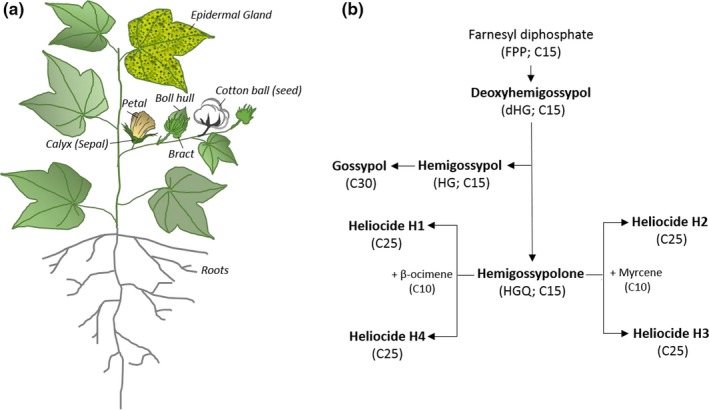
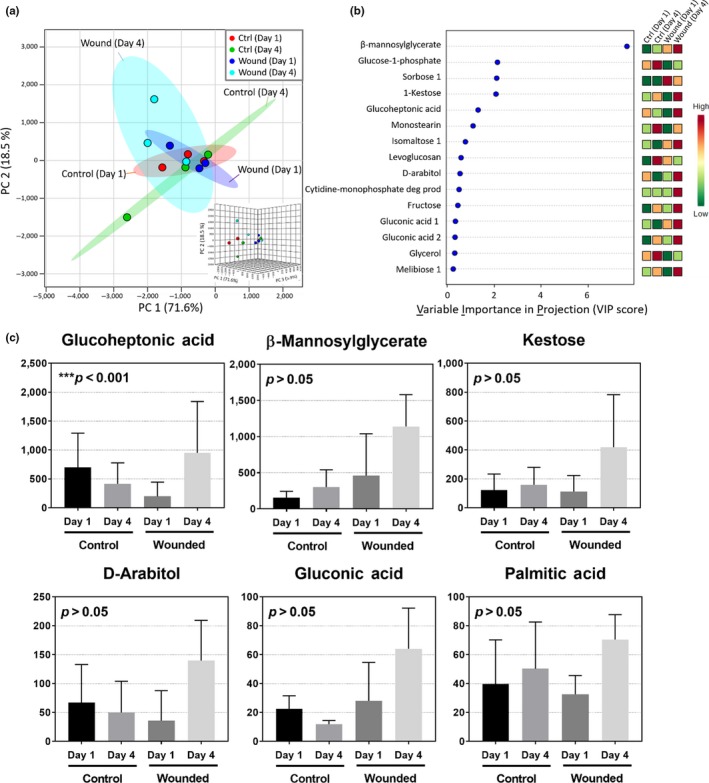
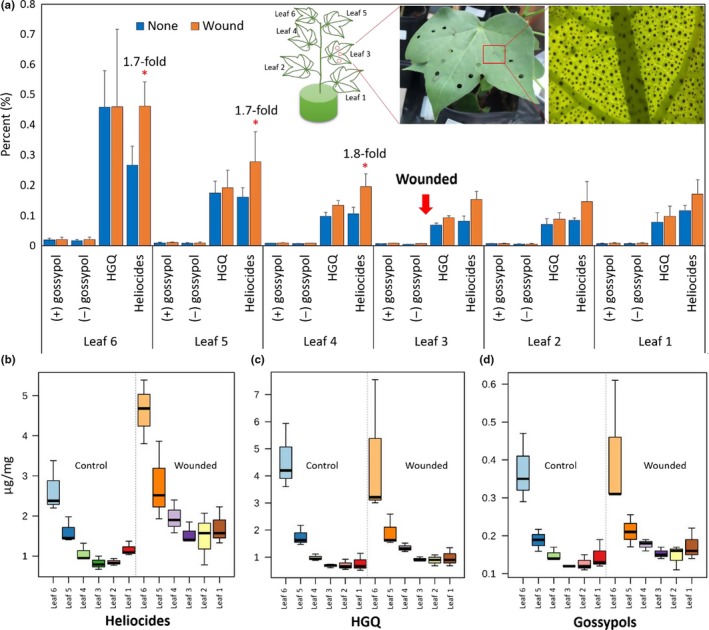
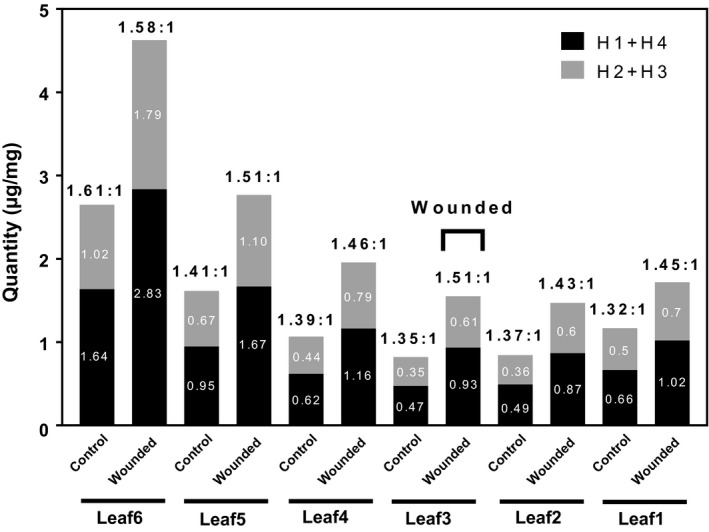
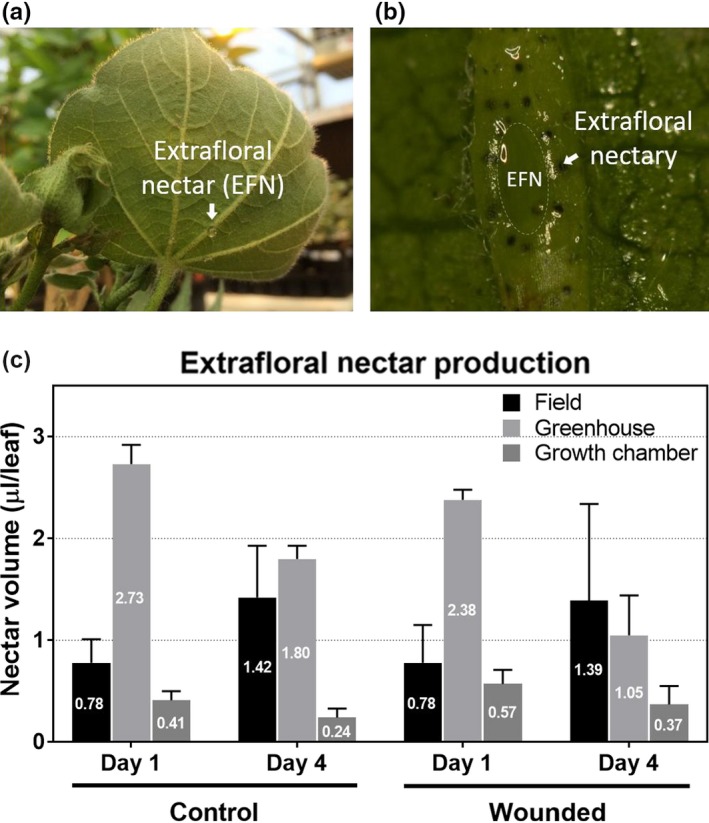
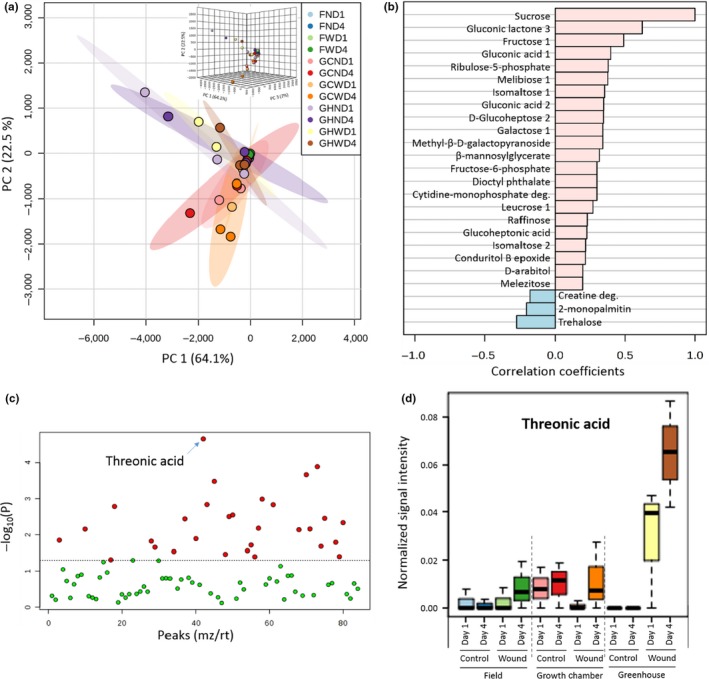
Upland cotton ( L.) produces terpenoid aldehydes (TAs) that protect the plant from microbial and insect infestations. Foliar TAs include plus (+)- and minus (-)-gossypol, hemigossypolone, and heliocides. To examine foliar TAs' response to physical wounding, the four TA derivatives of a fully glanded variety JACO GL were quantified by ultra-high performance liquid chromatography. The results show that foliar heliocides increased by 1.7-fold in younger leaves after wounding. While the hemigossypolone level was not affected by the physical wounding, the level of heliocides was significantly increased up to 1.8-fold in the younger leaves. Upland cotton accumulates concentrated carbohydrates, amino acids, and fatty acids in foliar extrafloral nectar (EFN) to serve as a nutrient resource, which attracts both beneficial insects and damaging pests. To better understand the nectar physiology, particularly to determine the temporal dynamics of EFN metabolites in response to the wounding, a gas chromatograph-mass spectrometer (GC-MS) was used to perform metabolic profiling analyses of a variety Deltapine 383 that has fully developed extrafloral nectaries. A total of 301 compounds were monitored, specifically 75 primary metabolites, two secondary metabolites and 224 unidentified compounds. The physical wounding treatment changed the EFN composition and lowered overall production. The accumulation of 30 metabolites was altered in response to the wounding treatment and threonic acid levels increased consistently. GC-MS combined with Kovat's analysis enabled identification of EFN secondary metabolites including furfuryl alcohol and 5-hyrdomethoxyfurfural, which both have antioxidant and antimicrobial properties that may protect the nectar against microbial pathogens. This study provides new insights into the wounding response of cotton plants in terms of cotton metabolites found in leaf glands and extrafloral nectar as well as highlighting some protective functions of secondary metabolites produced in foliar glands and extrafloral nectaries.
陆地棉(Gossypium hirsutum L.)会产生萜类醛(TAs),保护植株免受微生物和昆虫侵害。叶片中的TAs包括(+)-和(-)-棉酚、半棉酚酮以及半日花素。为研究叶片TAs对物理损伤的响应,通过超高效液相色谱法对完全具腺体品种JACO GL的四种TA衍生物进行了定量分析。结果表明,受伤后幼叶中的叶片半日花素增加了1.7倍。虽然半棉酚酮水平不受物理损伤影响,但幼叶中半日花素水平显著增加,最高可达1.8倍。陆地棉在叶片的花外蜜腺(EFN)中积累浓缩的碳水化合物、氨基酸和脂肪酸,作为一种营养资源,这既吸引有益昆虫,也吸引有害害虫。为更好地了解花蜜生理学,特别是确定EFN代谢产物对损伤的时间动态变化,使用气相色谱-质谱联用仪(GC-MS)对具有完全发育花外蜜腺的品种Deltapine 383进行代谢谱分析。总共监测了301种化合物,具体包括75种初级代谢产物、两种次级代谢产物和224种未鉴定化合物。物理损伤处理改变了EFN的组成并降低了总体产量。30种代谢产物的积累因损伤处理而改变,苏糖酸水平持续增加。GC-MS结合科瓦特分析能够鉴定出EFN中的次级代谢产物,包括糠醇和5-羟基甲氧基糠醛,它们都具有抗氧化和抗菌特性,可能保护花蜜免受微生物病原体侵害。这项研究在棉花叶片腺体和花外蜜腺中发现的棉花代谢产物方面,为棉花植株的损伤响应提供了新见解,同时突出了叶片腺体和花外蜜腺中产生的次级代谢产物的一些保护功能。