Department of Electrical and Computer Engineering, Texas Tech University, Lubbock, TX 79409, USA.
Educational Psychology and Leadership, Texas Tech University, Lubbock, TX 79409, USA.
Sensors (Basel). 2019 Jun 26;19(13):2846. doi: 10.3390/s19132846.
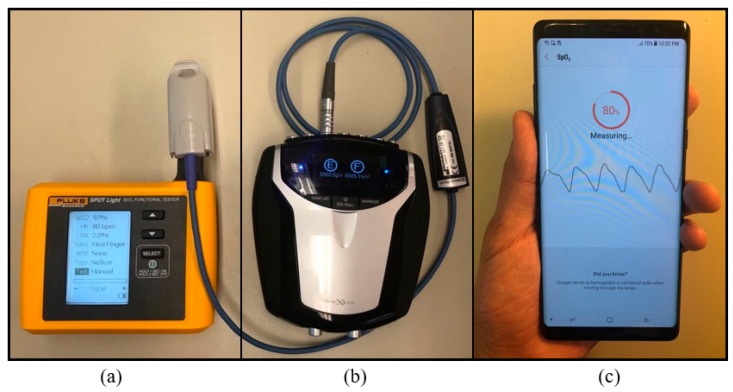
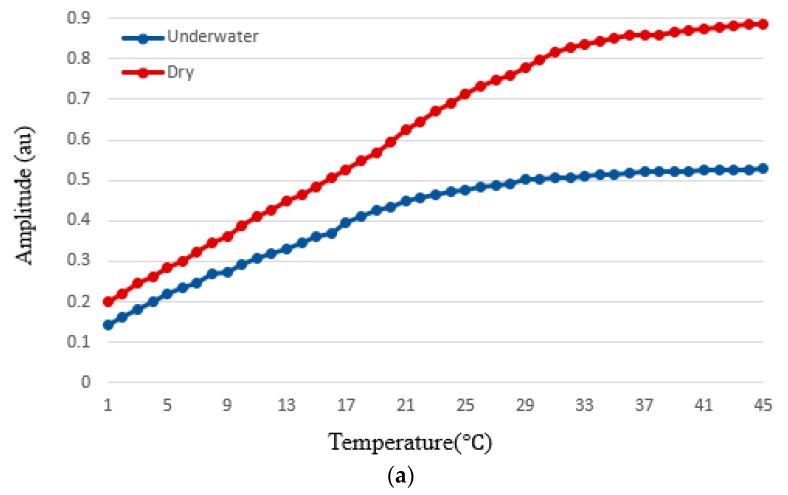
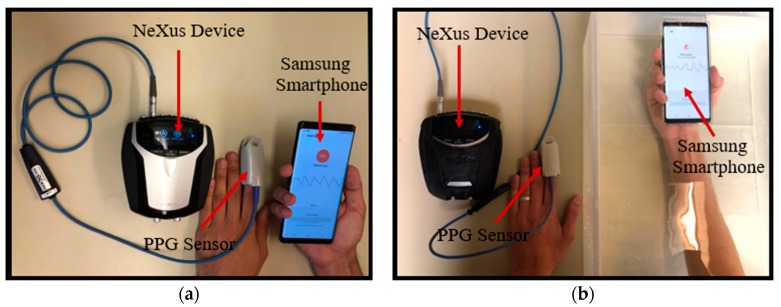
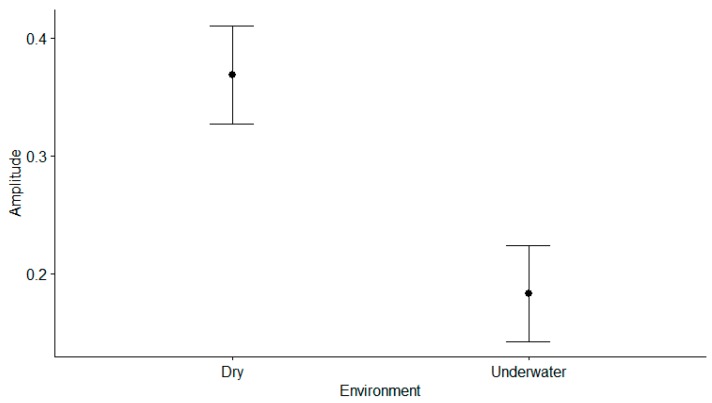
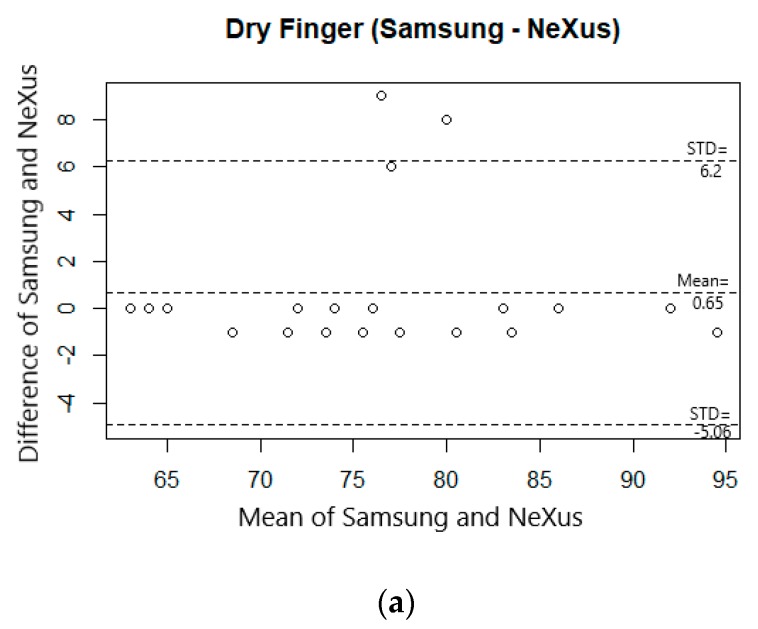
Photoplethysmography (PPG) is a commonly used in determining heart rate and oxygen saturation (SpO). However, PPG measurements and its accuracy are heavily affected by the measurement procedure and environmental factors such as light, temperature, and medium. In this paper, we analyzed the effects of different mediums (water vs. air) and temperature on the PPG signal quality and heart rate estimation. To evaluate the accuracy, we compared our measurement output with a gold-standard PPG device (NeXus-10 MKII). The experimental results show that the average PPG signal amplitude values of the underwater environment decreased considerably (22% decrease) compared to PPG signals of dry environments, and the heart rate measurement deviated 7% (5 beats per minute on average. The experimental results also show that the signal to noise ratio (SNR) and signal amplitude decrease as temperature decreases. Paired -test which compares amplitude and heart rate values between the underwater and dry environments was performed and the test results show statistically significant differences for both amplitude and heart rate values ( < 0.05). Moreover, experimental results indicate that decreasing the temperature from 45 °C to 5 °C or changing the medium from air to water decreases PPG signal quality, (e.g., PPG signal amplitude decreases from 0.560 to 0.112). The heart rate is estimated within 5.06 bpm deviation at 18 °C in underwater environment, while estimation accuracy decreases as temperature goes down.
光电容积脉搏波描记法(PPG)常用于测量心率和血氧饱和度(SpO2)。然而,PPG 测量及其准确性受到测量程序和环境因素(如光、温度和介质)的严重影响。在本文中,我们分析了不同介质(水与空气)和温度对 PPG 信号质量和心率估计的影响。为了评估准确性,我们将我们的测量结果与金标准 PPG 设备(NeXus-10 MKII)进行了比较。实验结果表明,水下环境的平均 PPG 信号幅度值与干燥环境相比显著降低(降低 22%),心率测量偏差为 7%(平均每分钟 5 次)。实验结果还表明,随着温度的降低,信噪比(SNR)和信号幅度减小。我们对水下和干燥环境中的幅度和心率值进行了配对检验,结果表明幅度和心率值均存在统计学差异(<0.05)。此外,实验结果表明,从 45°C 降低到 5°C 或从空气改为水会降低 PPG 信号质量,(例如,PPG 信号幅度从 0.560 降低到 0.112)。在水下环境中,18°C 时心率估计的偏差在 5.06 bpm 以内,而随着温度的降低,估计精度会降低。