Department of Biochemistry, Covenant University, Ota, 23401, Nigeria.
Department of Biological Sciences, Covenant University, Ota, 23401, Nigeria.
Malar J. 2019 Jun 27;18(1):218. doi: 10.1186/s12936-019-2833-8.
Malaria eradication globally is yet to be achieved and transmission is sustained in many endemic countries. Plasmodium falciparum continues to develop resistance to currently available anti-malarial drugs, posing great problems for malaria elimination. This study evaluates the frequencies of asymptomatic infection and multidrug resistance-1 (mdr-1) gene mutations in parasite isolates, which form the basis for understanding persistently high incidence in South West, Nigeria.
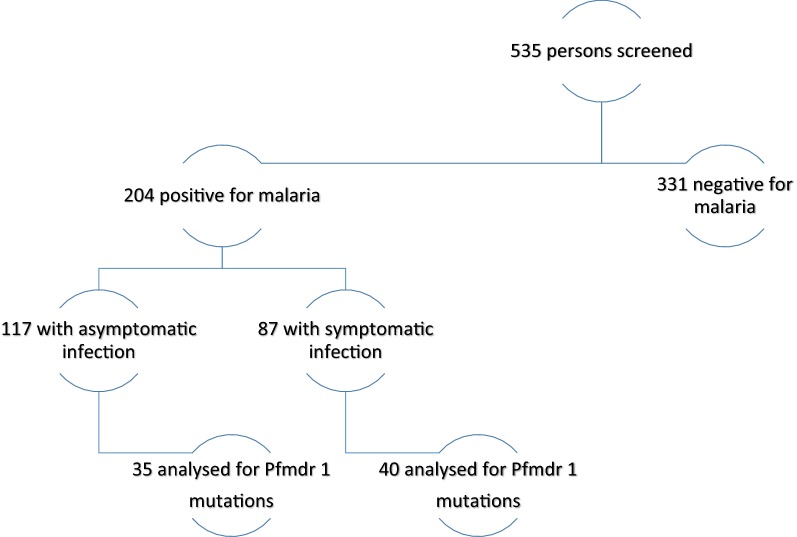
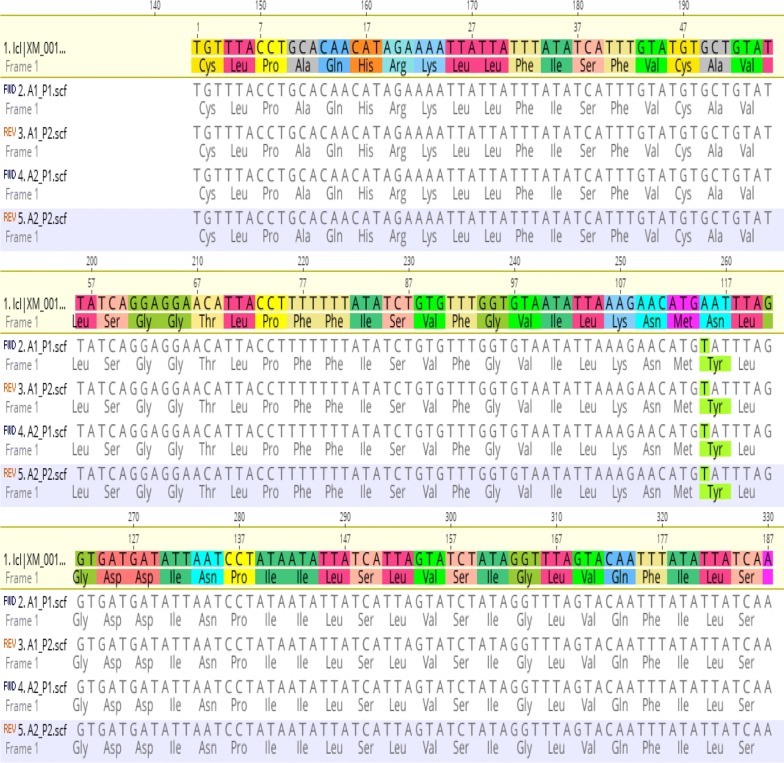
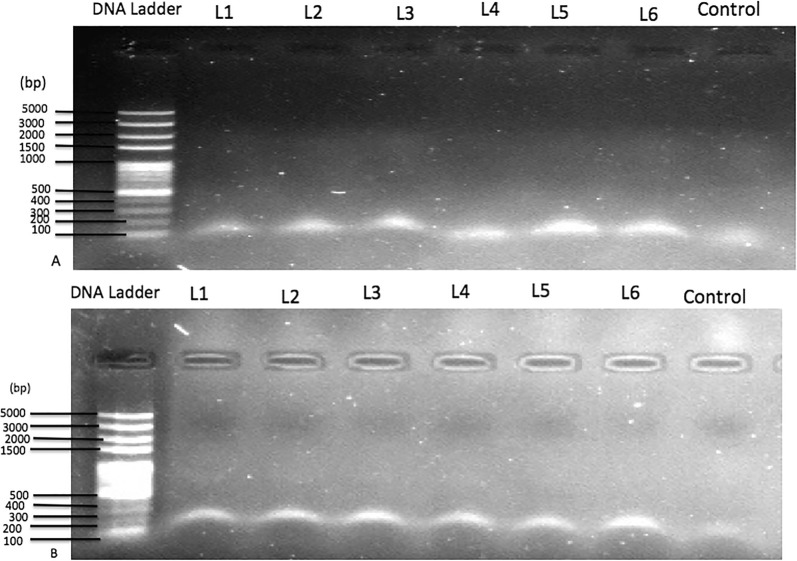
A total of 535 individuals aged from 6 months were screened during the epidemiological survey evaluating asymptomatic transmission. Parasite prevalence was determined by histidine-rich protein II rapid detection kit (RDT) in healthy individuals. Plasmodium falciparum mdr-1 gene mutations were detected by polymerase chain reaction (PCR) followed by restriction enzyme digest and electrophoresis to determine polymorphism in parasite isolates. Sequencing was done to confirm polymorphism. Proportions were compared using Chi-square test at p value < 0.05.
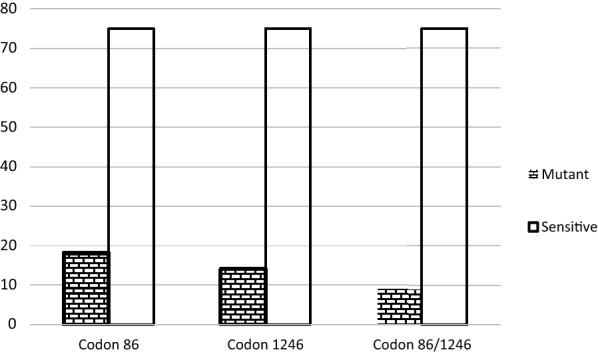
Malaria parasites were detected by RDT in 204 (38.1%) individuals. Asymptomatic infection was detected in 117 (57.3%) and symptomatic malaria confirmed in 87 individuals (42.6%). Overall, individuals with detectable malaria by RDT was significantly higher in individuals with symptoms, 87 of 197 (44.2%), than asymptomatic persons; 117 of 338 (34.6%), p = 0.02. In a sub-set of 75 isolates, 18(24%) and 14 (18.6%) individuals had Pfmdr1 86Y and 1246Y mutations.
There is still high malaria transmission rate in Nigeria with higher incidence of asymptomatic infections. These parasites harbour mutations on Pfmdr1 which contribute to artemisinin partner drug resistance; surveillance strategies to reduce the spread of drug resistance in endemic areas are needed to eliminate the reservoir of malaria parasites that can mitigate the eradication of malaria in Nigeria.
全球尚未实现疟疾消除,许多流行国家仍存在疟疾传播。恶性疟原虫继续对现有抗疟药物产生耐药性,这给疟疾消除带来了巨大问题。本研究评估了寄生虫分离株中无症状感染和多药耐药 1 号(mdr-1)基因突变的频率,这是了解尼日利亚西南部持续高发病率的基础。
在评估无症状传播的流行病学调查中,共筛查了 535 名 6 个月以上的个体。健康个体采用富含组氨酸蛋白 II 快速检测试剂盒(RDT)确定寄生虫患病率。采用聚合酶链反应(PCR)检测恶性疟原虫 mdr-1 基因突变,然后用限制性内切酶消化和电泳确定寄生虫分离株的多态性。测序用于确认多态性。用卡方检验比较比例,p 值<0.05。
RDT 在 204 名(38.1%)个体中检测到疟原虫。117 名(57.3%)个体检测到无症状感染,87 名(42.6%)个体确诊为有症状疟疾。总体而言,RDT 检测到可检测疟疾的个体中,有症状者 87 例(44.2%)明显高于无症状者 117 例(34.6%),p=0.02。在 75 个分离株的子集中,18(24%)和 14(18.6%)个体有 Pfmdr1 86Y 和 1246Y 突变。
尼日利亚仍存在高疟疾传播率,无症状感染发病率较高。这些寄生虫携带 Pfmdr1 突变,导致与青蒿素联合用药耐药;需要监测策略来减少耐药性在流行地区的传播,以消除可以减轻尼日利亚疟疾消除的寄生虫库。