Department of Biomedical Sciences, College of Health Sciences, University of Wisconsin, 2400 E. Hartford Avenue, Milwaukee, WI, 53211, USA.
Department of Pharmaceutics and Pharmaceutical Technology, Faculty of Pharmacy, University of Lagos, Lagos, Nigeria.
Malar J. 2019 Sep 18;18(1):319. doi: 10.1186/s12936-019-2947-z.
Plasmodium falciparum, the deadliest causative agent of malaria, has high prevalence in Nigeria. Drug resistance causing failure of previously effective drugs has compromised anti-malarial treatment. On this basis, there is need for a proactive surveillance for resistance markers to the currently recommended artemisinin-based combination therapy (ACT), for early detection of resistance before it become widespread.
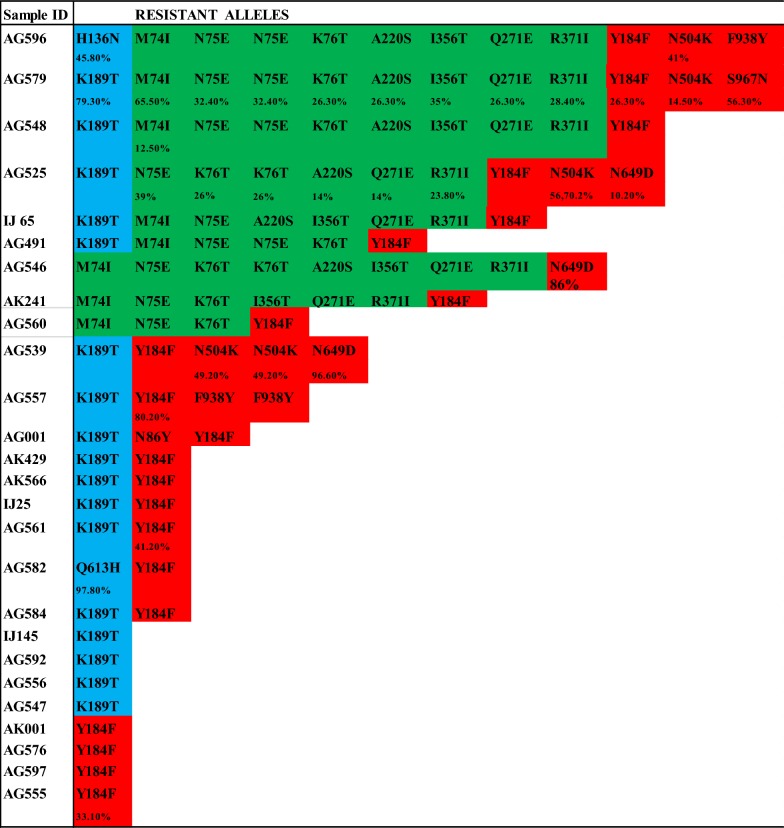
This study assessed anti-malarial resistance genes polymorphism in patients with uncomplicated P. falciparum malaria in Lagos, Nigeria. Sanger and Next Generation Sequencing (NGS) methods were used to screen for mutations in thirty-seven malaria positive blood samples targeting the P. falciparum chloroquine-resistance transporter (Pfcrt), P. falciparum multidrug-resistance 1 (Pfmdr1), and P. falciparum kelch 13 (Pfk13) genes, which have been previously associated with anti-malarial resistance.
Expectedly, the NGS method was more proficient, detecting six Pfmdr1, seven Pfcrt and three Pfk13 mutations in the studied clinical isolates from Nigeria, a malaria endemic area. These mutations included rare Pfmdr1 mutations, N504K, N649D, F938Y and S967N, which were previously unreported. In addition, there was moderate prevalence of the K76T mutation (34.6%) associated with chloroquine and amodiaquine resistance, and high prevalence of the N86 wild type allele (92.3%) associated with lumefantrine resistance.
Widespread circulation of mutations associated with resistance to current anti-malarial drugs could potentially limit effective malaria therapy in endemic populations.
恶性疟原虫是导致疟疾的最致命病原体,在尼日利亚流行率很高。药物耐药性导致先前有效的药物治疗失败,从而影响了抗疟治疗。在此基础上,需要对目前推荐的青蒿素为基础的联合治疗(ACT)的耐药标志物进行主动监测,以便在耐药性广泛传播之前及早发现耐药性。
本研究评估了尼日利亚拉各斯地区无并发症恶性疟原虫疟疾患者的抗疟药物耐药基因多态性。采用 Sanger 和下一代测序(NGS)方法对 37 份疟疾阳性血液样本进行了靶向疟原虫氯喹耐药转运蛋白(Pfcrt)、疟原虫多药耐药 1 型(Pfmdr1)和疟原虫 Kelch13 型(PfK13)基因的突变筛查,这些基因之前与抗疟药物耐药性相关。
不出所料,NGS 方法更高效,在尼日利亚这一疟疾流行地区的研究临床分离株中检测到 6 种 Pfmdr1、7 种 Pfcrt 和 3 种 PfK13 突变。这些突变包括以前未报道的罕见 Pfmdr1 突变 N504K、N649D、F938Y 和 S967N。此外,与氯喹和阿莫地喹耐药相关的 K76T 突变有中度流行率(34.6%),与卢米芬耐药相关的 N86 野生型等位基因有高流行率(92.3%)。
与目前抗疟药物耐药相关的突变广泛传播,可能会限制流行地区的有效疟疾治疗。