Cugno Massimo, Depetri Federica, Gnocchi Laura, Porro Fernando, Bucciarelli Paolo
Division of Internal Medicine, Department of Pathophysiology and Transplantation, Università degli Studi di Milano, Milan, Italy.
Angelo Bianchi Bonomi Hemophilia and Thrombosis Center, Fondazione IRCCS Ca' Granda Ospedale Maggiore Policlinico, Milan, Italy.
TH Open. 2018 Sep 6;2(3):e265-e271. doi: 10.1055/s-0038-1669427. eCollection 2018 Jul.
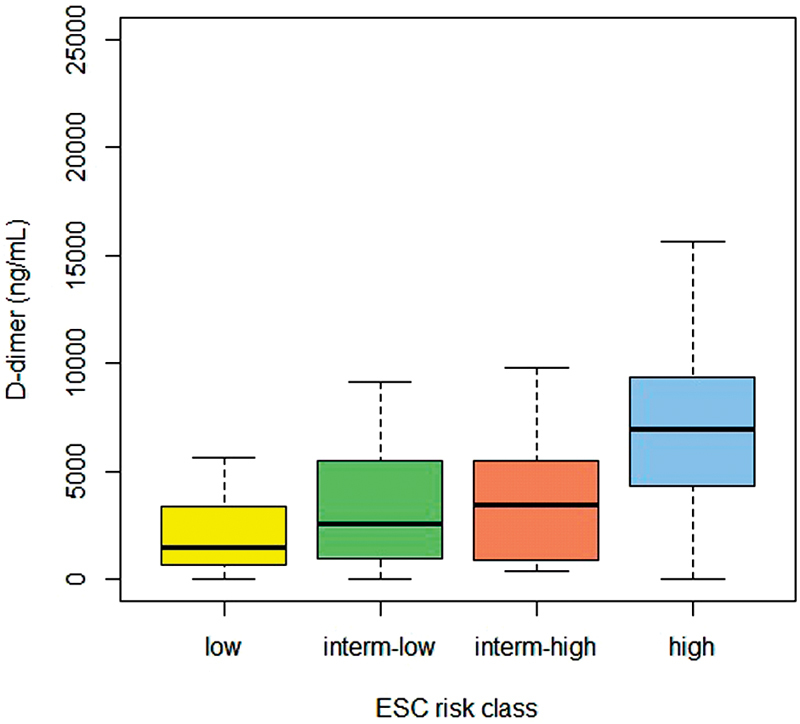
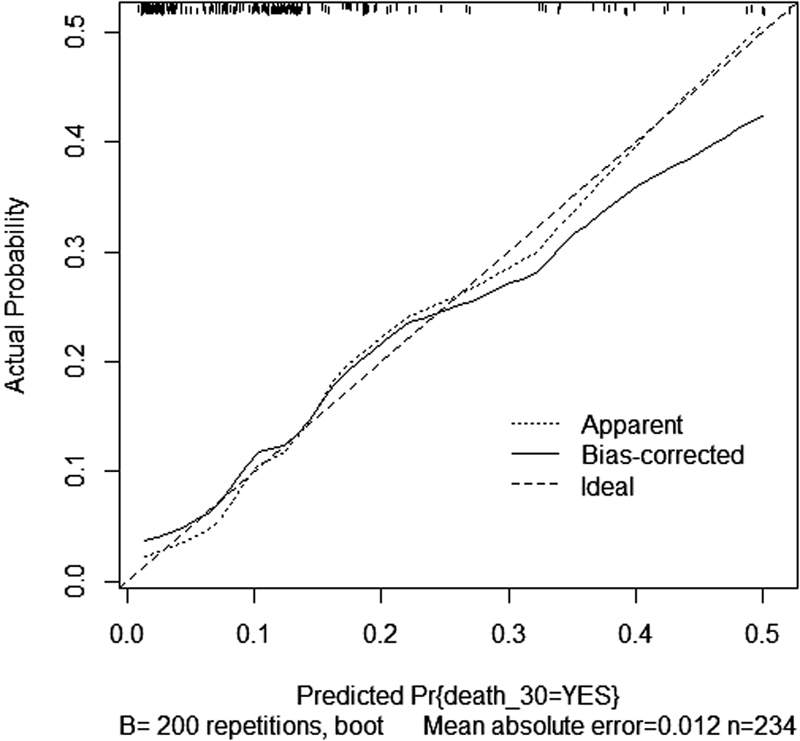
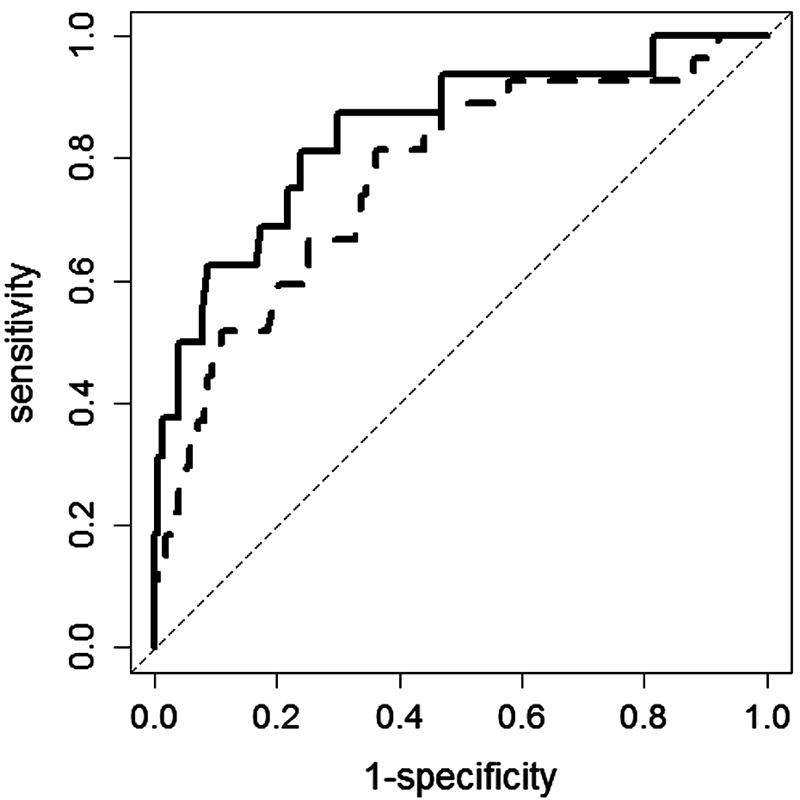
Acute pulmonary embolism (PE) is burdened by high mortality, especially within 30 days from the diagnosis. The development and the validation of predictive models for the risk of early mortality allow to differentiate patients who can undergo home treatment from those who need admission into intensive care units. To validate the prognostic model for early mortality after PE diagnosis proposed by the European Society of Cardiology (ESC) in 2014, we analyzed data of a cohort of 272 consecutive patients with acute PE, observed in our hospital during a 10-year period. Moreover, we evaluated the additional contribution of D-dimer, measured at PE diagnosis, in improving the prognostic ability of the model. All cases of PE were objectively diagnosed by angiography chest CT scan or perfusion lung scan. The overall mortality rate within 30 days from PE diagnosis was 10% (95% confidence interval [CI]: 6.4-13.5%). According to the ESC prognostic model, the risk of death increased 3.23 times in the intermediate-low-risk category, 5.55 times in the intermediate-high-risk category, and 23.78 times in the high-risk category, as compared with the low-risk category. The receiver operating characteristic analysis showed a good discriminatory power of the model (area under the curve [AUC] = 0.77 [95% CI: 0.67-0.87]), which further increased when D-dimer was added (AUC = 0.85 [95% CI: 0.73-0.96]). This study represents a good validation of the ESC predictive model whose performance can be further improved by adding D-dimer plasma levels measured at PE diagnosis.
急性肺栓塞(PE)死亡率高,尤其是在诊断后的30天内。开发和验证早期死亡风险预测模型有助于区分可接受居家治疗的患者和需要入住重症监护病房的患者。为了验证欧洲心脏病学会(ESC)在2014年提出的PE诊断后早期死亡的预后模型,我们分析了在我院10年期间观察到的272例连续急性PE患者队列的数据。此外,我们评估了在PE诊断时测量的D-二聚体对提高模型预后能力的额外贡献。所有PE病例均通过胸部CT血管造影或肺灌注扫描客观诊断。PE诊断后30天内的总死亡率为10%(95%置信区间[CI]:6.4-13.5%)。根据ESC预后模型,与低风险类别相比,中低风险类别死亡风险增加3.23倍,中高风险类别增加5.55倍,高风险类别增加23.78倍。受试者工作特征分析显示该模型具有良好的辨别力(曲线下面积[AUC]=0.77[95%CI:0.67-0.87]),加入D-二聚体后辨别力进一步提高(AUC=0.85[95%CI:0.73-0.96])。本研究很好地验证了ESC预测模型,通过加入PE诊断时测量的D-二聚体血浆水平,其性能可进一步提高。