Vukmanovic Z, Holness M B, Monks K, Andersen J C Ø
1Department of Earth Sciences, University of Cambridge, Downing Street, Cambridge, CB2 3EQ UK.
2Camborne School of Mines, College of Engineering, Mathematics and Physical Sciences, University of Exeter, Penryn Campus, Penryn, Cornwall TR10 9FE UK.
Contrib Mineral Petrol. 2018;173(5):43. doi: 10.1007/s00410-018-1466-1. Epub 2018 Apr 25.
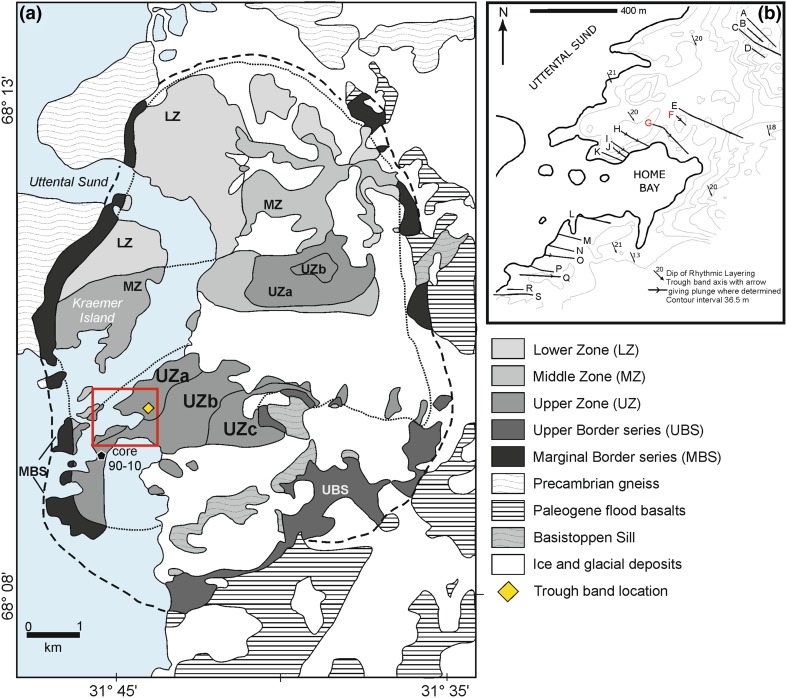
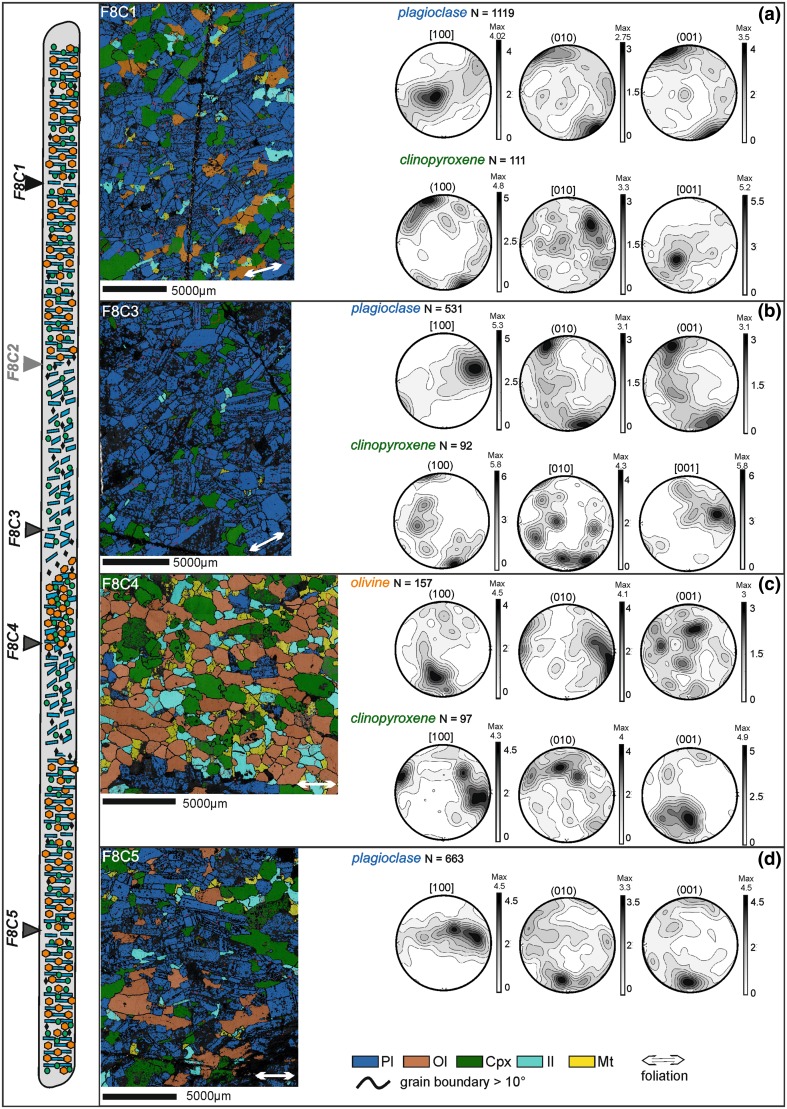
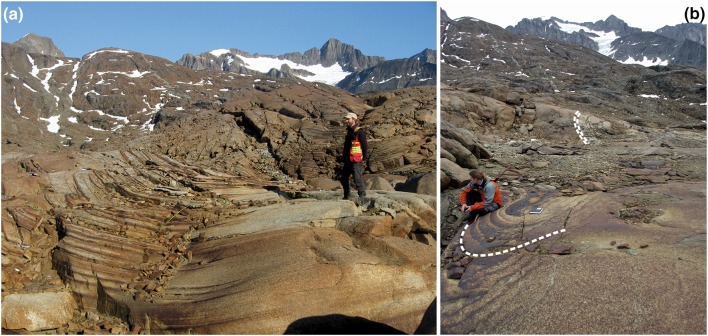
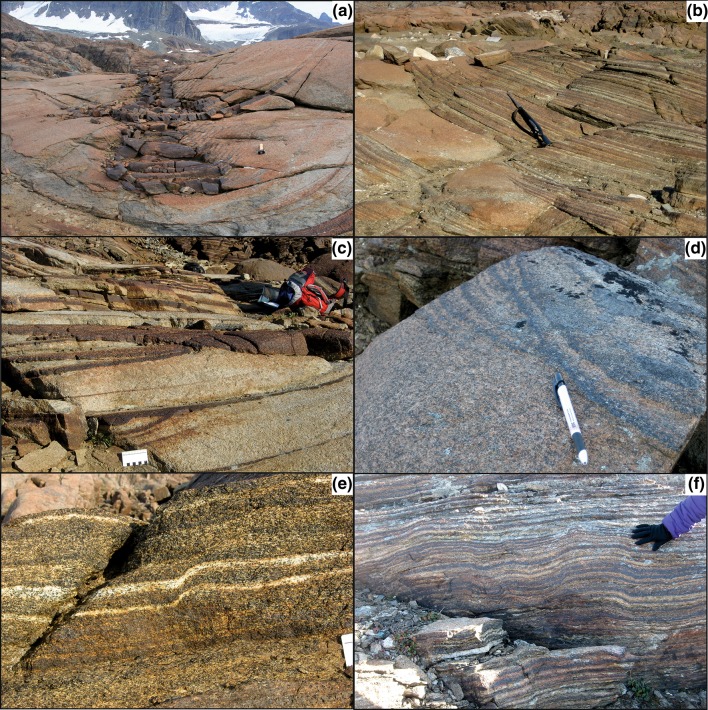
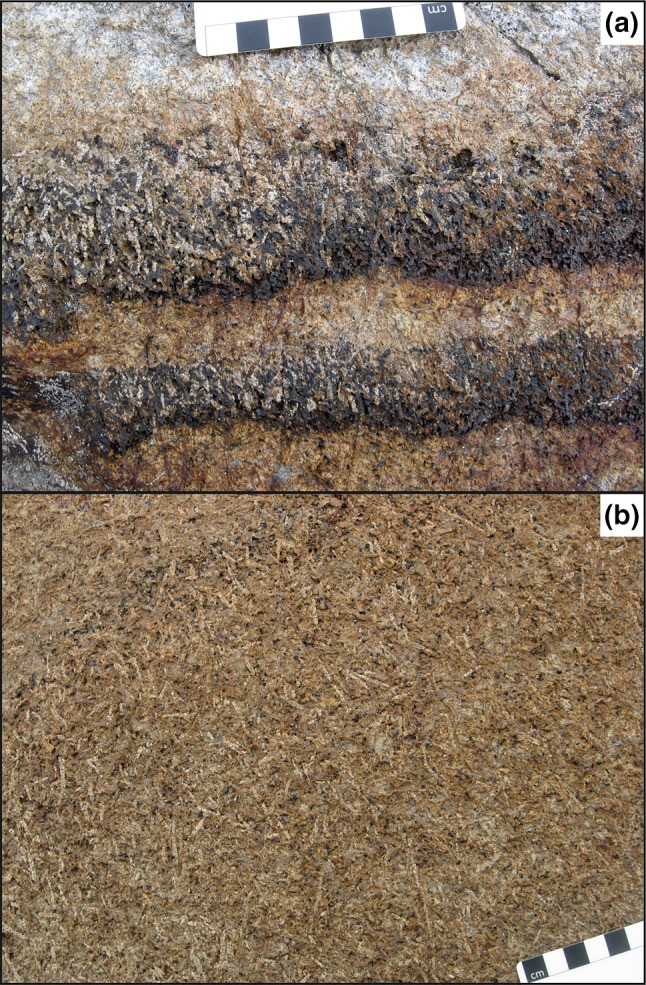
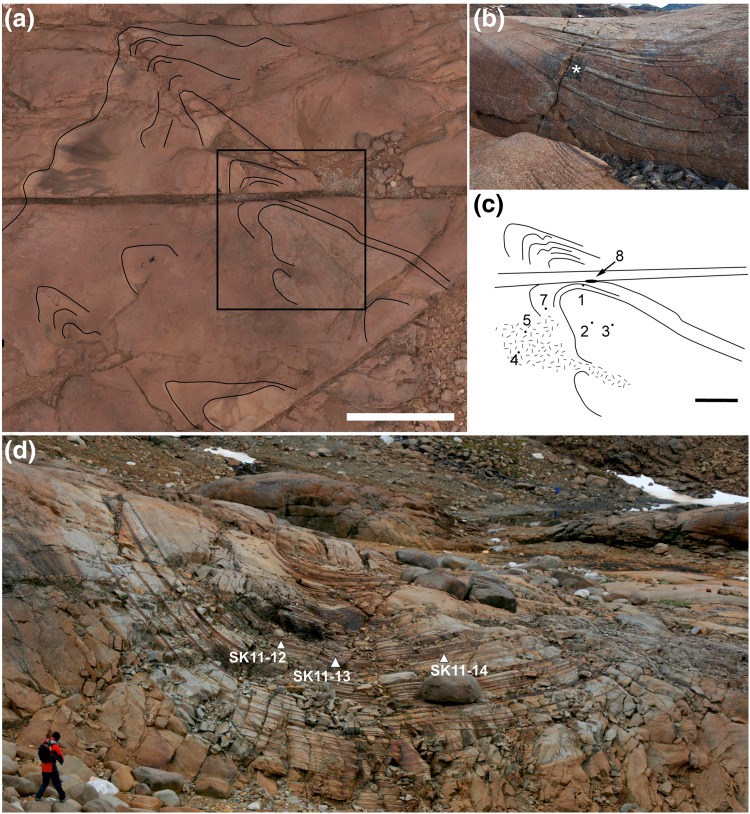
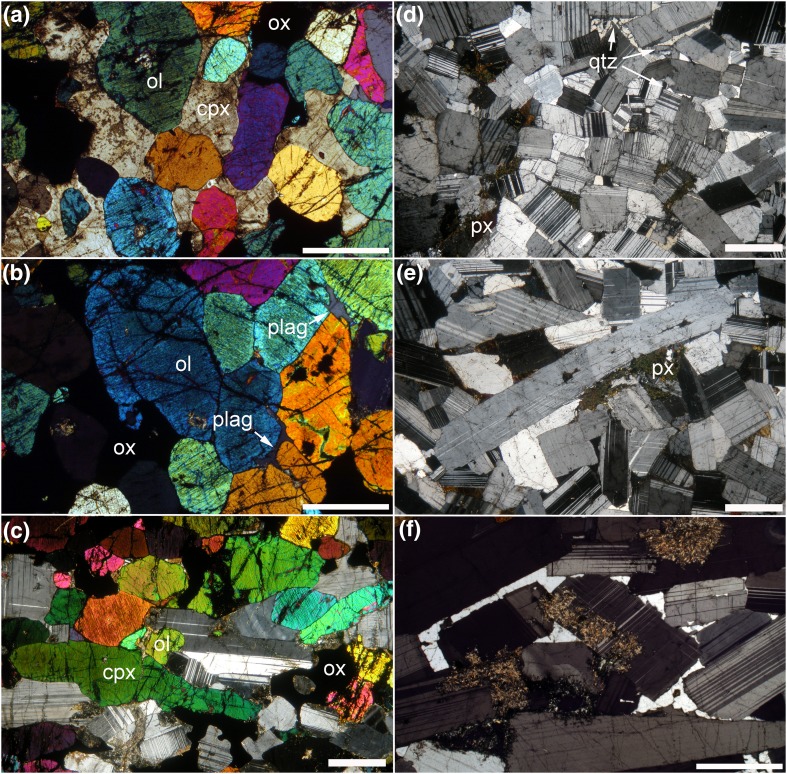
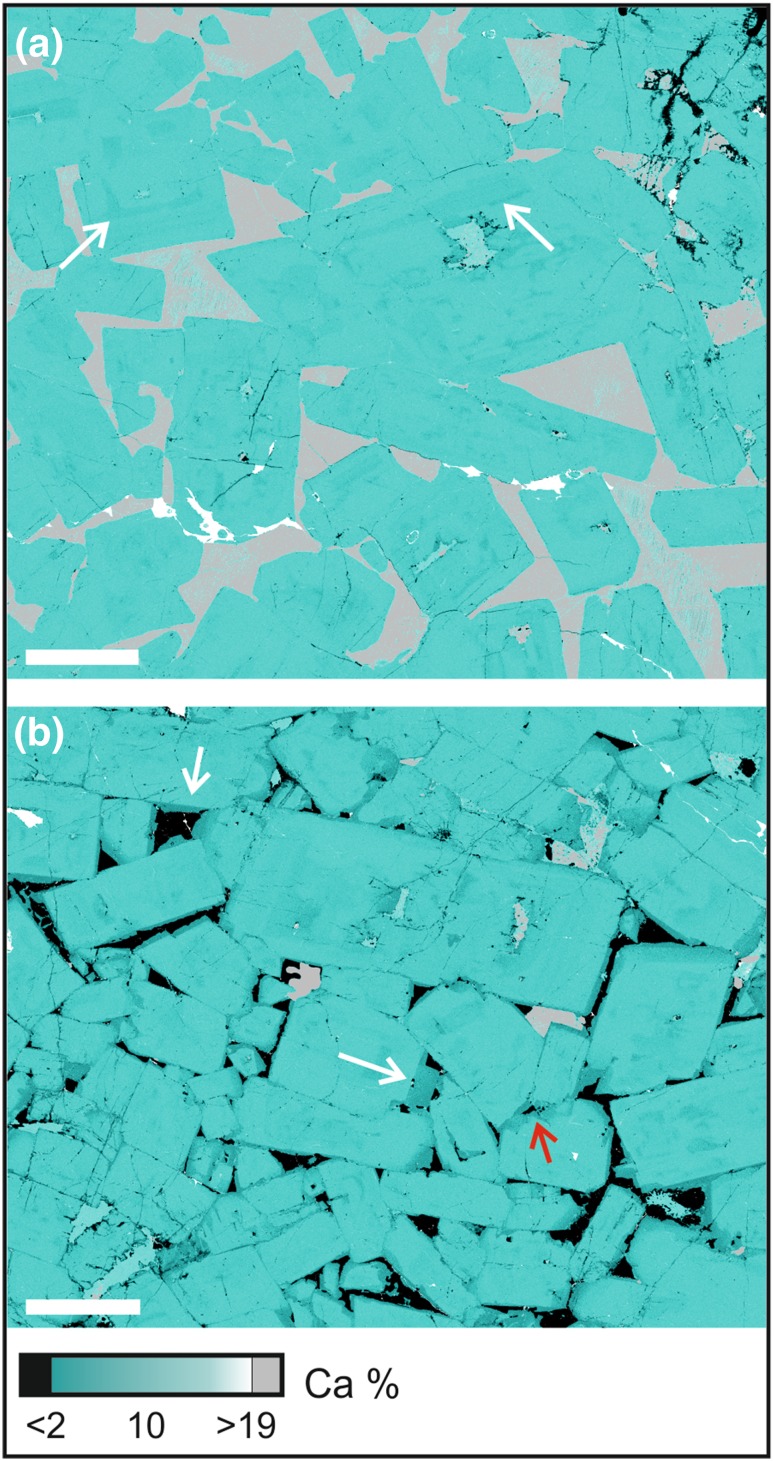
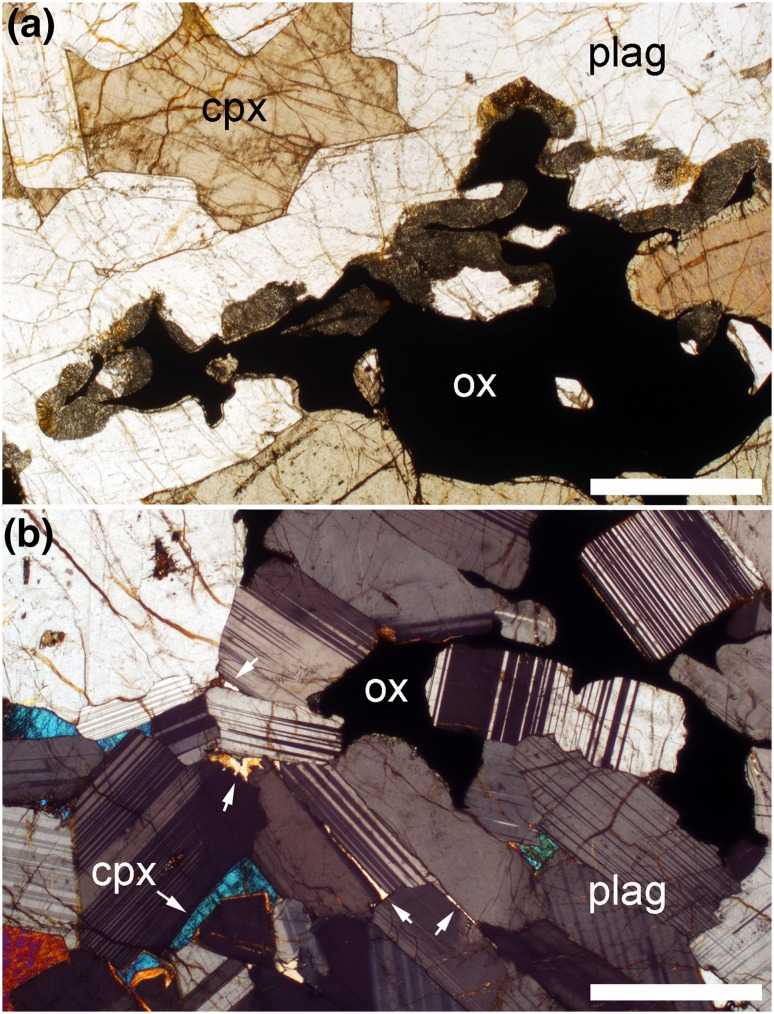
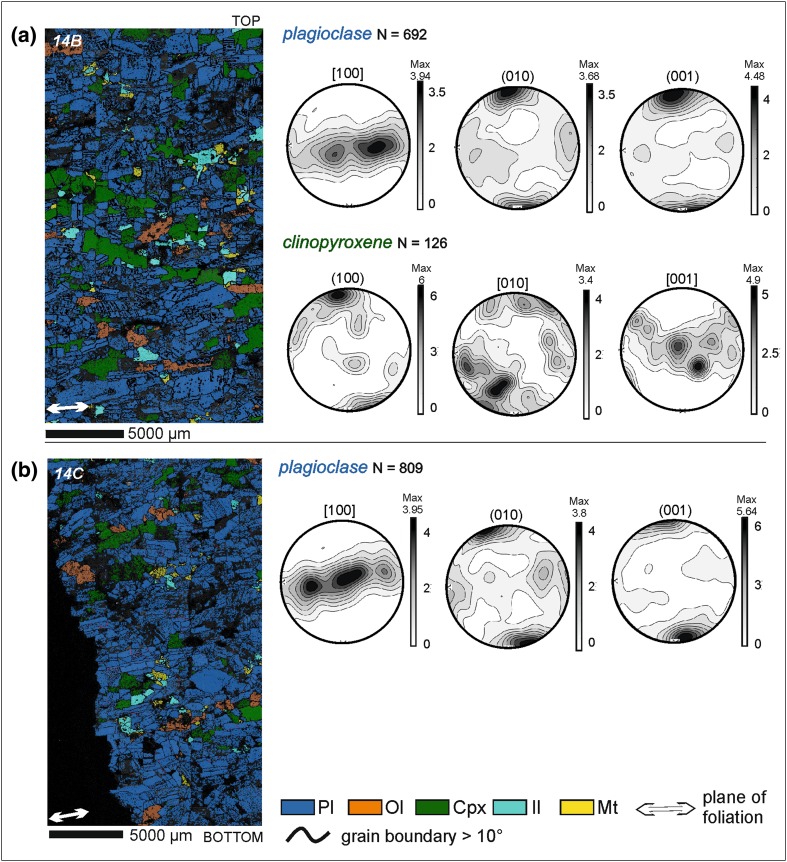
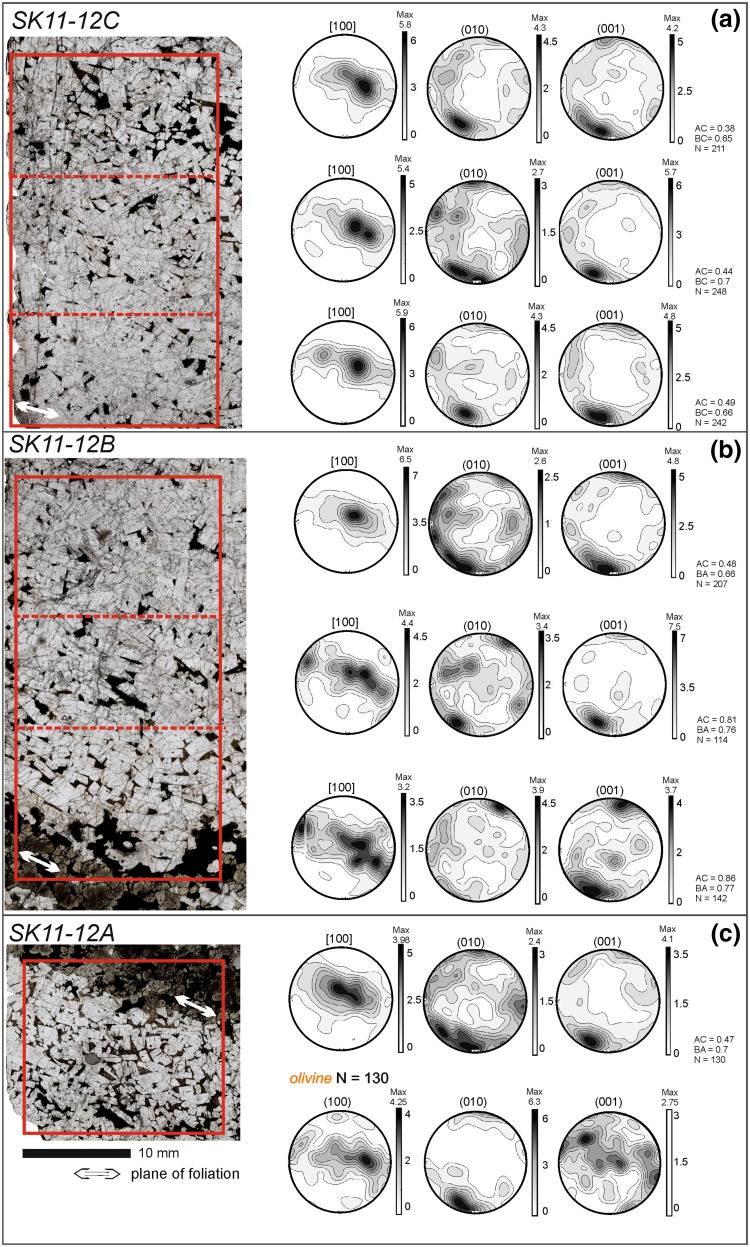
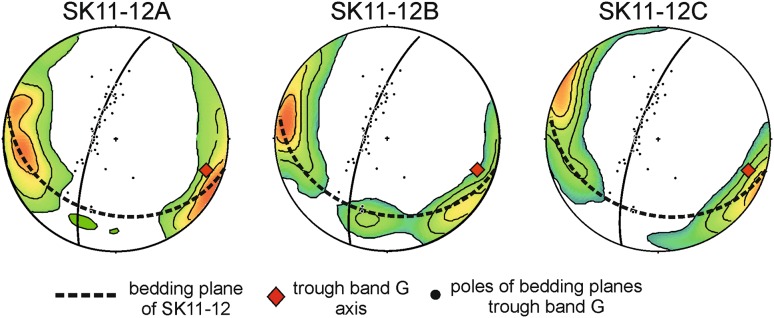
The upper parts of the floor cumulates of the Skaergaard Intrusion, East Greenland, contain abundant features known as troughs. The troughs are gently plunging synformal structures comprising stacks of crescentic modally graded layers with a sharply defined mafic base that grades upward into plagioclase-rich material. The origin of the troughs and layering is contentious, attributed variously to deposition of mineral grains by magmatic currents descending from the nearby walls, or to in situ development by localised recrystallisation during gravitationally-driven compaction. They are characterised by outcrop-scale features such as mineral lineations parallel to the trough axis, evidence of erosion and layer truncation associated with migration of the trough axis, and disruption of layering by syn-magmatic slumping. A detailed microstructural study of the modal trough layers, using electron backscatter diffraction together with geochemical mapping, demonstrates that these rocks do not record evidence for deformation by either dislocation creep or dissolution-reprecipitation. Instead, the troughs are characterised by the alignment of euhedral plagioclase crystals with unmodified primary igneous compositional zoning. We argue that the lineations and foliations are, therefore, a consequence of grain alignment during magmatic flow. Post-accumulation amplification of the modal layering occurred as a result of differential migration of an unmixed immiscible interstitial liquid, with upwards migration of the Si-rich conjugate into the plagioclase-rich upper part of the layers, whereas the Fe-rich immiscible conjugate remained in the mafic base. Both field and microstructure evidence support the origin of the troughs as the sites of repeated deposition from crystal-rich currents descending from the nearby chamber walls.
东格陵兰斯卡格拉克侵入体底部堆积物的上部含有大量被称为槽的特征。这些槽是平缓倾伏的向形构造,由新月形模态渐变层堆叠而成,具有明显界定的镁铁质底部,向上渐变为富含斜长石的物质。槽和层理的成因存在争议,有多种解释,要么归因于从附近壁面下降的岩浆流对矿物颗粒的沉积,要么归因于重力驱动压实过程中局部重结晶的原地发育。它们的特征包括露头尺度的特征,如与槽轴平行的矿物线理、与槽轴迁移相关的侵蚀和层截断证据,以及同岩浆滑塌对层理的破坏。利用电子背散射衍射和地球化学绘图对模态槽层进行的详细微观结构研究表明,这些岩石没有记录到位错蠕变或溶解再沉淀变形的证据。相反,槽的特征是自形斜长石晶体的排列以及未改变的原生火成岩成分分带。因此,我们认为线理和叶理是岩浆流动过程中颗粒排列的结果。模态层理的堆积后放大是由于不混溶的间隙液体的差异迁移导致的,富硅共轭物向上迁移到层的富含斜长石的上部,而富铁不混溶共轭物则保留在镁铁质底部。野外和微观结构证据均支持槽是从附近岩腔壁面下降的富含晶体的水流反复沉积的场所这一观点。