Li Jun, Bai Litao, Wei Fan, Zhao Jing, Wang Danwei, Xiao Yao, Yan Weitian, Wei Junping
Department of Endocrinology, Guang'anmen Hospital, China Academy of Chinese Medical Sciences, Beijing, China.
Graduate School, Beijing University of Chinese Medicine, Beijing, China.
Front Pharmacol. 2019 Jun 14;10:661. doi: 10.3389/fphar.2019.00661. eCollection 2019.
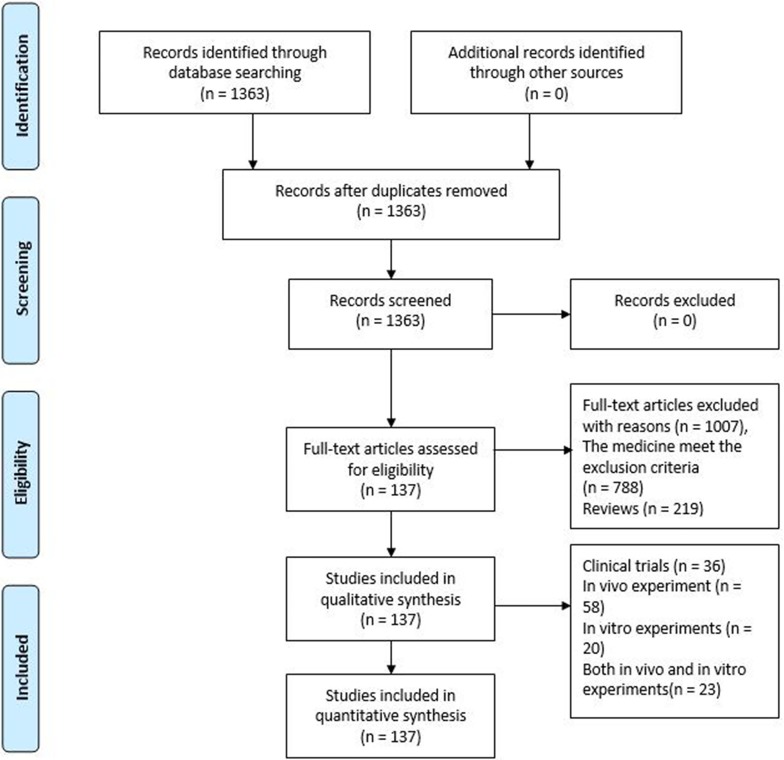
Insulin resistance is a condition in which insulin sensitivity is reduced and the insulin signaling pathway is impaired. Although often expressed as an increase in insulin concentration, the disease is characterized by a decrease in insulin action. This increased workload of the pancreas and the consequent decompensation are not only the main mechanisms for the development of type 2 diabetes (T2D), but also exacerbate the damage of metabolic diseases, including obesity, nonalcoholic fatty liver disease, polycystic ovary syndrome, metabolic syndrome, and others. Many clinical trials have suggested the potential role of herbs in the treatment of insulin resistance, although most of the clinical trials included in this review have certain flaws and bias risks in their methodological design, including the generation of randomization, the concealment of allocation, blinding, and inadequate reporting of sample size estimates. These studies involve not only the single-flavored herbs, but also herbal formulas, extracts, and active ingredients. Numerous of and studies have pointed out that the role of herbal medicine in improving insulin resistance is related to interventions in various aspects of the insulin signaling pathway. The targets involved in these studies include insulin receptor substrate, phosphatidylinositol 3-kinase, glucose transporter, AMP-activated protein kinase, glycogen synthase kinase 3, mitogen-activated protein kinases, c-Jun-N-terminal kinase, nuclear factor-kappaB, protein tyrosine phosphatase 1B, nuclear factor-E2-related factor 2, and peroxisome proliferator-activated receptors. Improved insulin sensitivity upon treatment with herbal medicine provides considerable prospects for treating insulin resistance. This article reviews studies of the target mechanisms of herbal treatments for insulin resistance.
胰岛素抵抗是一种胰岛素敏感性降低且胰岛素信号通路受损的状态。尽管该病常表现为胰岛素浓度升高,但其特征是胰岛素作用减弱。胰腺的这种工作量增加以及随之而来的失代偿不仅是2型糖尿病(T2D)发生发展的主要机制,还会加剧包括肥胖、非酒精性脂肪性肝病、多囊卵巢综合征、代谢综合征等在内的代谢性疾病的损害。许多临床试验表明草药在治疗胰岛素抵抗方面具有潜在作用,尽管本综述纳入的大多数临床试验在其方法设计上存在某些缺陷和偏倚风险,包括随机化的产生、分配隐藏、盲法以及样本量估计报告不足。这些研究不仅涉及单味草药,还包括中药复方、提取物和活性成分。众多研究指出,草药改善胰岛素抵抗的作用与对胰岛素信号通路各个方面的干预有关。这些研究涉及的靶点包括胰岛素受体底物、磷脂酰肌醇3激酶、葡萄糖转运蛋白、AMP激活的蛋白激酶、糖原合酶激酶3、丝裂原活化蛋白激酶、c-Jun氨基末端激酶、核因子-κB、蛋白酪氨酸磷酸酶1B、核因子E2相关因子2以及过氧化物酶体增殖物激活受体。草药治疗后胰岛素敏感性的改善为治疗胰岛素抵抗提供了可观的前景。本文综述了草药治疗胰岛素抵抗的靶点机制研究。