Jin Yu, Li Yuexiu, Wang Xin, Yang Ya
Department of General Dentistry, Ninth People's Hospital, Shanghai Jiao Tong University School of Medicine, Shanghai, 200011, PR China.
Shanghai Key Laboratory of Stomatology and Shanghai Research Institute of Stomatology, National Clinical Research Center of Stomatology, 200000, PR China.
J Cancer. 2019 Jun 2;10(12):2720-2734. doi: 10.7150/jca.31825. eCollection 2019.
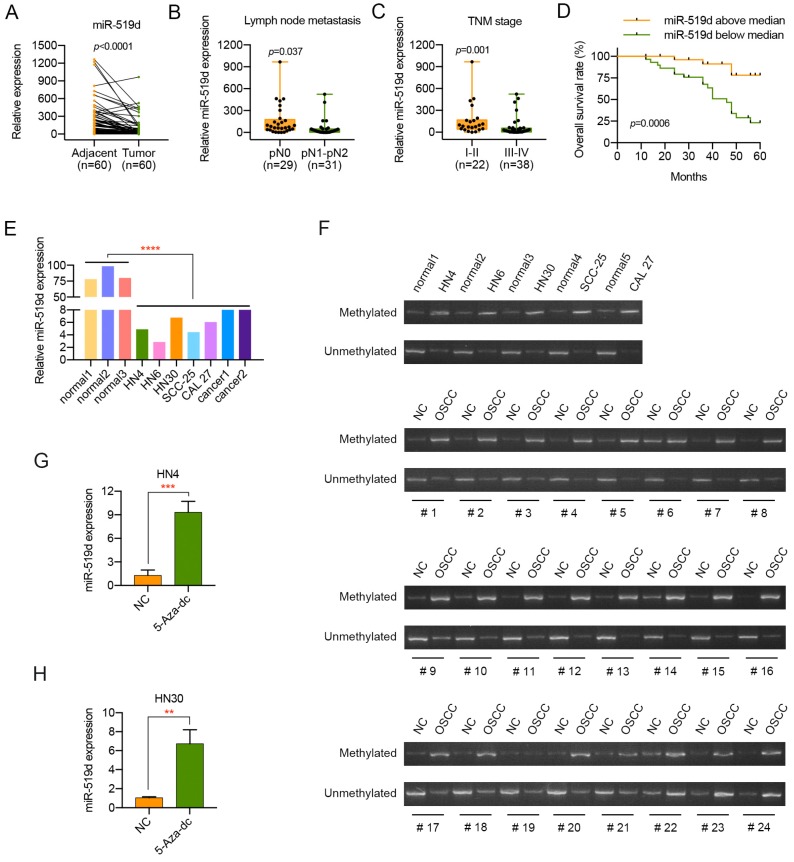
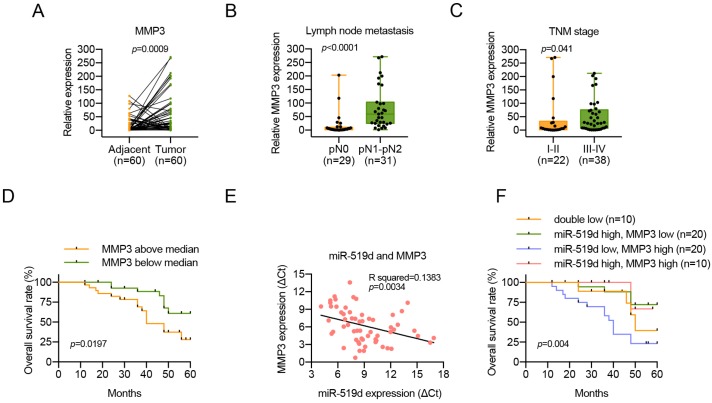
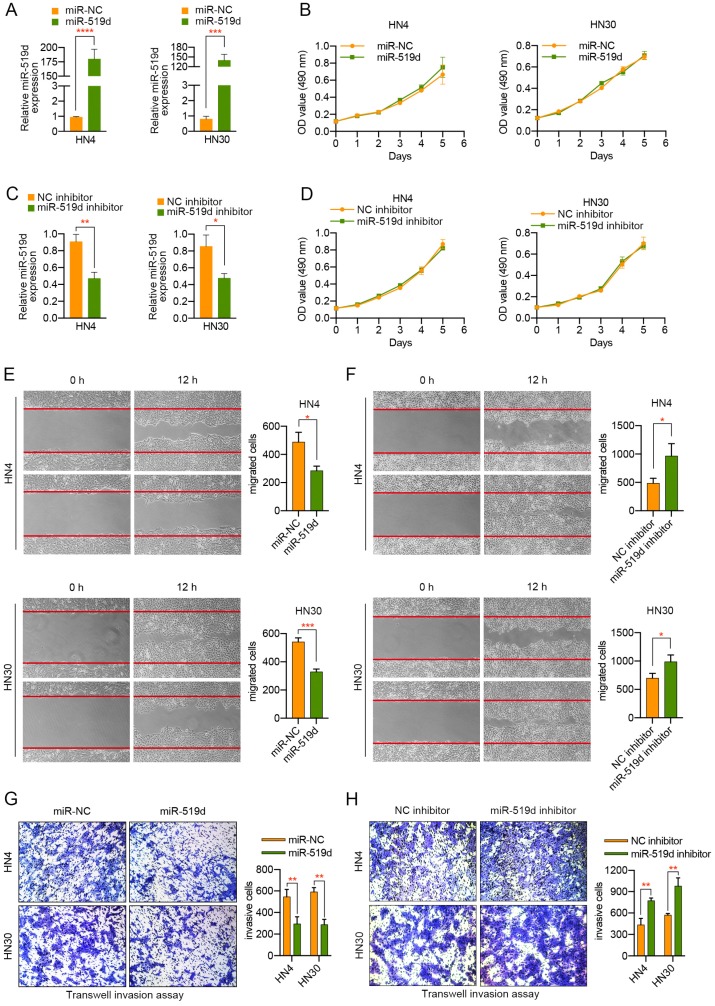
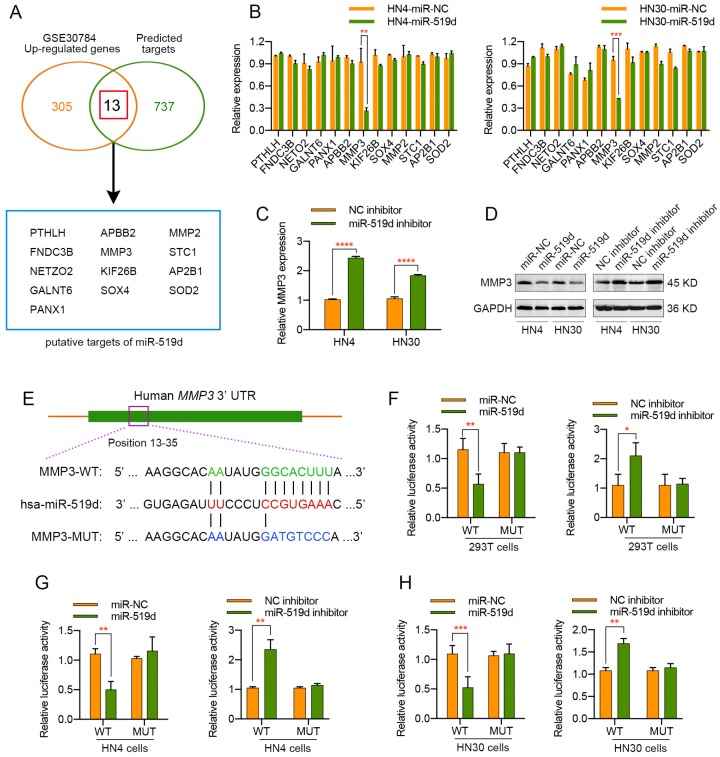
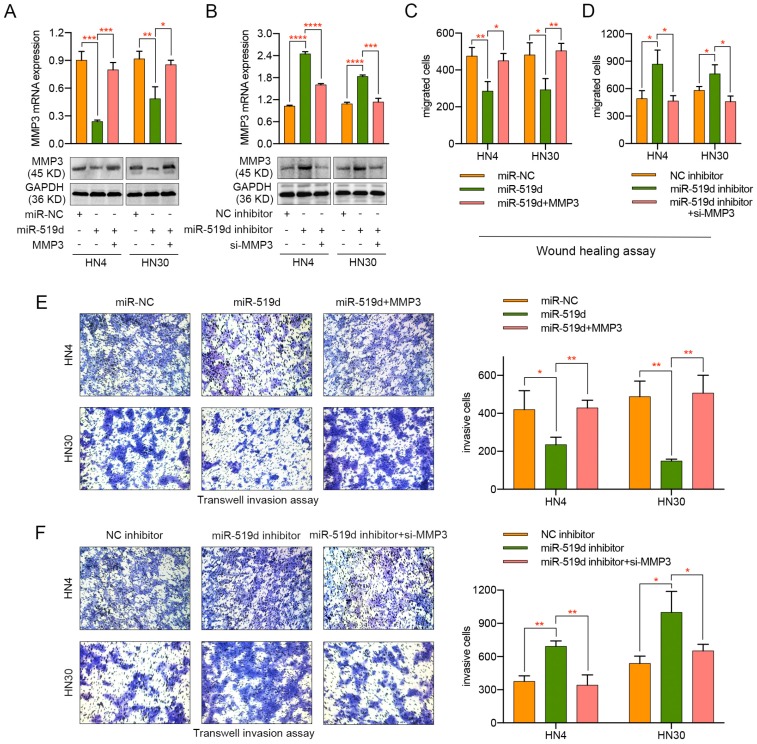
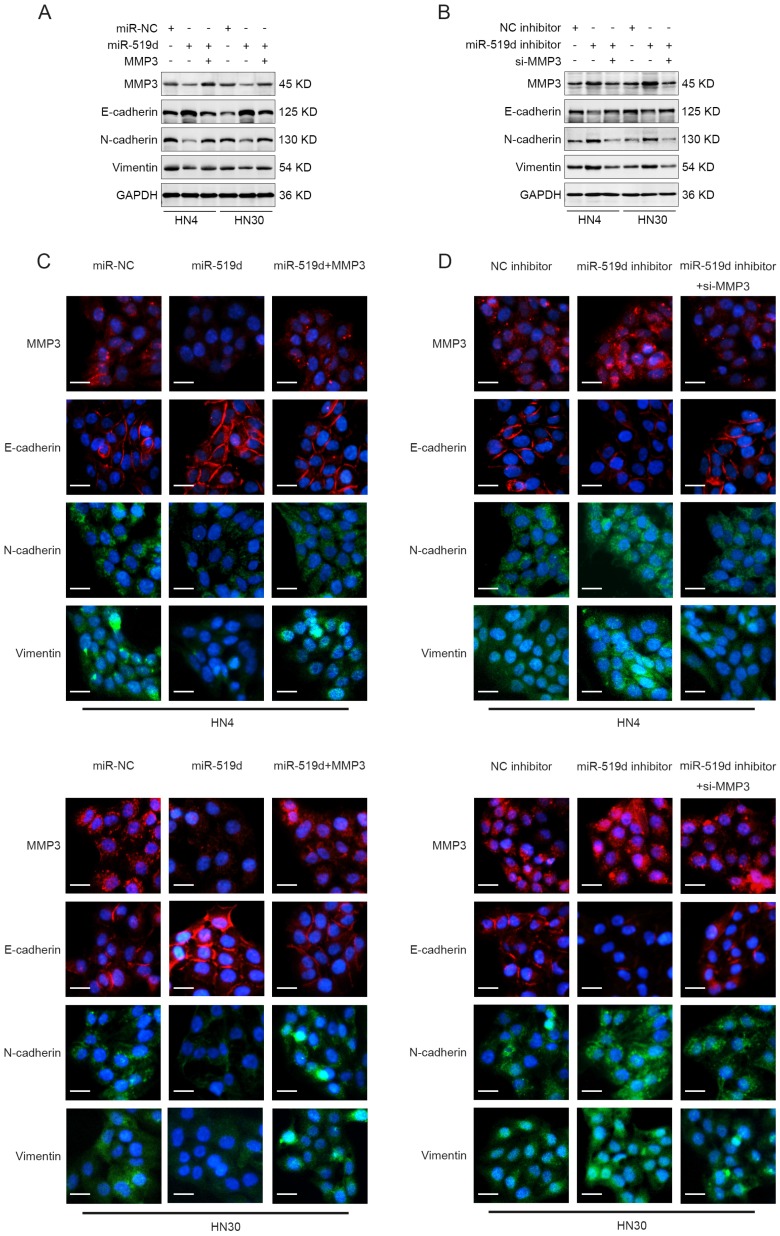
MicroRNA-519d (miR-519d) has been reported to play important roles in tumor development and progression in multiple cancers, either as tumor suppressor or tumor promotor. However, the expression level, biological function and molecular mechanisms of miR-519d in oral squamous cell carcinoma (OSCC) remain unclear. Therefore, the aims of this study were to investigate the functional role of miR-519d in OSCC and the possible underlying regulatory mechanism. In this study, we found that miR-519d was significantly downregulated in OSCC tissues and cell lines compared with normal oral mucosae and normal oral epithelial cells. Importantly, downregulation of miR-519d was closely correlated with the lymph node metastasis, advanced tumor stage and poor overall survival of OSCC patients. Furthermore, miR-519d significantly inhibited the migration and invasion of OSCC cells. Using bioinformatics and biological approaches, we showed that miR-519d directly targeted matrix metalloproteinase-3 (MMP3), which might account for the underlying mechanism involved in the miR-519d mediated suppression of OSCC progression. What is more, miR-519d expression was inversely correlated with MMP3 expression in OSCC tissues, and high levels of MMP3 expression in OSCC tissues were also associated with the metastasis and poor prognosis of these patients. In addition, we further identified that miR-519d acted as a regulator of epithelial-mesenchymal transition (EMT) in OSCC cells. Overall, the present study highlighted miR-519d as a tumor suppressor in OSCC by targeting MMP3 and supported biological and clinical links between miR-519d-MMP3 and OSCC, thus indicating the potential therapeutic value of miR-519d for alleviating OSCC metastasis.
据报道,微小RNA-519d(miR-519d)在多种癌症的肿瘤发生和进展过程中发挥着重要作用,既可以作为肿瘤抑制因子,也可以作为肿瘤促进因子。然而,miR-519d在口腔鳞状细胞癌(OSCC)中的表达水平、生物学功能和分子机制仍不清楚。因此,本研究的目的是探讨miR-519d在OSCC中的功能作用及其潜在的调控机制。在本研究中,我们发现与正常口腔黏膜和正常口腔上皮细胞相比,miR-519d在OSCC组织和细胞系中显著下调。重要的是,miR-519d的下调与OSCC患者的淋巴结转移、肿瘤晚期和总体生存率低密切相关。此外,miR-519d显著抑制OSCC细胞的迁移和侵袭。通过生物信息学和生物学方法,我们发现miR-519d直接靶向基质金属蛋白酶-3(MMP3),这可能是miR-519d介导的抑制OSCC进展的潜在机制。此外,在OSCC组织中,miR-519d的表达与MMP3的表达呈负相关,OSCC组织中高水平的MMP3表达也与这些患者的转移和不良预后相关。此外,我们进一步确定miR-519d在OSCC细胞中作为上皮-间质转化(EMT)的调节因子发挥作用。总体而言,本研究强调miR-519d通过靶向MMP3在OSCC中作为肿瘤抑制因子,并支持miR-519d-MMP3与OSCC之间的生物学和临床联系,从而表明miR-519d在减轻OSCC转移方面的潜在治疗价值。