Szenasi Nikolett Lilla, Toth Eszter, Balogh Andrea, Juhasz Kata, Karaszi Katalin, Ozohanics Oliver, Gelencser Zsolt, Kiraly Peter, Hargitai Beata, Drahos Laszlo, Hupuczi Petronella, Kovalszky Ilona, Papp Zoltan, Than Nandor Gabor
Systems Biology of Reproduction Research Group, Institute of Enzymology, Research Centre for Natural Sciences, Hungarian Academy of Sciences, Budapest, Hungary.
MS Proteomics Research Group, Institute of Organic Chemistry, Research Centre for Natural Sciences, Hungarian Academy of Sciences, Budapest, Hungary.
PeerJ. 2019 Jun 20;7:e6982. doi: 10.7717/peerj.6982. eCollection 2019.
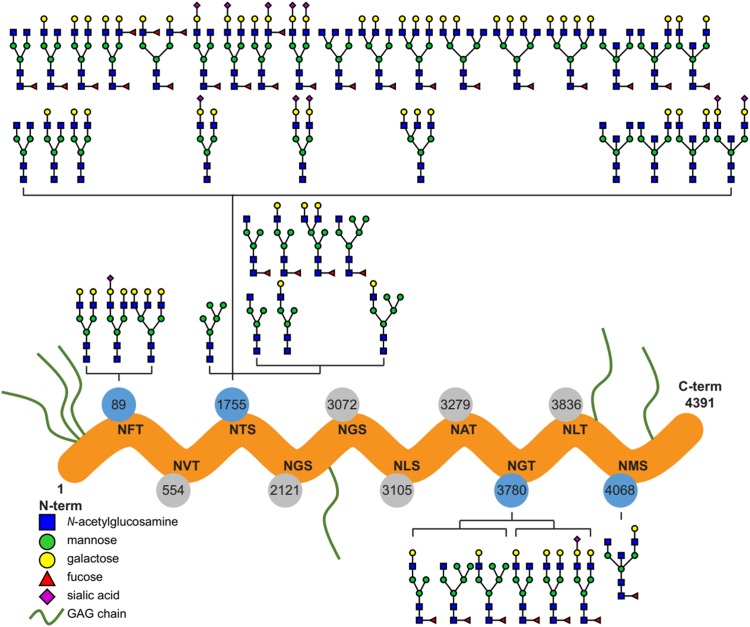
More than 50 human placental proteins were isolated and physico-chemically characterized in the 70-80s by Hans Bohn and co-workers. Many of these proteins turned to have important role in placental functions and diagnostic significance in pregnancy complications. Among these proteins was membrane-associated placental protein 4 (MP4), for which identity or function has not been identified yet. Our aim was to analyze the sequence and placental expression of this protein in normal and complicated pregnancies including miscarriage, preeclampsia and HELLP syndrome.
Lyophilized MP4 protein and frozen healthy placental tissue were analyzed using HPLC-MS/MS. Placental tissue samples were obtained from women with elective termination of pregnancy (first trimester controls, = 31), early pregnancy loss (EPL) ( = 13), early preeclampsia without HELLP syndrome ( = 7) and with HELLP syndrome ( = 8), late preeclampsia ( = 8), third trimester early controls ( = 5) and third trimester late controls ( = 9). Tissue microarrays were constructed from paraffin-embedded placentas ( = 81). Slides were immunostained with monoclonal perlecan antibody and evaluated using light microscopy and virtual microscopy. Perlecan was also analyzed for its expression in placentas from normal pregnancies using microarray data.
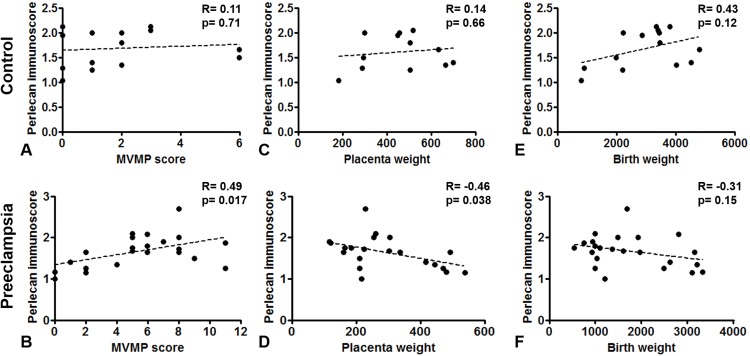
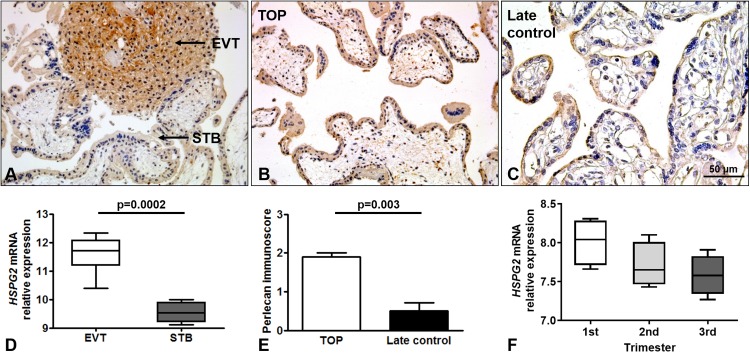
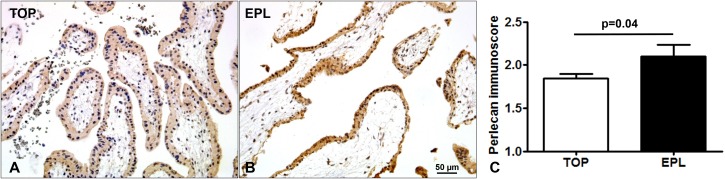
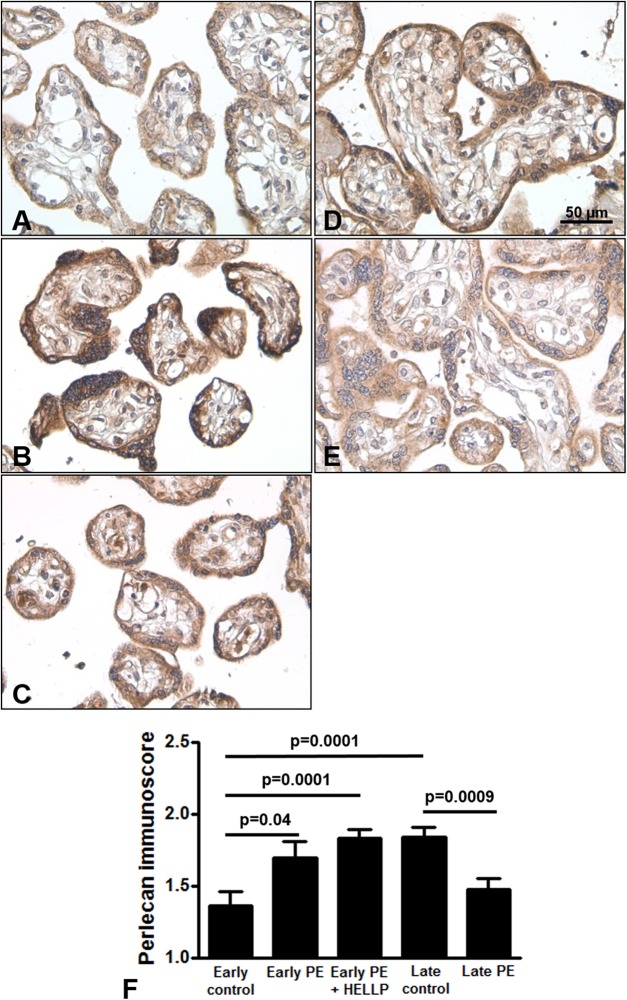
Mass spectrometry-based proteomics of MP4 resulted in the identification of basement membrane-specific heparan sulfate proteoglycan core protein also known as perlecan. Immunohistochemistry showed cytoplasmic perlecan localization in syncytiotrophoblast and cytotrophoblasts of the villi. Perlecan immunoscore decreased with gestational age in the placenta. Perlecan immunoscores were higher in EPL compared to controls. Perlecan immunoscores were higher in early preeclampsia without and with HELLP syndrome and lower in late preeclampsia than in respective controls. Among patients with preeclampsia, placental perlecan expression positively correlated with maternal vascular malperfusion and negatively correlated with placental weight.
Our findings suggest that an increased placental perlecan expression may be associated with hypoxic ischaemic injury of the placenta in miscarriages and in early preeclampsia with or without HELLP syndrome.
20世纪70至80年代,汉斯·博恩及其同事分离出50多种人胎盘蛋白,并对其进行了物理化学特性分析。其中许多蛋白质在胎盘功能中发挥重要作用,对妊娠并发症具有诊断意义。这些蛋白质中包括膜相关胎盘蛋白4(MP4),其身份或功能尚未确定。我们的目的是分析该蛋白在正常妊娠和包括流产、先兆子痫和HELLP综合征在内的复杂妊娠中的序列和胎盘表达。
使用HPLC-MS/MS分析冻干的MP4蛋白和冷冻的健康胎盘组织。胎盘组织样本取自选择性终止妊娠的妇女(孕早期对照组,n = 31)、早期妊娠丢失(EPL)(n = 13)、无HELLP综合征的早期先兆子痫(n = 7)和伴有HELLP综合征的早期先兆子痫(n = 8)、晚期先兆子痫(n = 8)、孕晚期早期对照组(n = 5)和孕晚期晚期对照组(n = 9)。从石蜡包埋的胎盘(n = 81)构建组织微阵列。玻片用单克隆基底膜聚糖抗体进行免疫染色,并使用光学显微镜和虚拟显微镜进行评估。还利用微阵列数据分析基底膜聚糖在正常妊娠胎盘组织中的表达。
基于质谱的MP4蛋白质组学鉴定出基底膜特异性硫酸乙酰肝素蛋白聚糖核心蛋白,也称为基底膜聚糖。免疫组织化学显示基底膜聚糖在绒毛的合体滋养层和细胞滋养层中呈细胞质定位。胎盘组织中基底膜聚糖免疫评分随孕周增加而降低。与对照组相比,EPL中的基底膜聚糖免疫评分更高。无HELLP综合征和伴有HELLP综合征的早期先兆子痫中基底膜聚糖免疫评分更高,而晚期先兆子痫中的基底膜聚糖免疫评分低于各自的对照组。在先兆子痫患者中,胎盘基底膜聚糖表达与母体血管灌注不良呈正相关,与胎盘重量呈负相关。
我们的研究结果表明,胎盘基底膜聚糖表达增加可能与流产以及有或无HELLP综合征的早期先兆子痫中胎盘的缺氧缺血性损伤有关。