Boutillon Florence, Pigat Natascha, Sala Lucila Sackmann, Reyes-Gomez Edouard, Moriggl Richard, Guidotti Jacques-Emmanuel, Goffin Vincent
Institut Necker Enfants Malades, Inserm U1151, 75014 Paris, France.
Faculté de médecine, Université Paris Descartes, 75014 Paris, France.
Cancers (Basel). 2019 Jul 2;11(7):929. doi: 10.3390/cancers11070929.
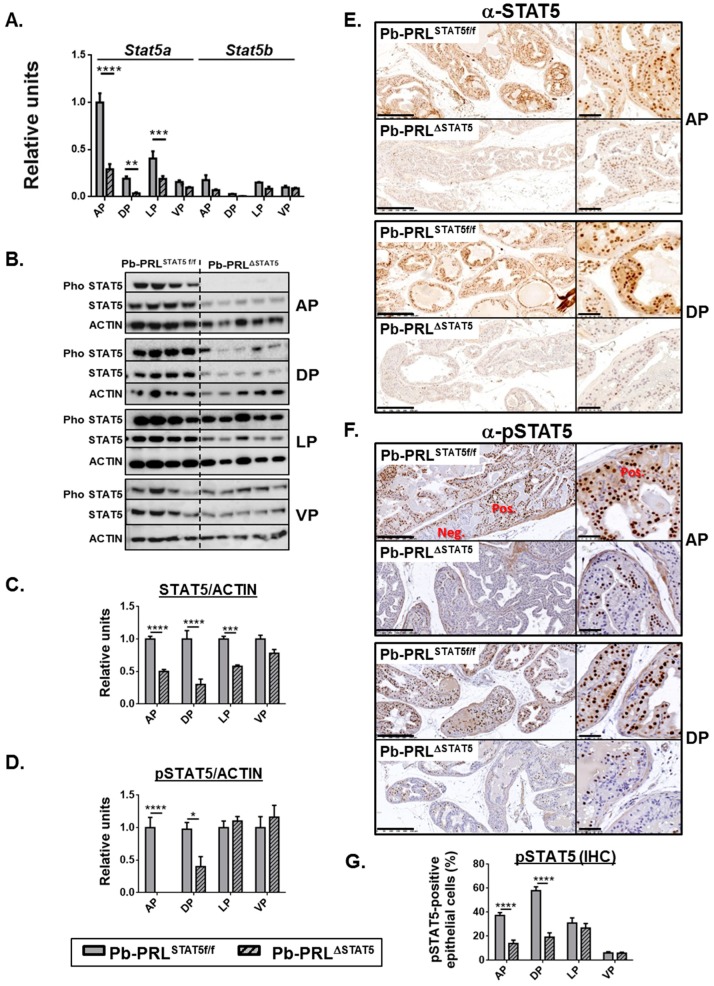
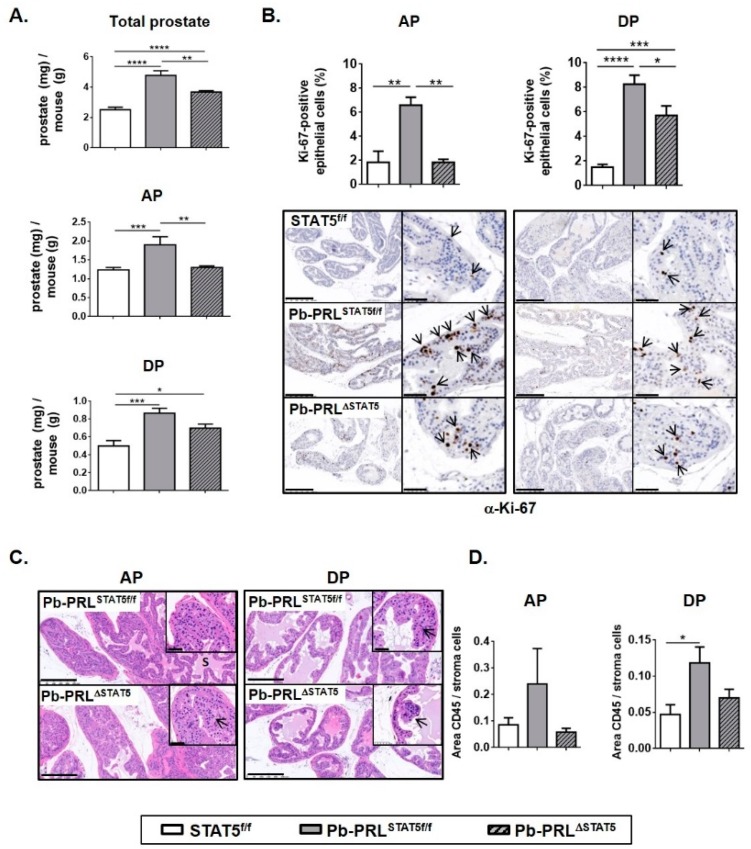
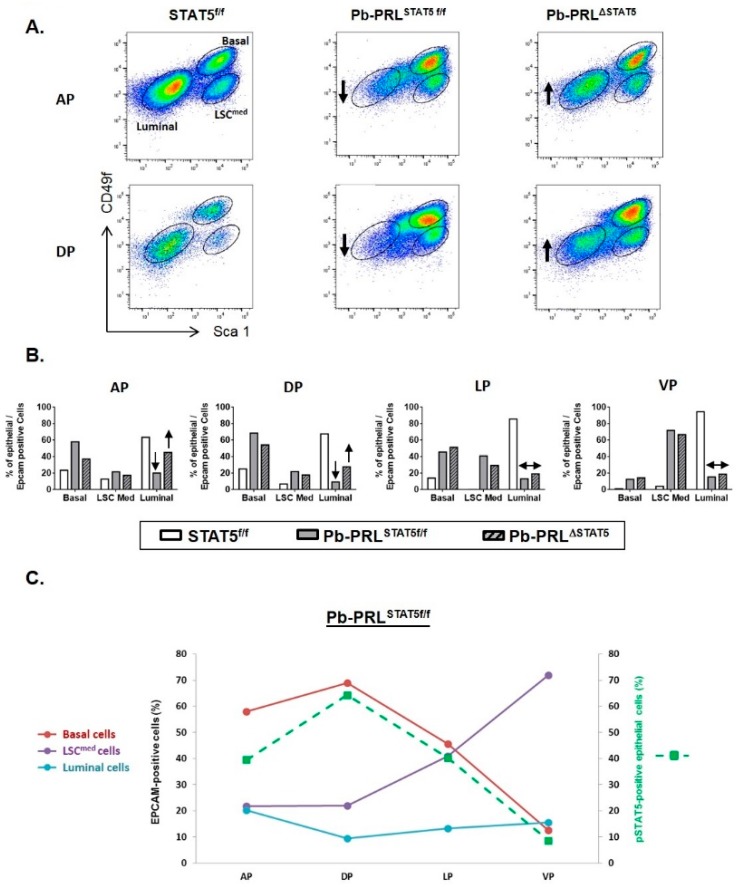
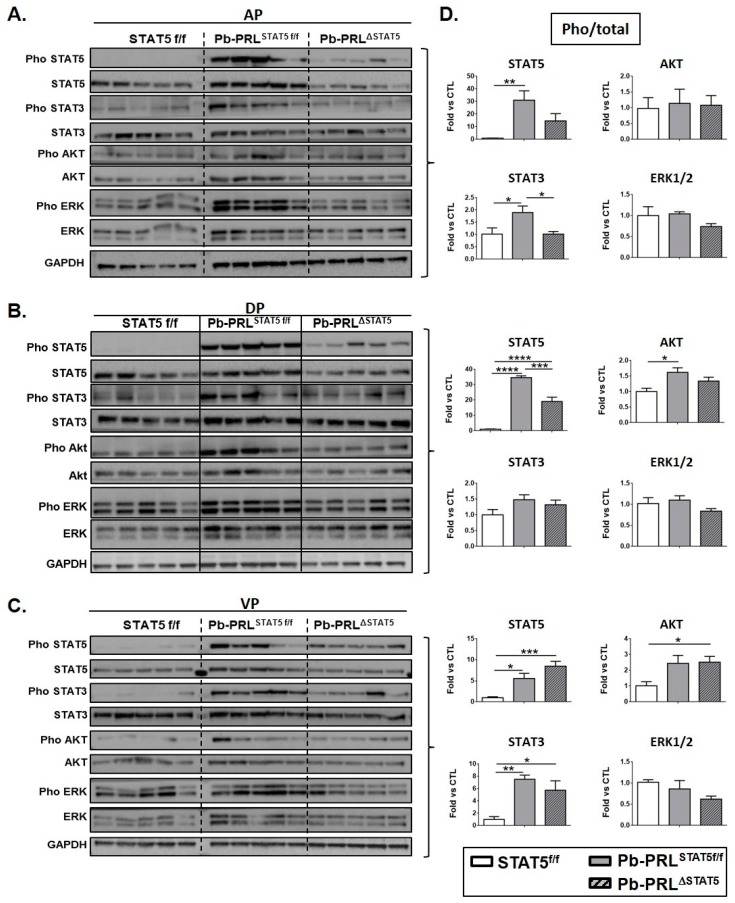
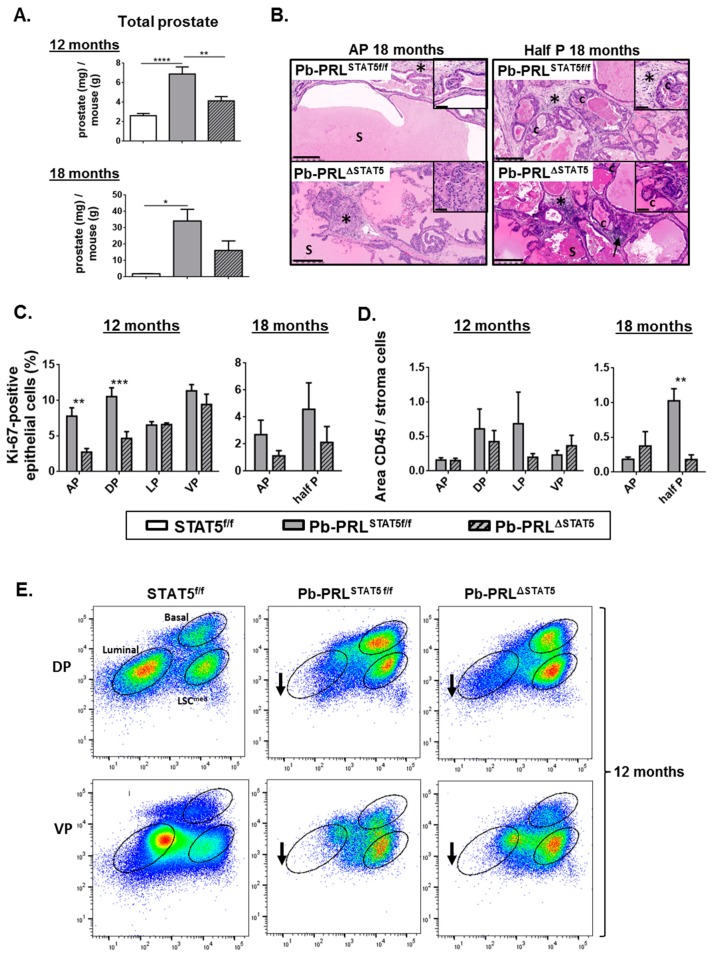
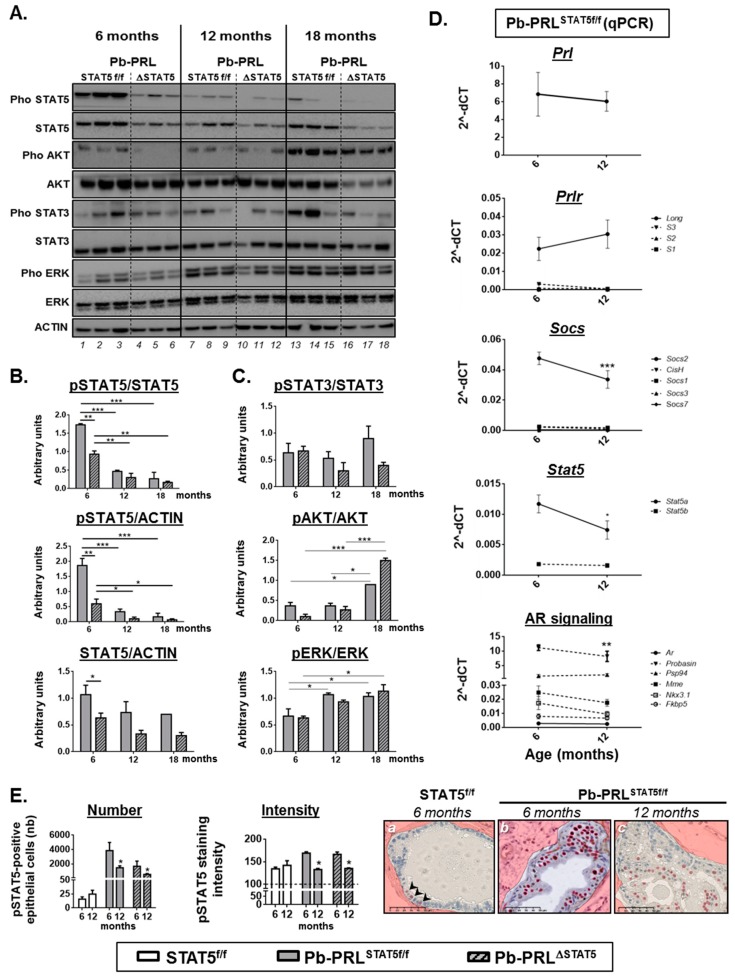
The canonical prolactin (PRL) Signal Transducer and Activator of Transcription (STAT) 5 pathway has been suggested to contribute to human prostate tumorigenesis via an autocrine/paracrine mechanism. The probasin (Pb)-PRL transgenic mouse models this mechanism by overexpressing PRL specifically in the prostate epithelium leading to strong STAT5 activation in luminal cells. These mice exhibit hypertrophic prostates harboring various pre-neoplastic lesions that aggravate with age and accumulation of castration-resistant stem/progenitor cells. As STAT5 signaling is largely predominant over other classical PRL-triggered pathways in Pb-PRL prostates, we reasoned that Pb-Cre recombinase-driven genetic deletion of a floxed locus should prevent prostate tumorigenesis in so-called Pb-PRL mice. Anterior and dorsal prostate lobes displayed the highest deletion efficiency with no overt compensatory activation of other PRLR signaling cascade at 6 months of age; hence the development of tumor hallmarks was markedly reduced. deletion also reversed the accumulation of stem/progenitor cells, indicating that STAT5 signaling regulates prostate epithelial cell hierarchy. Interestingly, ERK1/2 and AKT, but not STAT3 and androgen signaling, emerged as escape mechanisms leading to delayed tumor development in aged Pb-PRL mice. Unexpectedly, we found that Pb-PRL prostates spontaneously exhibited age-dependent decline of STAT5 signaling, also to the benefit of AKT and ERK1/2 signaling. As a consequence, both Pb-PRL and Pb-PRL mice ultimately displayed similar pathological prostate phenotypes at 18 months of age. This preclinical study provides insight on STAT5-dependent mechanisms of PRL-induced prostate tumorigenesis and alternative pathways bypassing STAT5 signaling down-regulation upon prostate neoplasia progression.
经典的催乳素(PRL)信号转导子与转录激活子(STAT)5通路已被认为通过自分泌/旁分泌机制促进人类前列腺肿瘤发生。前列腺素(Pb)-PRL转基因小鼠通过在前列腺上皮细胞中特异性过表达PRL来模拟这一机制,导致管腔细胞中STAT5强烈激活。这些小鼠表现出前列腺肥大,伴有各种癌前病变,且随着年龄增长和去势抵抗性干细胞/祖细胞的积累而加重。由于在Pb-PRL前列腺中STAT5信号在很大程度上比其他经典的PRL触发通路占主导地位,我们推测Pb-Cre重组酶驱动的一个floxed位点的基因缺失应该可以预防所谓的Pb-PRL小鼠的前列腺肿瘤发生。在6个月大时,前列腺前叶和背叶显示出最高的缺失效率,且没有其他PRLR信号级联的明显代偿性激活;因此肿瘤特征的发展明显减少。缺失也逆转了干细胞/祖细胞的积累,表明STAT5信号调节前列腺上皮细胞层次。有趣的是,ERK1/2和AKT,而不是STAT3和雄激素信号,成为导致老年Pb-PRL小鼠肿瘤发展延迟的逃逸机制。出乎意料的是,我们发现Pb-PRL前列腺自发地表现出STAT5信号随年龄的依赖性下降,这也有利于AKT和ERK1/2信号。因此,在18个月大时,Pb-PRL和Pb-PRL小鼠最终都表现出相似的前列腺病理表型。这项临床前研究为PRL诱导前列腺肿瘤发生的STAT5依赖性机制以及前列腺肿瘤进展时绕过STAT5信号下调的替代途径提供了见解。