Department of Urology, Ruijin Hospital, School of Medicine, Shanghai Jiaotong University, Shanghai, China.
Department of Anesthesiology, Renji Hospital, School of Medicine, Shanghai Jiaotong University, Shanghai, China.
Cell Death Dis. 2019 Jul 4;10(7):517. doi: 10.1038/s41419-019-1750-7.
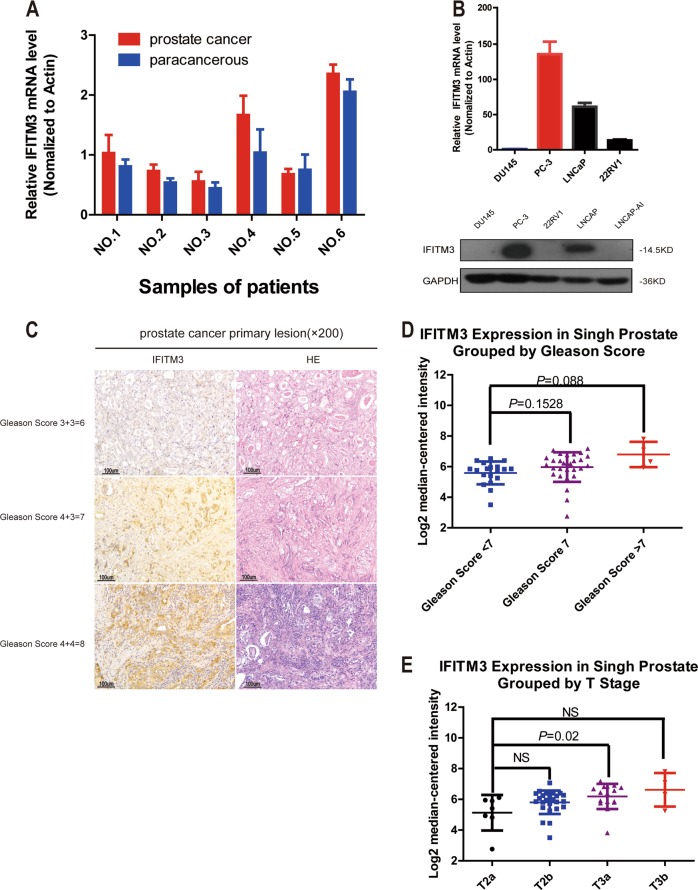
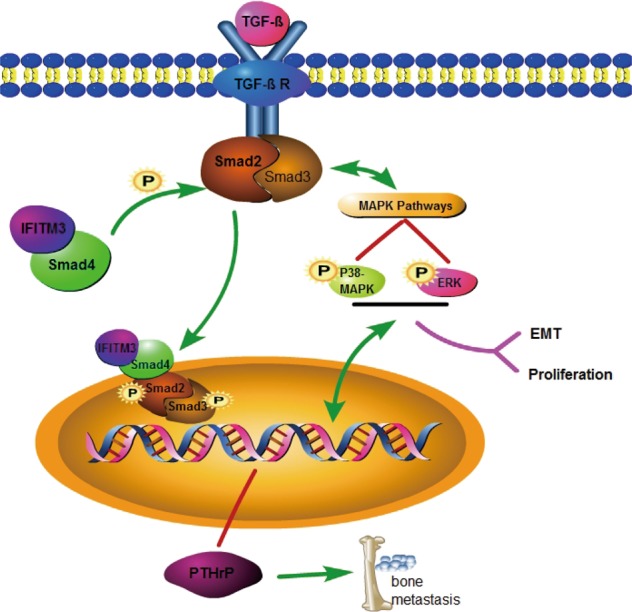
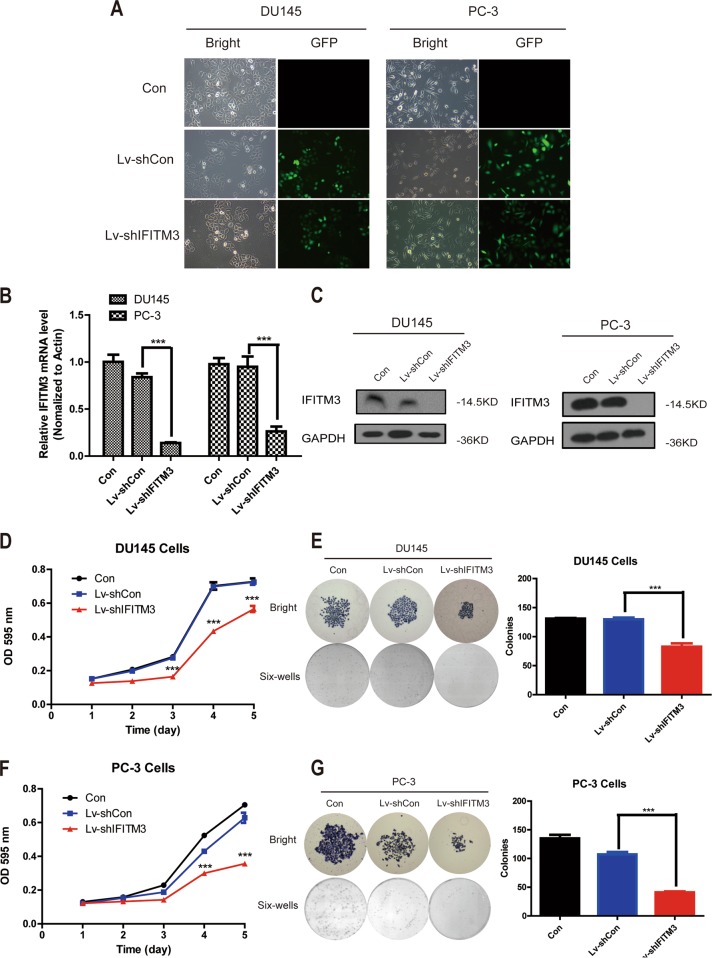
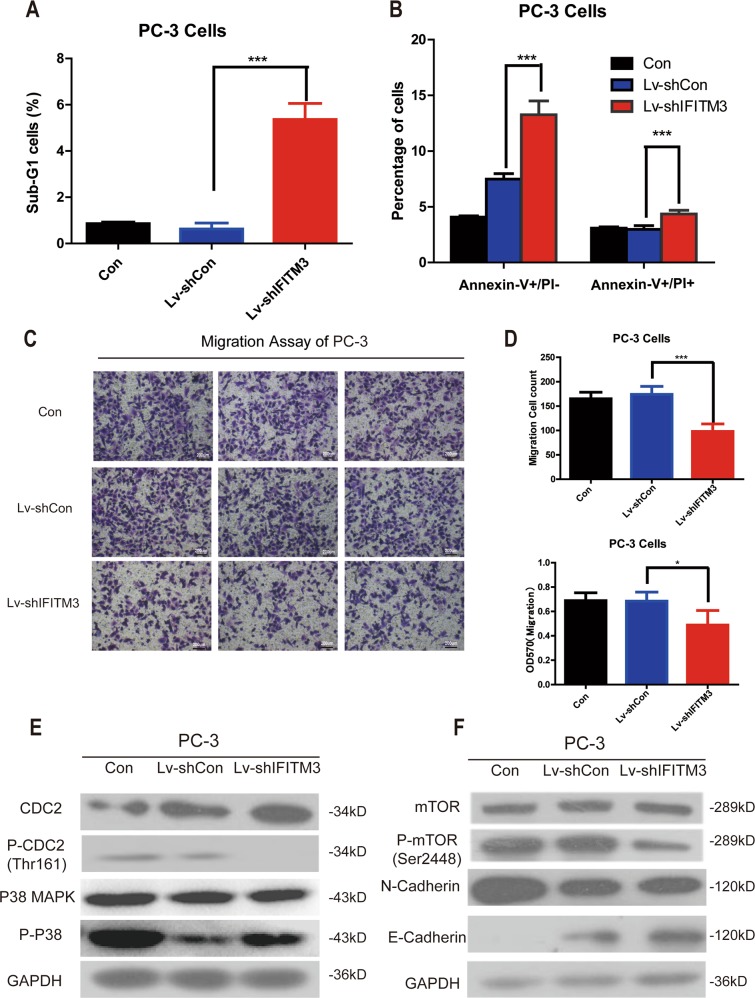
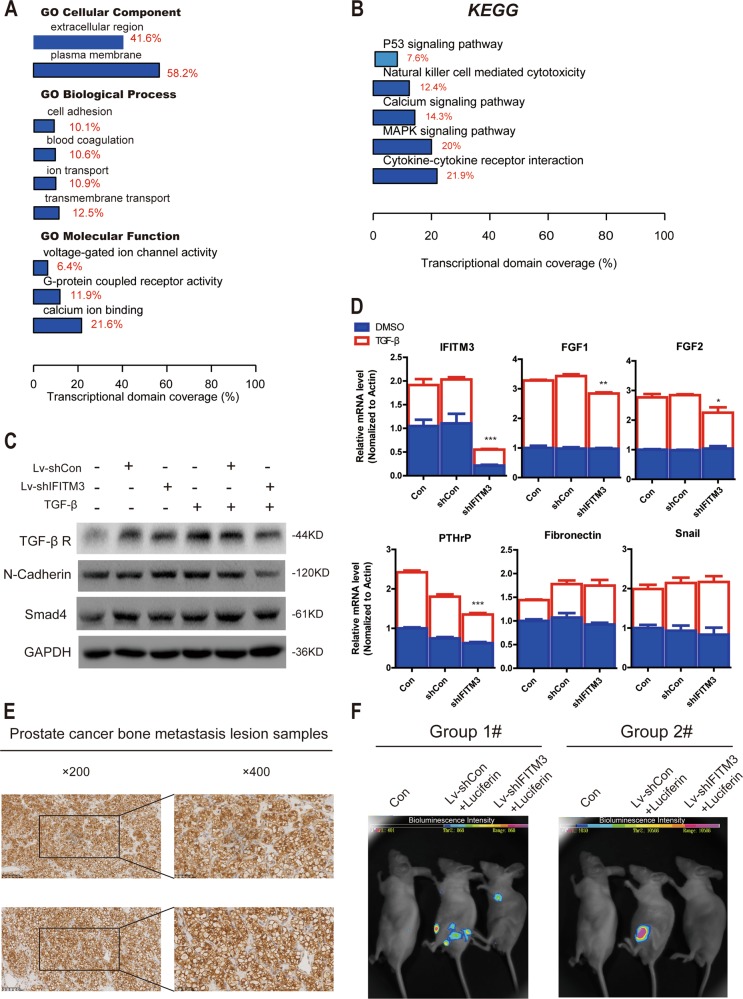
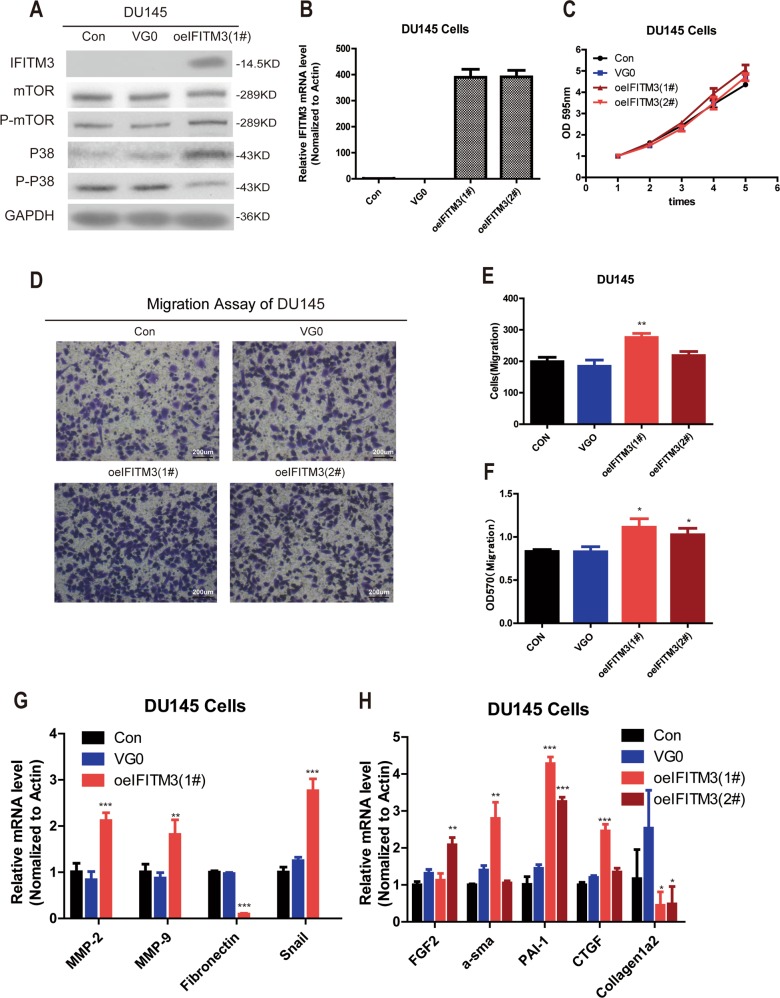
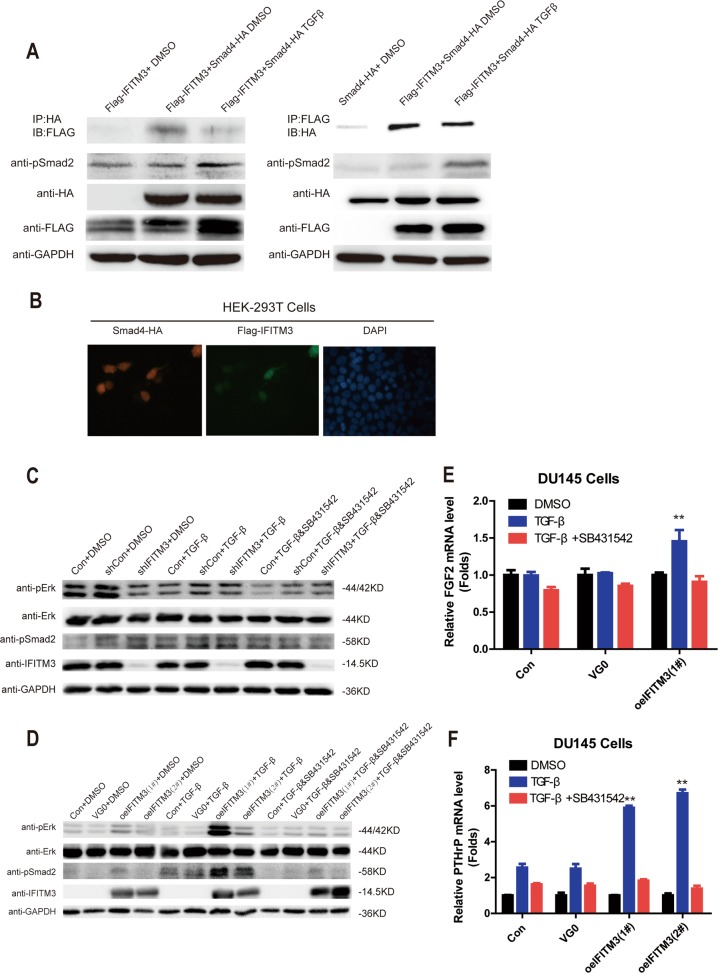
Advanced-stage prostate cancer (PCa) is often diagnosed with bone metastasis, for which there are limited therapies. Transforming growth factor β (TGF-β) is known to induce epithelial-mesenchymal transition (EMT), and abundance of TGF-β in the bone matrix is one of the important growth factors contributing to bone metastasis. TGF-β is reported as a key mediator of bone metastasis, but the underlying mechanism has not been elucidated. It was found in our study that Interferon-inducible Transmembrane Protein 3 (IFITM3) played a key role in the regulation of malignant tumor cell proliferation, invasion, and bone migration by binding to Smad4, thus activating the TGF-β-Smads Signaling Pathway. Lentivirus-mediated short hairpin RNA (shRNA) knockdown of IFITM3 inhibited cell proliferation and colony formation, induced apoptosis and inhibited migration by reversing EMT and downregulating the expression of metastasis-related molecules including FGFs and PTHrP. Microarray analysis showed that IFITM3 knockdown could alter the MAPK pathway associated with TGF-β-Smads signaling. By knocking down and overexpressing IFITM3, we demonstrated that IFITM3 expression level had an effect on MAPK pathway activation, and this change was more pronounced upon exogenous TGF-β stimulation. These results suggest that IFITM3 played an oncogenic role in PCa progression and bone metastasis via a novel TGF-β-Smads-MAPK pathway.
晚期前列腺癌 (PCa) 常伴有骨转移,而针对骨转移的治疗方法有限。转化生长因子β (TGF-β) 可诱导上皮间质转化 (EMT),骨基质中 TGF-β 的丰度是促进骨转移的重要生长因子之一。TGF-β 被认为是骨转移的关键介质,但具体机制尚未阐明。我们的研究发现,干扰素诱导跨膜蛋白 3 (IFITM3) 通过与 Smad4 结合在调节恶性肿瘤细胞增殖、侵袭和骨迁移中发挥关键作用,从而激活 TGF-β-Smads 信号通路。慢病毒介导的短发夹 RNA (shRNA) 敲低 IFITM3 可抑制细胞增殖和集落形成,通过逆转 EMT 并下调包括 FGFs 和 PTHrP 在内的转移相关分子的表达来诱导细胞凋亡和抑制迁移。微阵列分析表明,IFITM3 敲低可改变与 TGF-β-Smads 信号相关的 MAPK 通路。通过敲低和过表达 IFITM3,我们证明 IFITM3 的表达水平对 MAPK 通路的激活有影响,而在外源性 TGF-β 刺激下这种变化更为明显。这些结果表明,IFITM3 通过一种新的 TGF-β-Smads-MAPK 通路在 PCa 进展和骨转移中发挥致癌作用。