
社区卫生工作者干预措施对低收入和中等收入国家孕产妇及新生儿健康方面社会经济不平等的影响:一项混合方法的系统评价
Effects of community health worker interventions on socioeconomic inequities in maternal and newborn health in low-income and middle-income countries: a mixed-methods systematic review.
作者信息
Blanchard Andrea Katryn, Prost Audrey, Houweling Tanja A J
机构信息
Institute for Global Health, University College London, London, UK.
Department of Public Health, Erasmus MC, Rotterdam, The Netherlands.
出版信息
BMJ Glob Health. 2019 Jun 16;4(3):e001308. doi: 10.1136/bmjgh-2018-001308. eCollection 2019.
INTRODUCTION
Community health worker (CHW) interventions are promoted to improve maternal and newborn health in low-income and middle-income countries. We reviewed the evidence on their effectiveness in reducing socioeconomic inequities in maternal and newborn health outcomes, how they achieve these effects, and contextual processes that shape these effects.
METHODS
We conducted a mixed-methods systematic review of quantitative and qualitative studies published between 1996 and 2017 in Medline, Embase, Web of Science and Scopus databases. We included studies examining the effects of CHW interventions in low-income and middle-income countries on maternal and newborn health outcomes across socioeconomic groups (wealth, occupation, education, class, caste or tribe and religion). We then conducted a narrative synthesis of evidence.
RESULTS
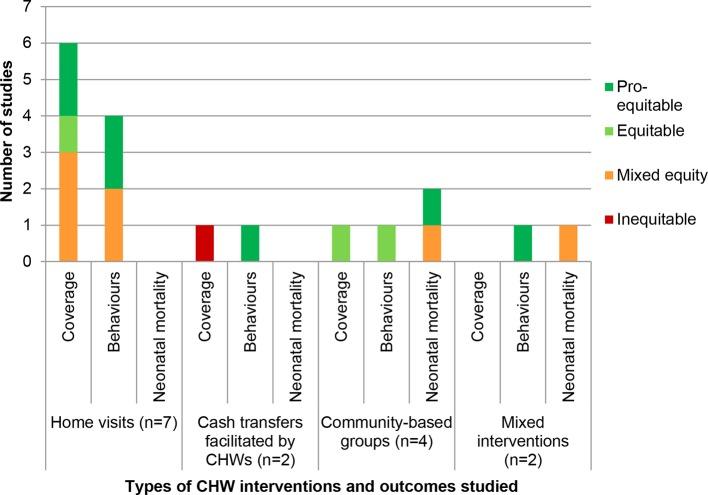
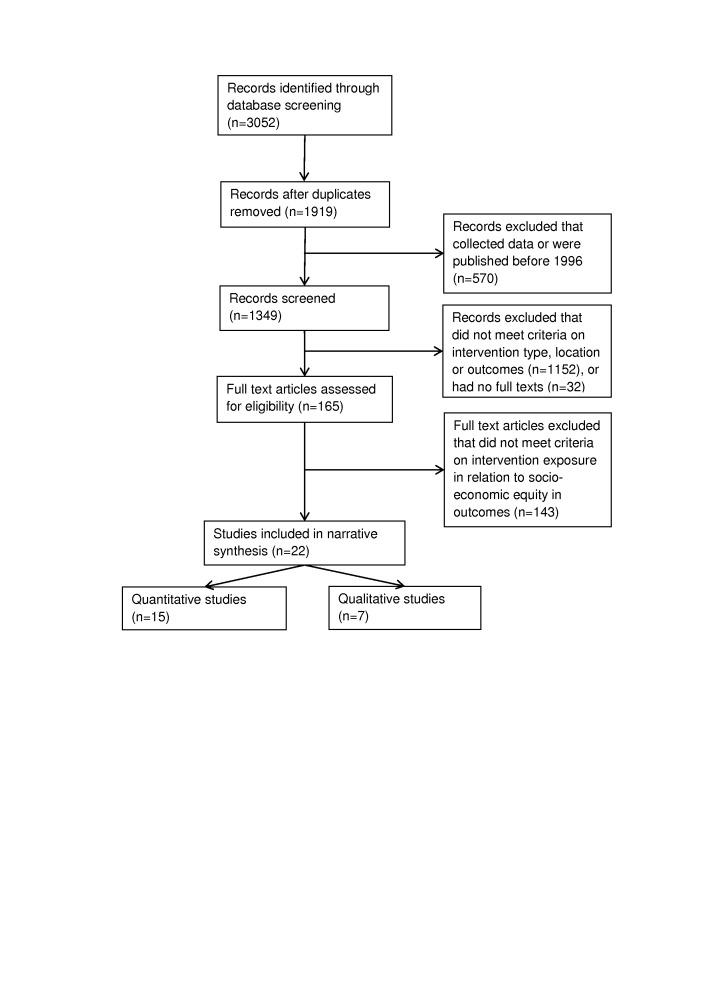
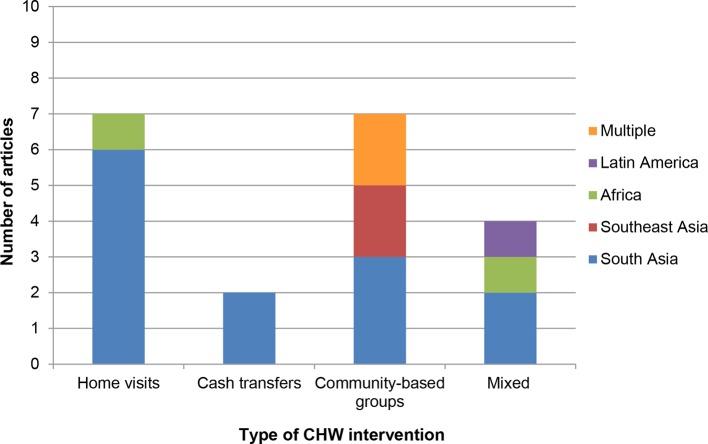
We identified 1919 articles, of which 22 met the inclusion criteria. CHWs facilitated four types of interventions: home visits, community-based groups, cash transfers or combinations of these. Four studies found that CHWs providing home visits or facilitating women's groups had equitable coverage. Four others found that home visits and cash transfer interventions had inequitable coverage. Five studies reported equitable effects of CHW interventions on antenatal care, skilled birth attendance and/or essential newborn care. One study found that a CHW home visit intervention did not reduce wealth inequities in skilled birth attendance. A study of women's groups reported greater reductions in neonatal mortality among lower compared with higher socioeconomic groups. Equity was most improved when CHWs had relevant support for assisting women to improve health practices and access health care within community contexts.
CONCLUSION
While current evidence remains limited, particularly for mortality, existing studies suggest that CHW interventions involving home visits, cash transfers, participatory women's groups or multiple components can improve equity in maternal and newborn health. Future mixed-methods research should explore intervention strategies and contextual processes shaping such effects on equity to optimise these efforts.
引言
在低收入和中等收入国家,社区卫生工作者(CHW)干预措施被推广用于改善孕产妇和新生儿健康。我们回顾了关于这些干预措施在减少孕产妇和新生儿健康结果方面社会经济不平等方面的有效性证据、它们如何实现这些效果以及塑造这些效果的背景过程。
方法
我们对1996年至2017年在Medline、Embase、科学引文索引和Scopus数据库中发表的定量和定性研究进行了混合方法的系统评价。我们纳入了研究社区卫生工作者干预措施对低收入和中等收入国家不同社会经济群体(财富、职业、教育、阶层、种姓或部落以及宗教)孕产妇和新生儿健康结果影响的研究。然后我们对证据进行了叙述性综合。
结果
我们识别出1919篇文章,其中22篇符合纳入标准。社区卫生工作者促成了四种类型的干预措施:家访、社区团体、现金转移或这些措施的组合。四项研究发现,提供家访或促成妇女团体的社区卫生工作者具有公平的覆盖范围。另外四项研究发现,家访和现金转移干预措施的覆盖范围不公平。五项研究报告了社区卫生工作者干预措施在产前护理、熟练接生和/或基本新生儿护理方面的公平效果。一项研究发现,社区卫生工作者家访干预措施并未减少熟练接生方面的财富不平等。一项关于妇女团体的研究报告称,与较高社会经济群体相比,较低社会经济群体的新生儿死亡率下降幅度更大。当社区卫生工作者在社区环境中获得协助妇女改善健康行为和获得医疗保健的相关支持时,公平性得到了最大程度的改善。
结论
虽然目前的证据仍然有限,特别是关于死亡率方面,但现有研究表明,涉及家访、现金转移、参与性妇女团体或多个组成部分的社区卫生工作者干预措施可以改善孕产妇和新生儿健康方面的公平性。未来的混合方法研究应探索塑造此类公平效果的干预策略和背景过程,以优化这些努力。
 Zotero 插件