Olaniran Abimbola, Smith Helen, Unkels Regine, Bar-Zeev Sarah, van den Broek Nynke
a Centre for Maternal and Newborn Health , Liverpool School of Tropical Medicine , Liverpool , UK.
Glob Health Action. 2017;10(1):1272223. doi: 10.1080/16549716.2017.1272223.
Community health workers (CHWs) can play vital roles in increasing coverage of basic health services. However, there is a need for a systematic categorisation of CHWs that will aid common understanding among policy makers, programme planners, and researchers.
To identify the common themes in the definitions and descriptions of CHWs that will aid delineation within this cadre and distinguish CHWs from other healthcare providers.
A systematic review of peer-reviewed papers and grey literature.
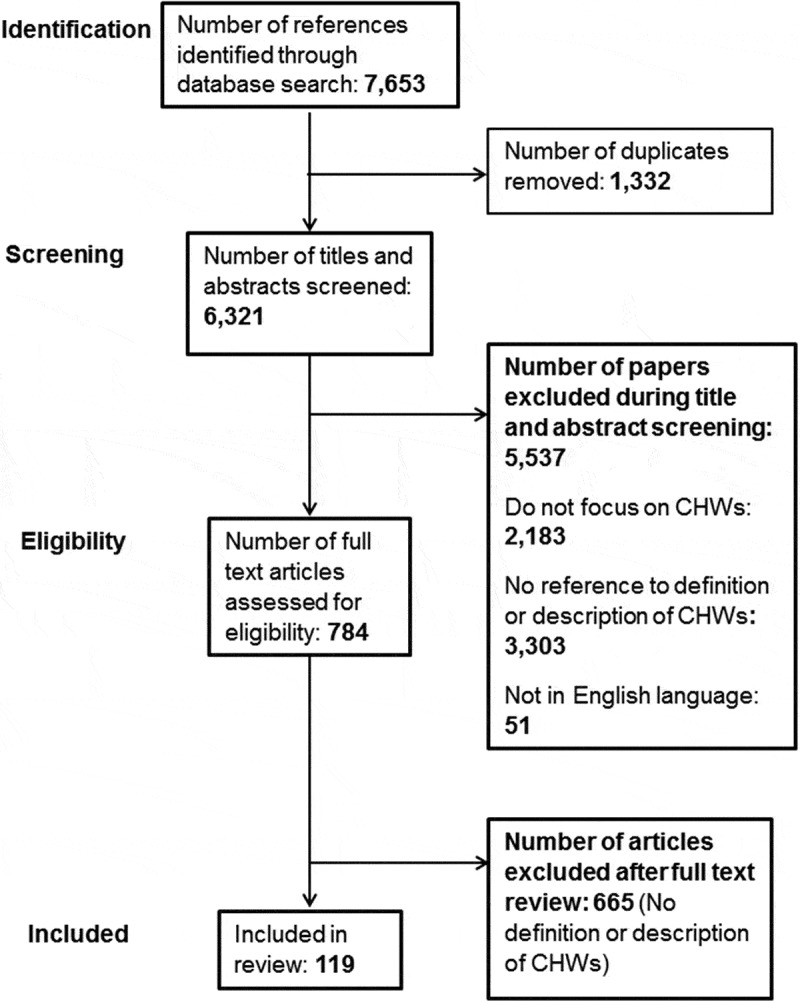
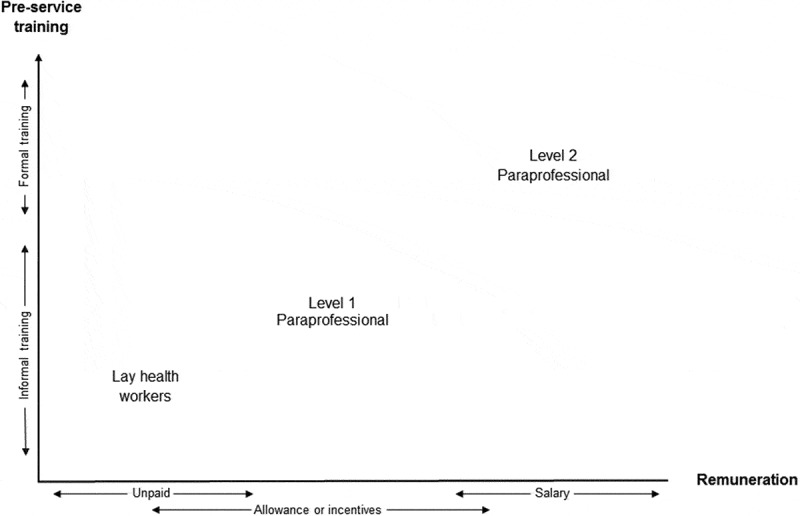
We identified 119 papers that provided definitions of CHWs in 25 countries across 7 regions. The review shows CHWs as paraprofessionals or lay individuals with an in-depth understanding of the community culture and language, have received standardised job-related training of a shorter duration than health professionals, and their primary goal is to provide culturally appropriate health services to the community. CHWs can be categorised into three groups by education and pre-service training. These are lay health workers (individuals with little or no formal education who undergo a few days to a few weeks of informal training), level 1 paraprofessionals (individuals with some form of secondary education and subsequent informal training), and level 2 paraprofessionals (individuals with some form of secondary education and subsequent formal training lasting a few months to more than a year). Lay health workers tend to provide basic health services as unpaid volunteers while level 1 paraprofessionals often receive an allowance and level 2 paraprofessionals tend to be salaried.
This review provides a categorisation of CHWs that may be useful for health policy formulation, programme planning, and research.
社区卫生工作者(CHWs)在提高基本卫生服务覆盖率方面可发挥重要作用。然而,需要对社区卫生工作者进行系统分类,以帮助政策制定者、项目规划者和研究人员达成共识。
确定社区卫生工作者定义和描述中的共同主题,以有助于在此类别中进行界定,并将社区卫生工作者与其他医疗服务提供者区分开来。
对同行评审论文和灰色文献进行系统综述。
我们确定了119篇论文,这些论文提供了7个地区25个国家社区卫生工作者的定义。该综述表明,社区卫生工作者为准专业人员或非专业人员,对社区文化和语言有深入了解,接受的与工作相关的标准化培训时间比卫生专业人员短,其主要目标是为社区提供符合文化背景的卫生服务。社区卫生工作者可按教育程度和岗前培训分为三类。分别是基层卫生工作者(几乎没有或没有接受过正规教育,接受过几天到几周非正式培训的人员)、一级准专业人员(接受过某种形式中等教育并随后接受非正式培训的人员)和二级准专业人员(接受过某种形式中等教育并随后接受为期几个月至一年以上正规培训的人员)。基层卫生工作者往往作为无薪志愿者提供基本卫生服务,而一级准专业人员通常会获得津贴,二级准专业人员往往有薪水。
本综述提供了社区卫生工作者的分类,可能有助于卫生政策制定、项目规划和研究。