Reikvam Håkon, Aasebø Elise, Brenner Annette K, Bartaula-Brevik Sushma, Grønningsæter Ida Sofie, Forthun Rakel Brendsdal, Hovland Randi, Bruserud Øystein
Department of Clinical Science, University of Bergen, 5020,Bergen, Norway.
Department of Medicine, Haukeland University Hospital, 5021 Bergen, Norway.
J Clin Med. 2019 Jul 4;8(7):970. doi: 10.3390/jcm8070970.
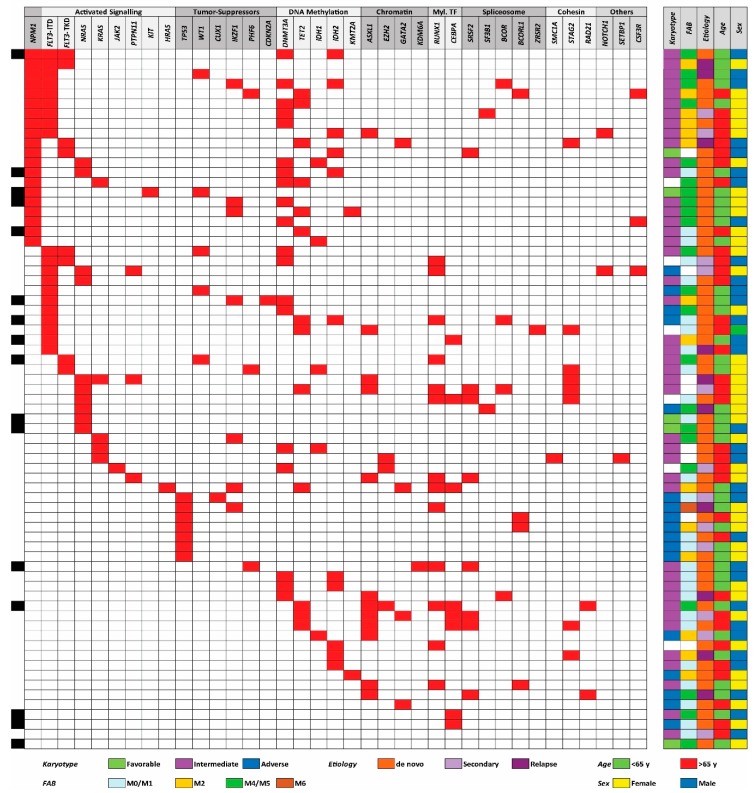
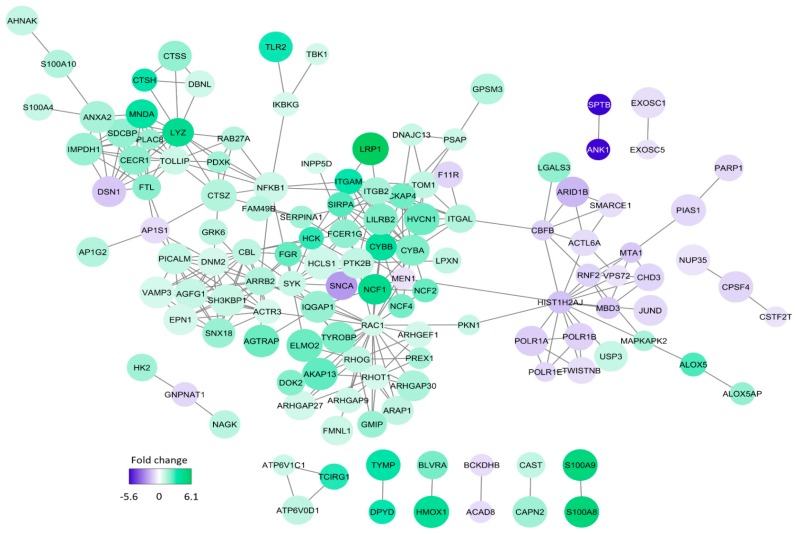
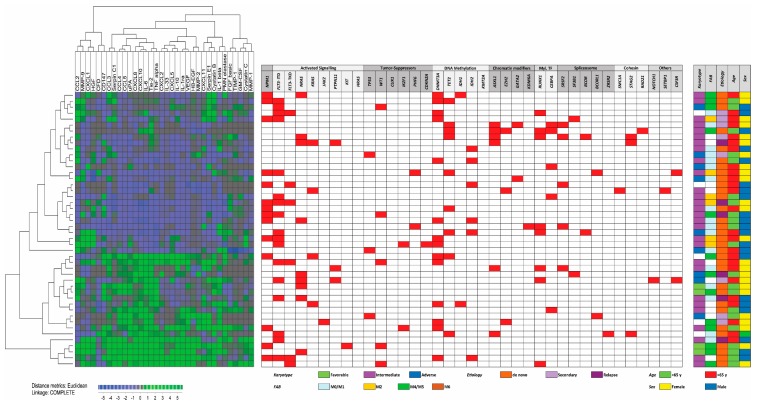
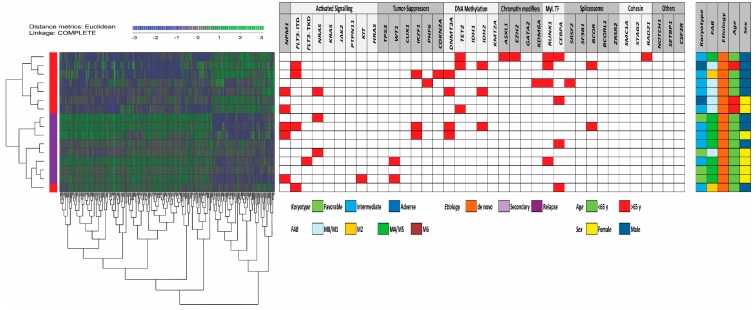
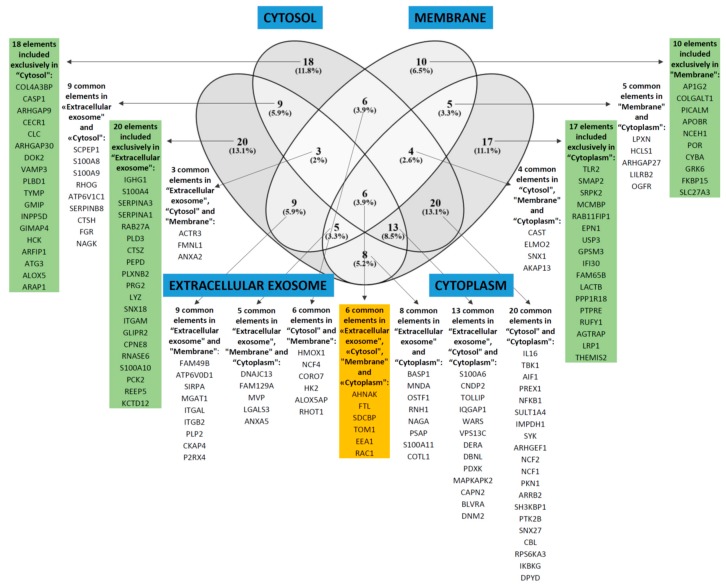
Acute myeloid leukemia (AML) is a heterogeneous disease, and this heterogeneity includes the capacity of constitutive release of extracellular soluble mediators by AML cells. We investigated whether this capacity is associated with molecular genetic abnormalities, and we compared the proteomic profiles of AML cells with high and low release. AML cells were derived from 71 consecutive patients that showed an expected frequency of cytogenetic and molecular genetic abnormalities. The constitutive extracellular release of 34 soluble mediators (CCL and CXCL chemokines, interleukins, proteases, and protease regulators) was investigated for an unselected subset of 62 patients, and they could be classified into high/intermediate/low release subsets based on their general capacity of constitutive secretion. -ITD was more frequent among patients with high constitutive mediator release, but our present study showed no additional associations between the capacity of constitutive release and 53 other molecular genetic abnormalities. We compared the proteomic profiles of two contrasting patient subsets showing either generally high or low constitutive release. A network analysis among cells with high release levels demonstrated high expression of intracellular proteins interacting with integrins, RAC1, and SYK signaling. In contrast, cells with low release showed high expression of several transcriptional regulators. We conclude that AML cell capacity of constitutive mediator release is characterized by different expression of potential intracellular therapeutic targets.
急性髓系白血病(AML)是一种异质性疾病,这种异质性包括AML细胞组成性释放细胞外可溶性介质的能力。我们研究了这种能力是否与分子遗传异常相关,并比较了高释放和低释放AML细胞的蛋白质组学特征。AML细胞来源于71例连续患者,这些患者显示出细胞遗传学和分子遗传异常的预期频率。对62例未选择患者的一个亚组研究了34种可溶性介质(CCL和CXCL趋化因子、白细胞介素、蛋白酶和蛋白酶调节剂)的组成性细胞外释放情况,根据其组成性分泌的总体能力可将他们分为高/中/低释放亚组。-ITD在组成性介质高释放患者中更常见,但我们目前的研究表明组成性释放能力与其他53种分子遗传异常之间没有额外关联。我们比较了两个对比鲜明的患者亚组的蛋白质组学特征,这两个亚组分别表现为总体组成性释放高或低。对高释放水平细胞进行的网络分析显示,与整合素、RAC1和SYK信号相互作用的细胞内蛋白质高表达。相反,低释放细胞显示几种转录调节因子高表达。我们得出结论,AML细胞组成性介质释放能力的特征是潜在细胞内治疗靶点的不同表达。