Department für Chemie, Universität für Bodenkultur, 1190, Wien, Austria.
Glycoconj J. 2020 Feb;37(1):27-40. doi: 10.1007/s10719-019-09874-2. Epub 2019 Jul 5.
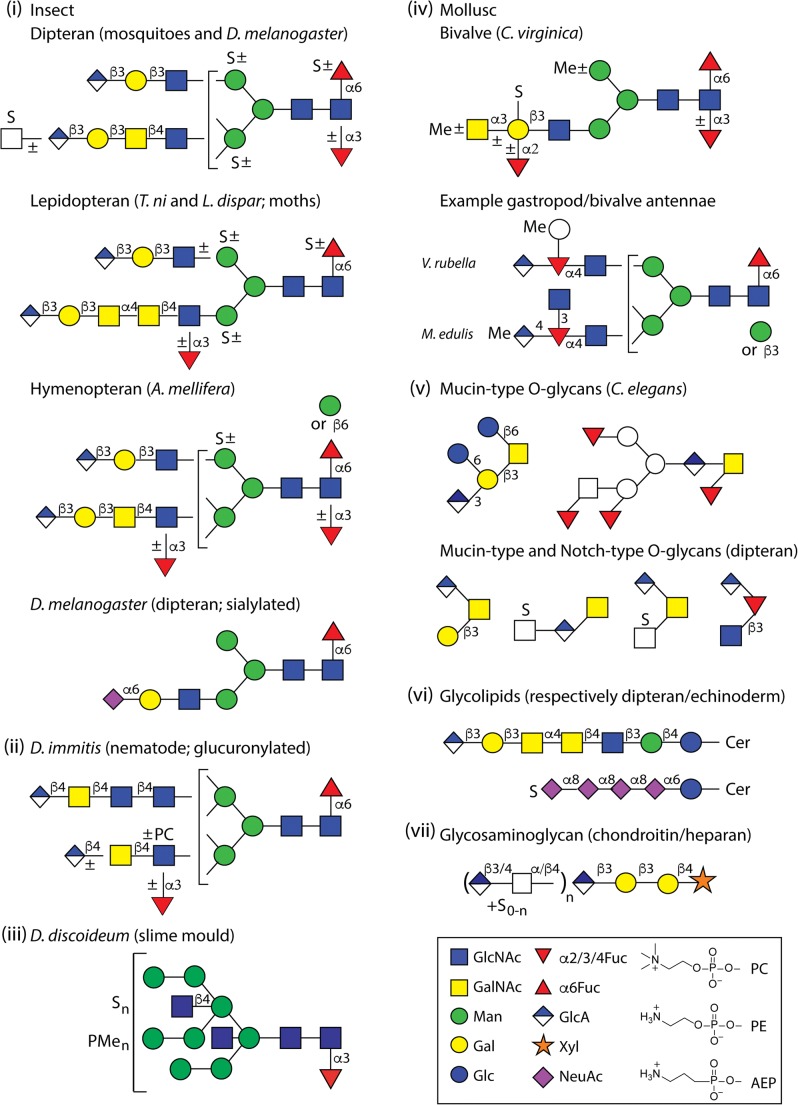
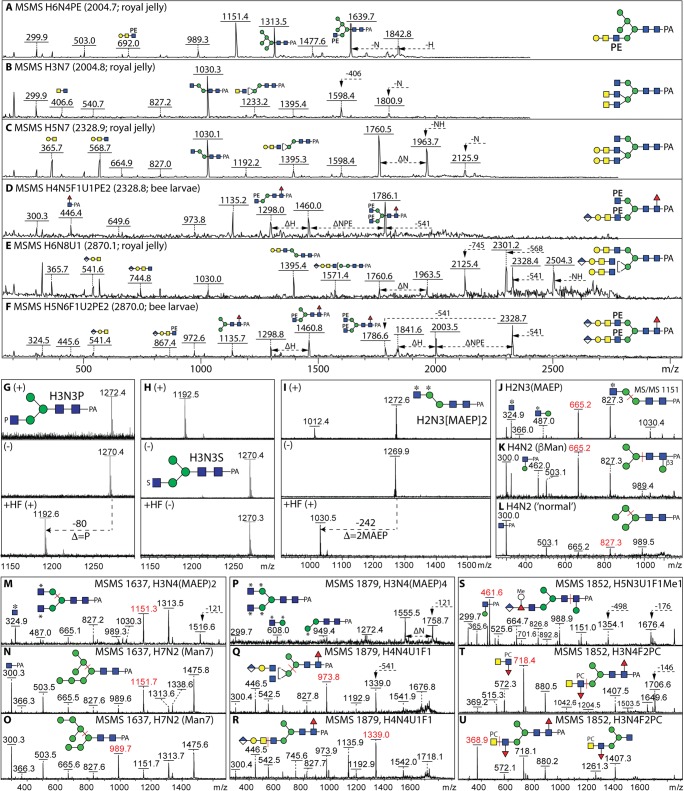
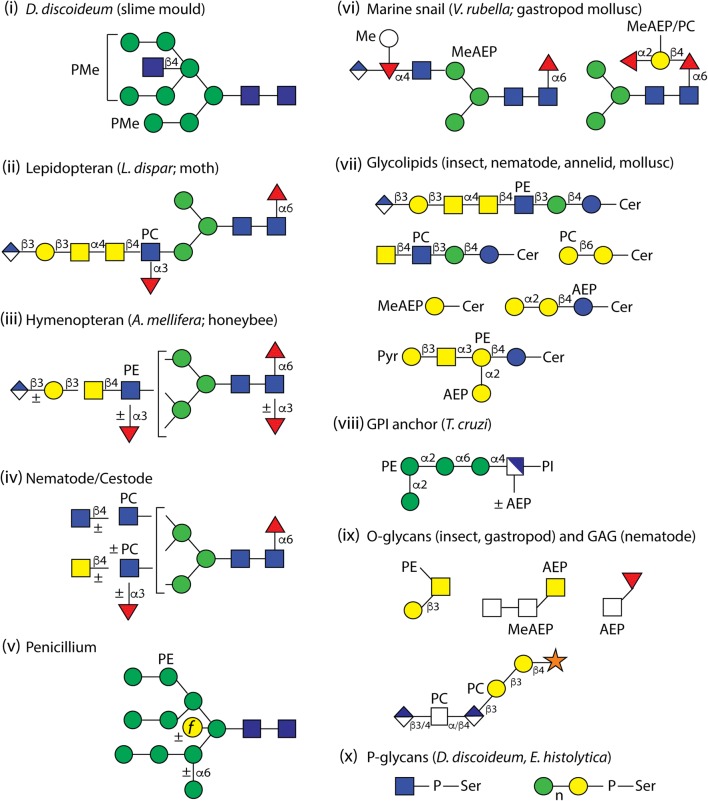
Glycan structures in non-vertebrates are highly variable; it can be assumed that this is a product of evolution and speciation, not that it is just a random event. However, in animals and protists, there is a relatively limited repertoire of around ten monosaccharide building blocks, most of which are neutral in terms of charge. While two monosaccharide types in eukaryotes (hexuronic and sialic acids) are anionic, there are a number of organic or inorganic modifications of glycans such as sulphate, pyruvate, phosphate, phosphorylcholine, phosphoethanolamine and aminoethylphosphonate that also confer a 'charged' nature (either anionic or zwitterionic) to glycoconjugate structures. These alter the physicochemical properties of the glycans to which they are attached, change their ionisation when analysing them by mass spectrometry and result in different interactions with protein receptors. Here, we focus on N-glycans carrying anionic and zwitterionic modifications in protists and invertebrates, but make some reference to O-glycans, glycolipids and glycosaminoglycans which also contain such moieties. The conclusion is that 'charged' glycoconjugates are a widespread, but easily overlooked, feature of 'lower' organisms.
非脊椎动物中的聚糖结构高度多样化;可以假设这是进化和物种形成的产物,而不是随机事件。然而,在动物和原生生物中,只有大约十种单糖组成块的相对有限的组合,其中大多数在电荷方面是中性的。虽然真核生物中有两种单糖类型(己糖醛酸和唾液酸)是阴离子的,但聚糖有许多有机或无机修饰,如硫酸盐、丙酮酸、磷酸盐、磷酸胆碱、磷酸乙醇胺和氨基乙基膦酸酯,它们也赋予糖缀合物结构“带电”的性质(阴离子或两性离子)。这些修饰改变了与之相连的聚糖的物理化学性质,当通过质谱分析它们时改变其电离状态,并导致与蛋白质受体的不同相互作用。在这里,我们专注于带阴离子和两性离子修饰的原生物和无脊椎动物中的 N-聚糖,但也提到了含有此类部分的 O-聚糖、糖脂和糖胺聚糖。结论是,“带电”糖缀合物是“较低”生物体中广泛存在但容易被忽视的特征。