Department of Cardiology, Changzhou Hospital Affiliated to Nanjing University of Chinese Medicine, Changzhou, Jiangsu, China (mainland).
Department of Cardiology, Changzhou Traditional Chinese Medicine Hospital, Changzhou, Jiangsu, China (mainland).
Med Sci Monit. 2019 Jul 7;25:5015-5027. doi: 10.12659/MSM.917362.
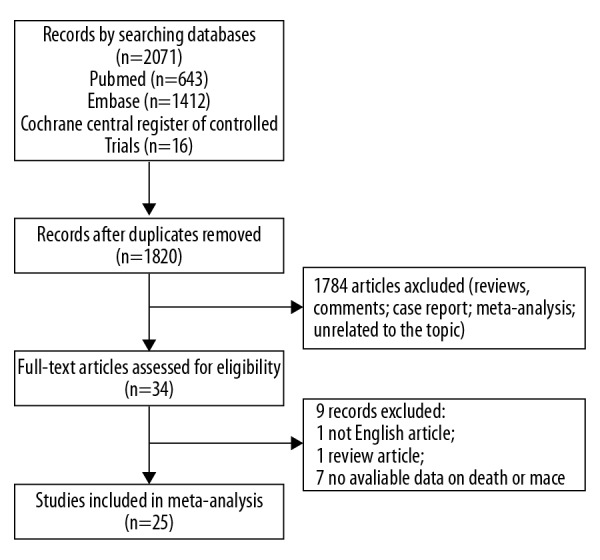
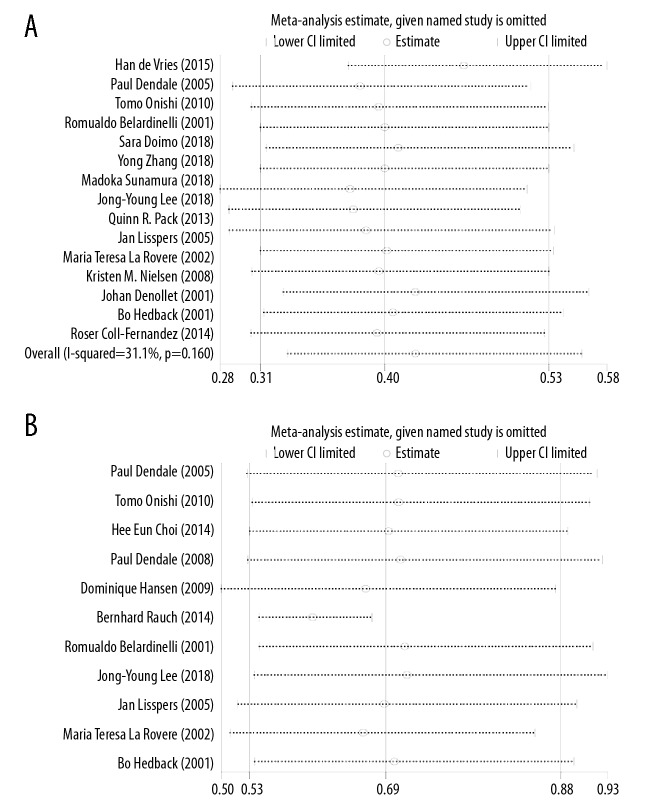
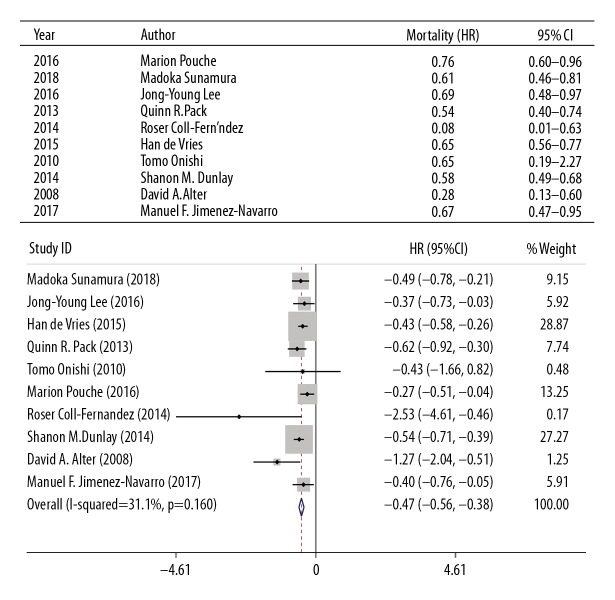
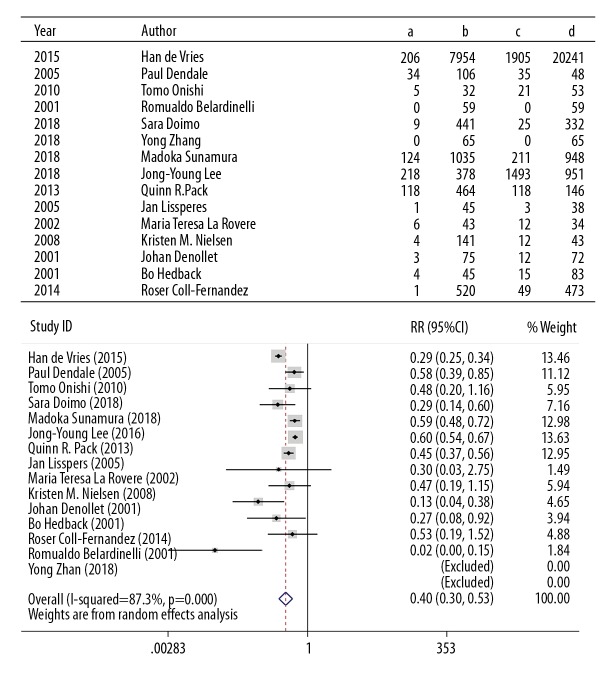
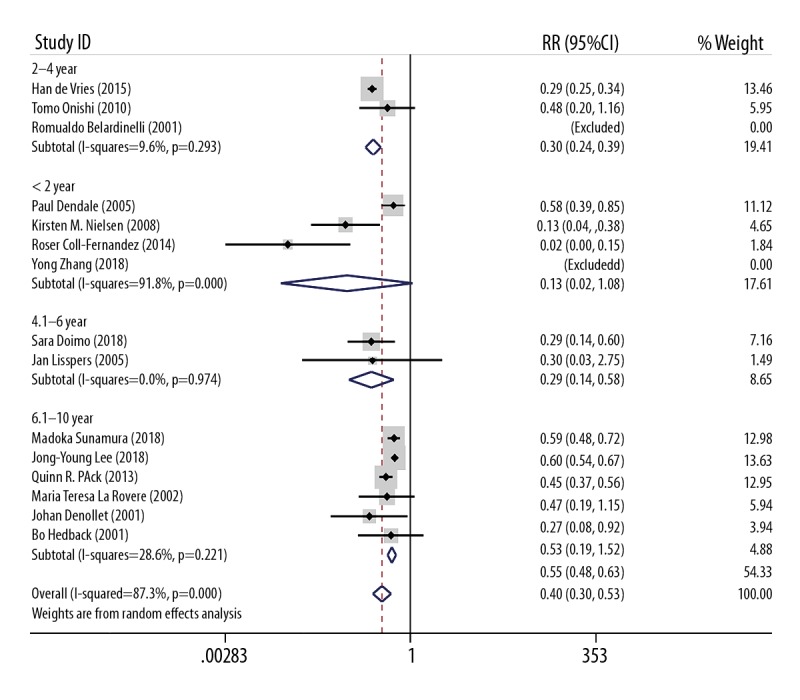
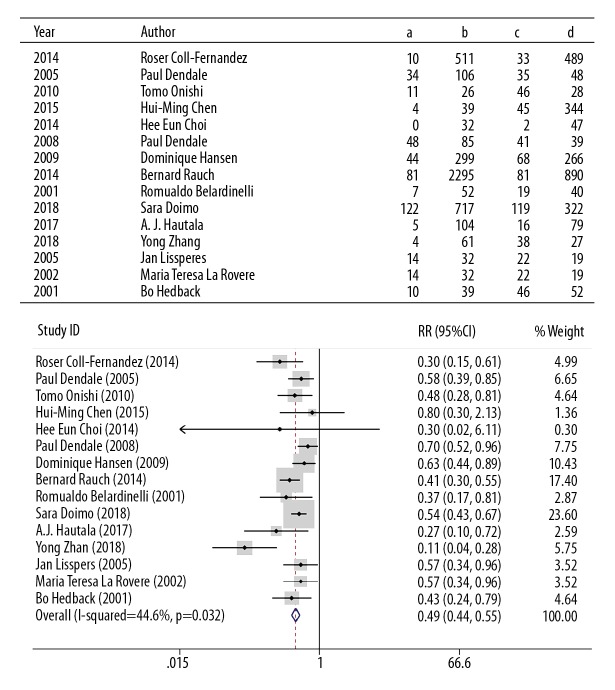
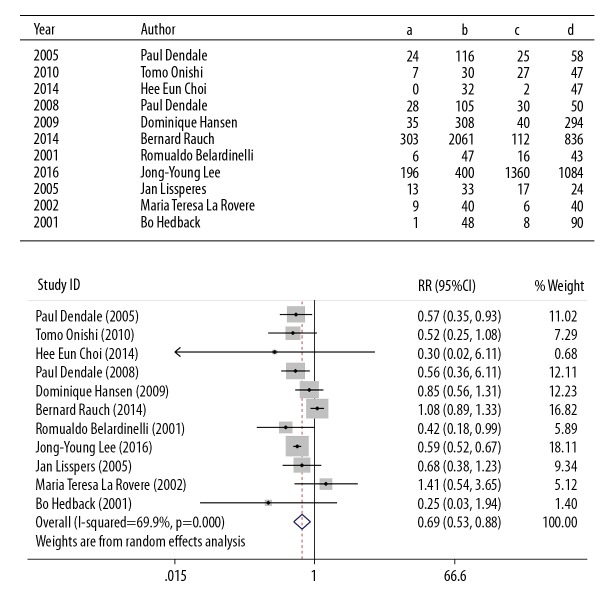
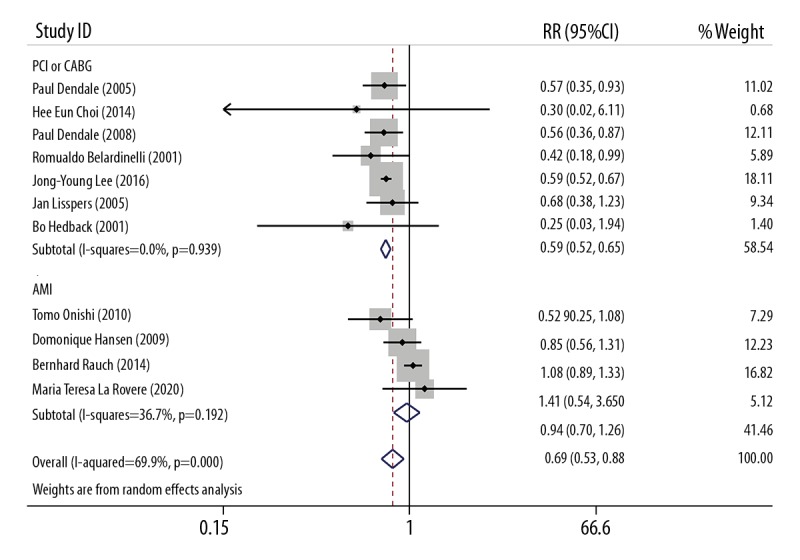
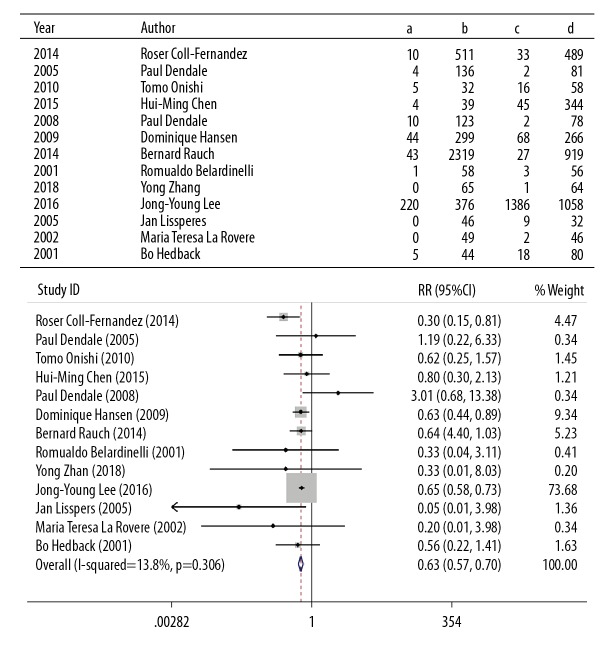
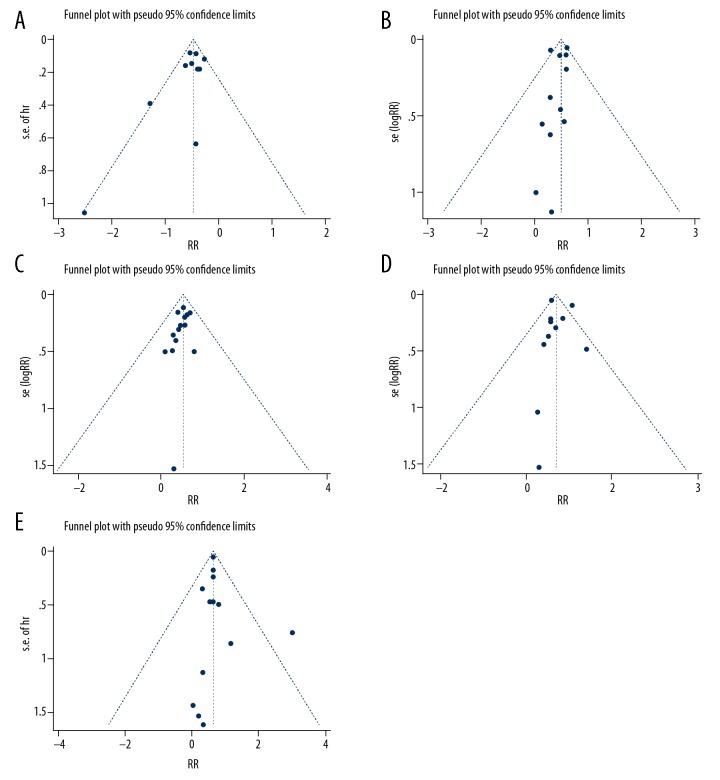
BACKGROUND Acute coronary syndrome (ACS) has become an important cause of death from cardiovascular disease. Cardiac rehabilitation (CR) plays an essential role in ACS patients after treatment. Therefore, in order to detect the impact of CR on mortality and major adverse cardiac events in patients with ACS, we conducted this meta-analysis. MATERIAL AND METHODS We searched PubMed, Web of science, and EMBASE databases to obtain published research results from 2010 to August 2018 to determine the relevant research. Random-effects model or fixed-effects model were used to calculate relative risk (RR) and 95% confidence interval (CI). RESULTS Overall, a total of 25 studies with 55 035 participants were summarized in our meta-analysis. The results indicated that the hazard ratio (HR) of mortality significantly lower in the CR group than in the non-CR group (HR=-0.47; 95% CI=(-0.56 to -0.39; P<0.05). Fourteen studies on mortality rate showed exercise was associated with reduced cardiac death rates (RR=0.40; 95% CI=0.30 to 0.53; P<0.05). We found the risk of major adverse cardiac events (MACE) was lower in the rehabilitation group (RR=0.49; 95% CI=0.44 to 0.55; P<0.05). In 11 articles on CR including 8098 participants, the benefit in the CR group was greater than in the control group concerning revascularization (RR=0.69, 95% CI: 0.53 to 0.88; P=0.003). The recurrence rate of MI was reported in 13 studies, and the risk was lower in the CR group (RR=0.63, 95% CI: 0.57-0.70; P<0.05). CONCLUSIONS Our meta-analysis results suggest that CR is clearly associated with reductions in cardiac mortality, recurrence of MI, repeated PCI, CABG, and restenosis.
急性冠状动脉综合征(ACS)已成为心血管疾病死亡的重要原因。心脏康复(CR)在 ACS 患者治疗后起着至关重要的作用。因此,为了检测 CR 对 ACS 患者死亡率和主要不良心脏事件的影响,我们进行了这项荟萃分析。
我们检索了 PubMed、Web of Science 和 EMBASE 数据库,以获取 2010 年至 2018 年 8 月发表的相关研究结果。采用随机效应模型或固定效应模型计算相对风险(RR)和 95%置信区间(CI)。
总体而言,我们的荟萃分析共纳入了 25 项研究,共 55035 名参与者。结果表明,CR 组的死亡率明显低于非 CR 组(RR=-0.47;95%CI=(-0.56 至 -0.39;P<0.05)。14 项关于死亡率的研究表明,运动与降低心脏死亡率相关(RR=0.40;95%CI=(0.30 至 0.53;P<0.05)。我们发现康复组的主要不良心脏事件(MACE)风险较低(RR=0.49;95%CI=(0.44 至 0.55;P<0.05)。在包括 8098 名参与者的 11 篇关于 CR 的文章中,CR 组的益处大于对照组的血运重建(RR=0.69,95%CI:0.53 至 0.88;P=0.003)。13 项研究报告了 MI 的复发率,CR 组的风险较低(RR=0.63,95%CI:0.57-0.70;P<0.05)。
我们的荟萃分析结果表明,CR 明显与降低心脏死亡率、MI 复发、重复 PCI、CABG 和再狭窄相关。