Department of Pediatrics, University of Cincinnati College of Medicine, Cincinnati, Ohio 45267, USA.
Divisions of Research in Patient Services and Clinical Pharmacology, Cincinnati Children's Hospital Medical Center, Cincinnati, Ohio 45229, USA.
Annu Rev Pharmacol Toxicol. 2020 Jan 6;60:311-331. doi: 10.1146/annurev-pharmtox-010919-023459. Epub 2019 Jul 5.
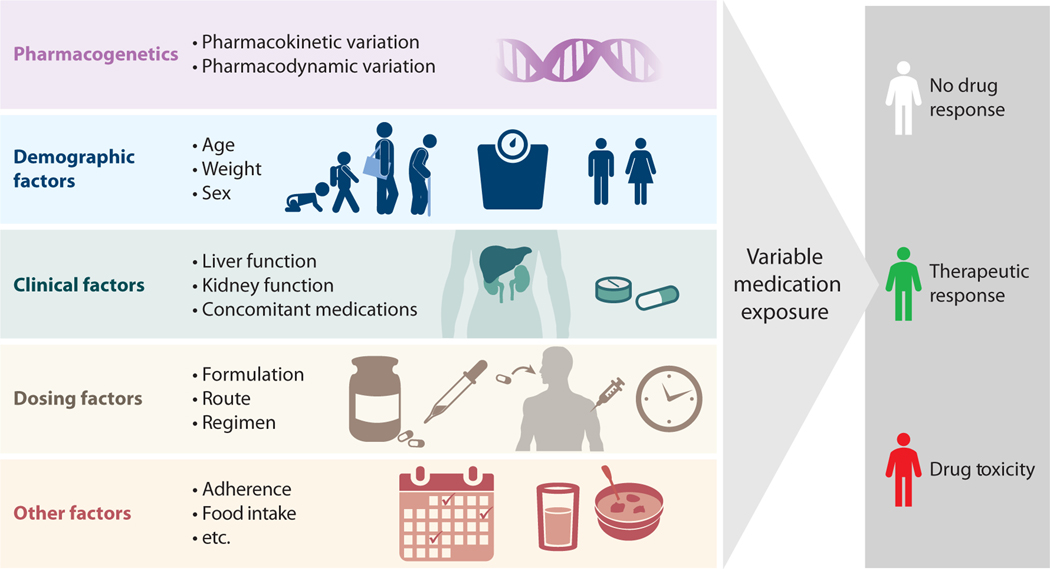
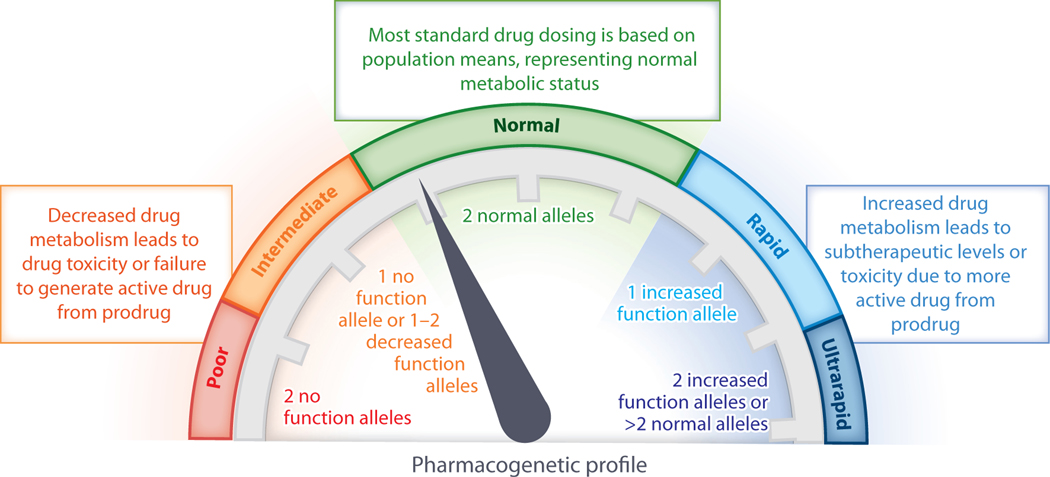
Pharmacogenetics is a key component of precision medicine. Genetic variation in drug metabolism enzymes can lead to variable exposure to drugs and metabolites, potentially leading to inefficacy and drug toxicity. Although the evidence for pharmacogenetic associations in children is not as extensive as for adults, there are several drugs across diverse therapeutic areas with robust pediatric data indicating important, and relatively common, drug-gene interactions. Guidelines to assist gene-based dose optimization are available for codeine, thiopurine drugs, selective serotonin reuptake inhibitors, atomoxetine, tacrolimus, and voriconazole. For each of these drugs, there is an opportunity to clinically implement precision medicine approaches with children for whom genetic test results are known or are obtained at the time of prescribing. For many more drugs that are commonly used in pediatric patients, additional investigation is needed to determine the genetic factors influencing appropriate dose.
药物遗传学是精准医学的一个关键组成部分。药物代谢酶的遗传变异可导致药物和代谢物的暴露情况出现差异,从而可能导致疗效不佳和药物毒性。尽管儿童药物遗传学相关性的证据不如成人那么广泛,但在多个治疗领域有多种药物具有强有力的儿科数据,表明存在重要且相对常见的药物-基因相互作用。有指南可协助基于基因的剂量优化,适用于可待因、硫嘌呤类药物、选择性 5-羟色胺再摄取抑制剂、托莫西汀、他克莫司和伏立康唑。对于这些药物中的每一种,都有机会针对已知基因检测结果或在开处方时获得基因检测结果的儿童实施精准医学方法。对于在儿科患者中更常使用的许多其他药物,还需要进一步研究以确定影响适当剂量的遗传因素。