Epidemic Diseases Research Group, University of Oxford, Oxford, UK.
Epidemic Diseases Research Group, University of Oxford, Oxford, UK; United Kingdom Public Health Rapid Support Team, London School of Hygiene & Tropical Medicine, Keppel Street, London, WC1E 7HT, UK.
Clin Microbiol Infect. 2019 Nov;25(11):1307-1314. doi: 10.1016/j.cmi.2019.06.032. Epub 2019 Jul 5.
Over 28 000 individuals were infected with Ebola virus during the West Africa (2013-2016) epidemic, yet there has been criticism of the lack of robust clinical descriptions of Ebola virus disease (EVD) illness from that outbreak.
To perform a meta-analysis of published data from the epidemic to describe the clinical presentation, evolution of disease, and predictors of mortality in individuals with EVD. To assess the quality and utility of published data for clinical and public health decision-making.
Primary articles available in PubMed and published between January 2014 and May 2017.
Studies that sequentially enrolled individuals hospitalized for EVD and that reported acute clinical outcomes.
We performed meta-analyses using random-effect models and assessed heterogeneity using the I method. We assessed data representativeness by comparing meta-analysis estimates with WHO aggregate data. We examined data utility by examining the availability and compatibility of data sets.
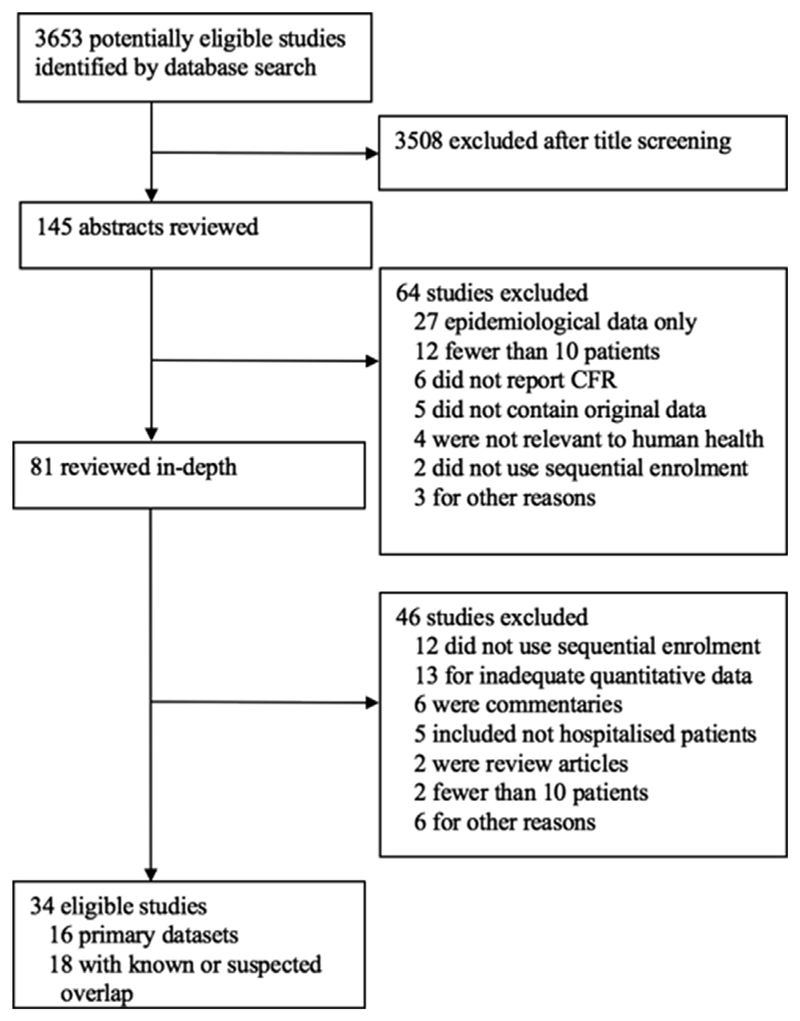
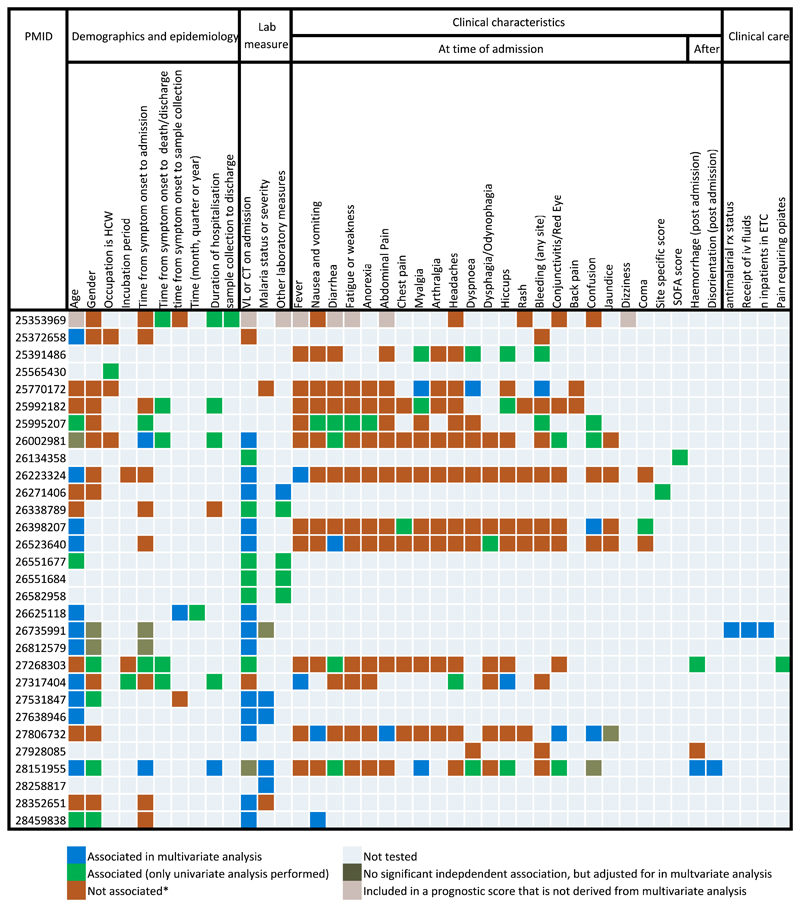
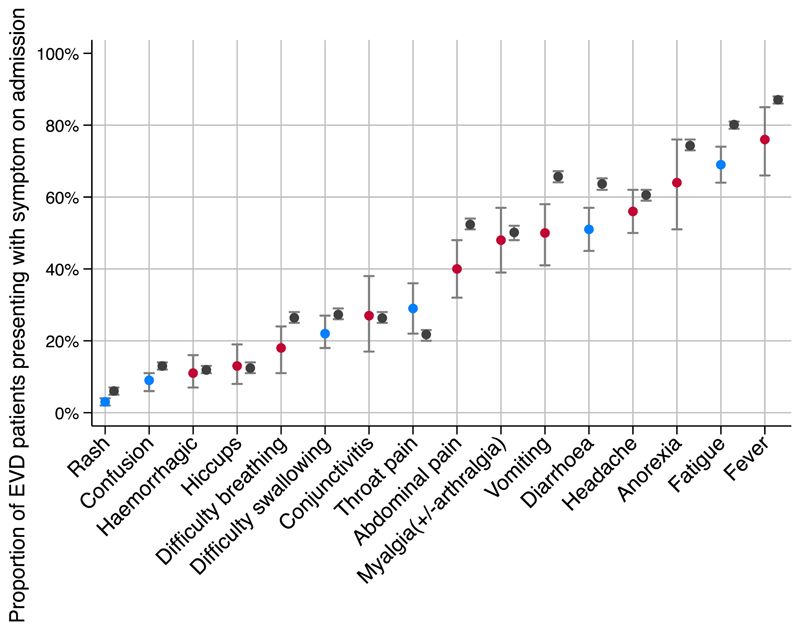
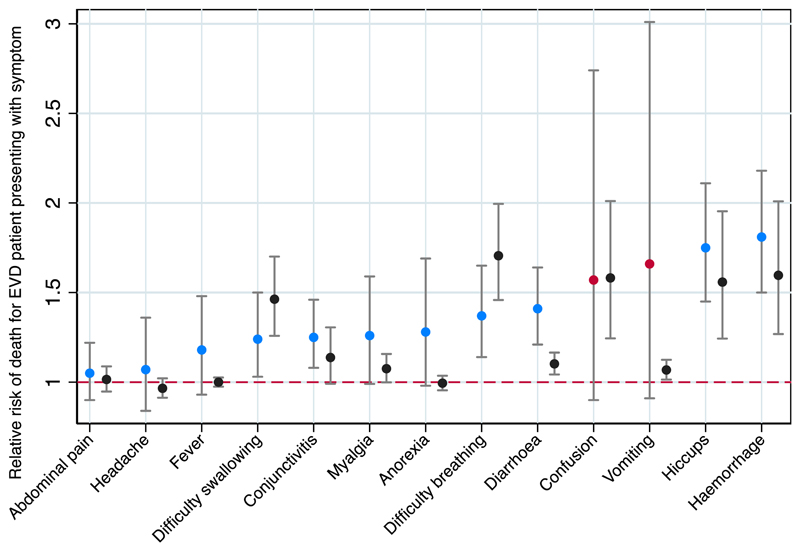
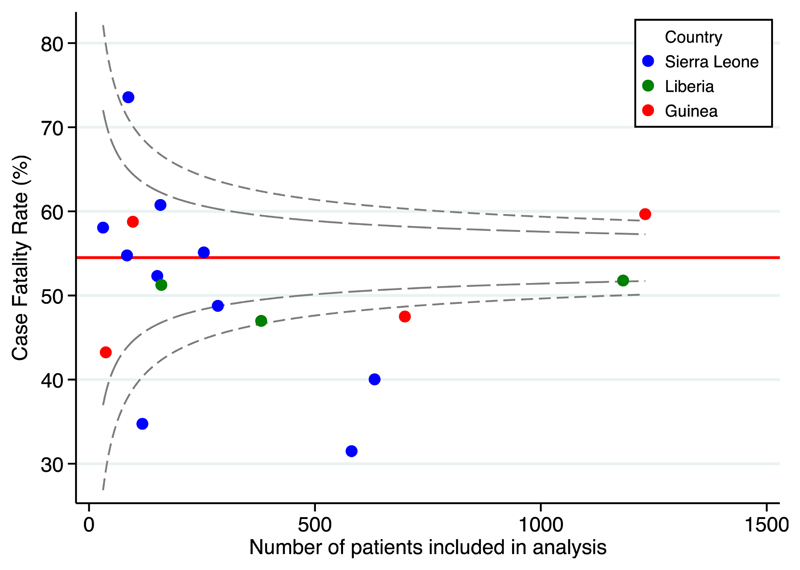
In all, 3653 articles were screened and 34 articles were included, representing 16 independent cohorts of patients (18 overlapping cohorts) and at least 6168 individuals. The pooled estimate for case fatality rate was 51% (95% CI 46%-56%). However, pooling of estimates for clinical presentation, progression, and predictors of mortality in individuals with EVD were hampered by significant heterogeneity, and inadequate data on clinical progression. Our assessment of data quality found that heterogeneity was largely unexplained, and data availability and compatibility were poor.
We have quantified a missed opportunity to generate reliable estimates of the clinical manifestations of EVD during the West Africa epidemic. Clinical data standards and data capture platforms are urgently needed.
在西非(2013-2016 年)疫情期间,超过 28000 人感染了埃博拉病毒,但有人批评缺乏对该疫情中埃博拉病毒病(EVD)疾病的稳健临床描述。
对该疫情中已发表数据进行荟萃分析,以描述 EVD 患者的临床表现、疾病进展和死亡预测因素。评估已发表数据对临床和公共卫生决策的质量和实用性。
PubMed 中可获取的并在 2014 年 1 月至 2017 年 5 月间发表的主要文章。
连续收治住院的 EVD 患者,并报告急性临床结局的研究。
我们使用随机效应模型进行荟萃分析,并使用 I 方法评估异质性。我们通过比较荟萃分析估计值与世卫组织汇总数据来评估数据代表性。我们通过检查数据集的可用性和兼容性来检查数据实用性。
共筛选了 3653 篇文章,纳入了 34 篇文章,代表了 16 个独立的患者队列(18 个重叠队列)和至少 6168 人。合并病死率估计值为 51%(95%CI 46%-56%)。然而,由于存在显著的异质性以及关于 EVD 患者临床进展的可用数据不足,对临床表现、进展和死亡预测因素的估计值进行汇总受到阻碍。我们对数据质量的评估发现,异质性在很大程度上无法解释,数据的可用性和兼容性较差。
我们已经量化了在西非疫情期间生成可靠的 EVD 临床表现估计值的错失机会。迫切需要临床数据标准和数据捕获平台。