Wit Jan M., Deeb Asma, Bin-Abbas Bassam, Al Mutair Angham, Koledova Ekaterina, Savage Martin O.
Leiden University Medical Centre, Department of Paediatrics, Leiden, Netherlands
Mafraq Hospital, Clinic of Paediatric Endocrinology, Abu Dhabi, United Arab Emirates
J Clin Res Pediatr Endocrinol. 2019 Nov 22;11(4):329-340. doi: 10.4274/jcrpe.galenos.2019.2019.0088. Epub 2019 Jul 9.
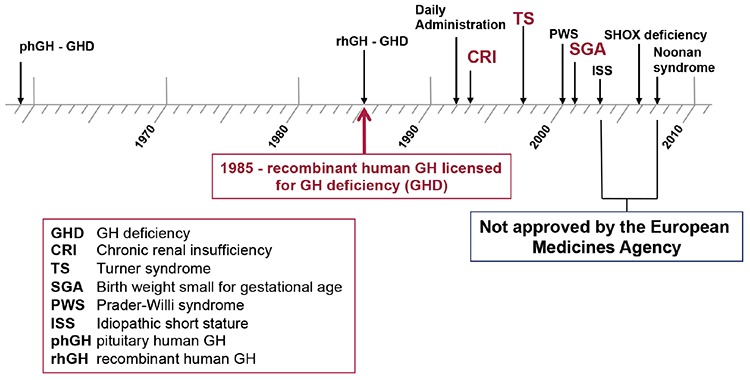
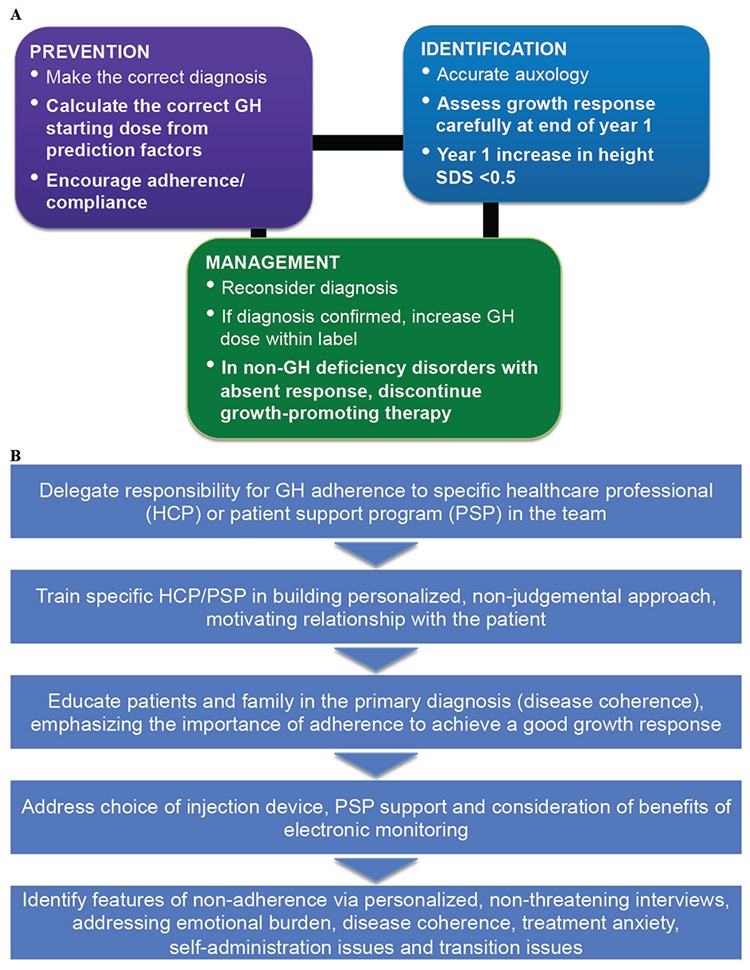
It is over sixty years since the first administration of human growth hormone (GH) to children with GH deficiency, and over thirty years since recombinant human GH has been available for treatment of GH deficiency and a wider range of non-GH deficiency disorders. From a diagnostic perspective, genetic analysis, using single gene or Sanger sequencing and more recently next generation or whole exome sequencing, has brought advances in the diagnosis of specific causes of short stature, which has enabled therapy to be targeted more accurately. Genetic discoveries have ranged from defects of pituitary development and GH action to abnormalities in intracellular mechanisms, paracrine regulation and cartilage matrix formation. The strategy of GH therapy using standard doses has evolved to individualised GH dosing, depending on diagnosis and predictors of growth response. Evidence of efficacy of GH in GH deficiency, Turner syndrome and short children born small for gestational age is reviewed. The importance of critical assessment of growth response is discussed, together with the recognition and management of a poor or unsatisfactory growth response and the organisational issues related to prevention, detection and intervention regarding suboptimal adherence to GH therapy.
自首次给生长激素(GH)缺乏的儿童使用人类生长激素以来,已经过去了六十多年;自重组人生长激素可用于治疗GH缺乏及更广泛的非GH缺乏性疾病以来,也已经过去了三十多年。从诊断角度来看,利用单基因或桑格测序以及最近的新一代测序或全外显子组测序进行的基因分析,在矮小症特定病因的诊断方面取得了进展,这使得治疗能够更精准地靶向。基因发现涵盖了从垂体发育和GH作用缺陷到细胞内机制、旁分泌调节和软骨基质形成异常等方面。使用标准剂量的GH治疗策略已演变为个体化的GH给药,这取决于诊断和生长反应的预测指标。本文综述了GH在GH缺乏症、特纳综合征以及小于胎龄儿出生的矮小儿童中的疗效证据。讨论了对生长反应进行严格评估的重要性,以及对生长反应不佳或不理想的识别与管理,还有与预防、检测和干预GH治疗依从性欠佳相关的组织问题。