• 文献检索
  • 文档翻译
  • 深度研究
  • 学术资讯
  • Suppr Zotero 插件Zotero 插件
  • 邀请有礼
  • 套餐&价格
  • 历史记录
应用&插件
Suppr Zotero 插件Zotero 插件浏览器插件Mac 客户端Windows 客户端微信小程序
定价
高级版会员购买积分包购买API积分包
服务
文献检索文档翻译深度研究API 文档MCP 服务
关于我们
关于 Suppr公司介绍联系我们用户协议隐私条款
关注我们

Suppr 超能文献

核心技术专利:CN118964589B侵权必究
粤ICP备2023148730 号-1Suppr @ 2026

文献检索

告别复杂PubMed语法,用中文像聊天一样搜索,搜遍4000万医学文献。AI智能推荐,让科研检索更轻松。

立即免费搜索

文件翻译

保留排版,准确专业,支持PDF/Word/PPT等文件格式,支持 12+语言互译。

免费翻译文档

深度研究

AI帮你快速写综述,25分钟生成高质量综述,智能提取关键信息,辅助科研写作。

立即免费体验

人类基于点击的距离回声定位:超精细的感知能力和动态点击行为。

Human Click-Based Echolocation of Distance: Superfine Acuity and Dynamic Clicking Behaviour.

机构信息

Department of Psychology, Durham University, Science Site, South Road, Durham, DH1 3LE, UK.

Eindhoven University of Technology, Eindhoven, The Netherlands.

出版信息

J Assoc Res Otolaryngol. 2019 Oct;20(5):499-510. doi: 10.1007/s10162-019-00728-0. Epub 2019 Jul 8.

DOI:10.1007/s10162-019-00728-0
PMID:31286299
原文链接:https://pmc.ncbi.nlm.nih.gov/articles/PMC6797687/
Abstract

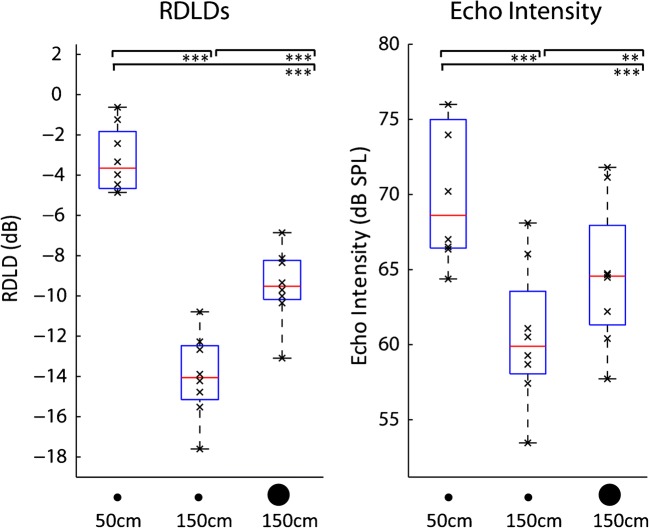
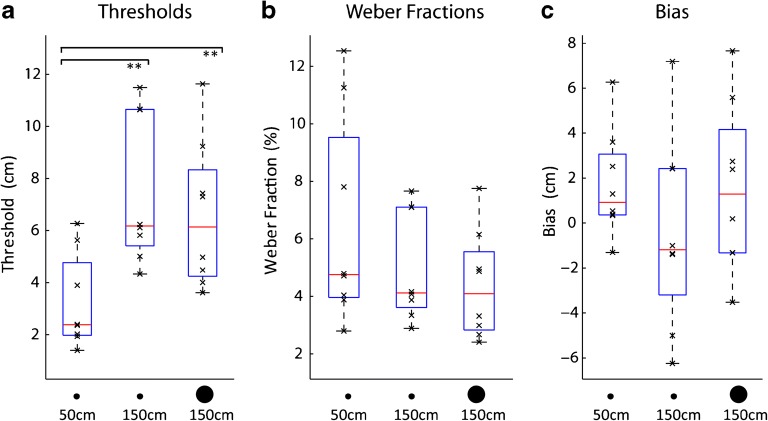
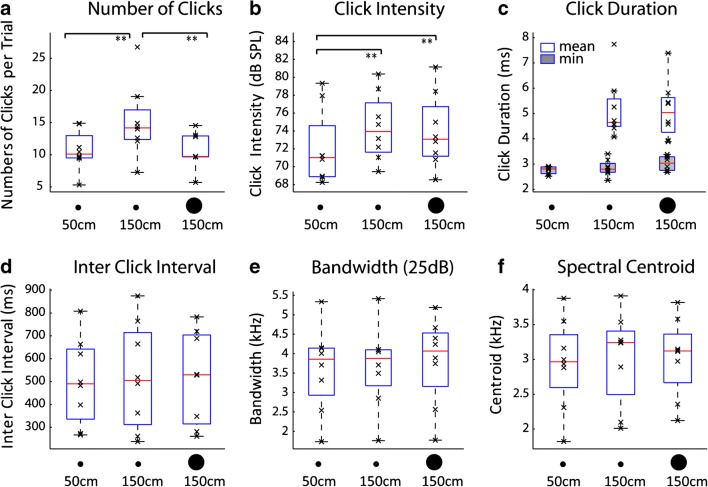
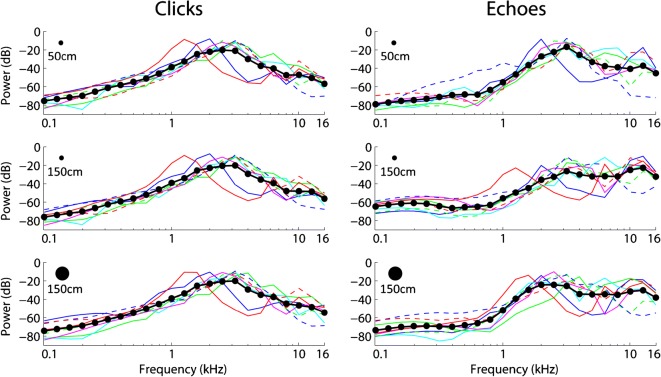
Some people who are blind have trained themselves in echolocation using mouth clicks. Here, we provide the first report of psychophysical and clicking data during echolocation of distance from a group of 8 blind people with experience in mouth click-based echolocation (daily use for > 3 years). We found that experienced echolocators can detect changes in distance of 3 cm at a reference distance of 50 cm, and a change of 7 cm at a reference distance of 150 cm, regardless of object size (i.e. 28.5 cm vs. 80 cm diameter disk). Participants made mouth clicks that were more intense and they made more clicks for weaker reflectors (i.e. same object at farther distance, or smaller object at same distance), but number and intensity of clicks were adjusted independently from one another. The acuity we found is better than previous estimates based on samples of sighted participants without experience in echolocation or individual experienced participants (i.e. single blind echolocators tested) and highlights adaptation of the perceptual system in blind human echolocators. Further, the dynamic adaptive clicking behaviour we observed suggests that number and intensity of emissions serve separate functions to increase SNR. The data may serve as an inspiration for low-cost (i.e. non-array based) artificial 'cognitive' sonar and radar systems, i.e. signal design, adaptive pulse repetition rate and intensity. It will also be useful for instruction and guidance for new users of echolocation.

摘要

一些失明的人通过口腔点击来训练自己的回声定位能力。在这里,我们提供了第一组 8 名有经验的基于口腔点击回声定位的盲人的心理物理和点击数据的报告,这些人每天使用该技术的时间超过 3 年。我们发现,有经验的回声定位者可以检测到 50 厘米参考距离处 3 厘米的距离变化,以及 150 厘米参考距离处 7 厘米的距离变化,而与物体大小无关(即 28.5 厘米与 80 厘米直径的圆盘)。参与者发出的口腔点击更强烈,并且对于较弱的反射器(即距离较远的相同物体或相同距离处较小的物体)发出更多的点击,但点击的数量和强度是相互独立调整的。我们发现的敏锐度优于以前基于没有回声定位经验的有视力参与者的样本或单个有经验的参与者(即单个盲回声定位者测试)的估计,这突显了盲人回声定位者的感知系统的适应性。此外,我们观察到的动态自适应点击行为表明,发射的数量和强度具有不同的功能,可以提高信噪比。这些数据可以为低成本(即非基于阵列的)人工“认知”声纳和雷达系统提供灵感,例如信号设计、自适应脉冲重复率和强度。它对于新的回声定位用户的指导和指导也将非常有用。
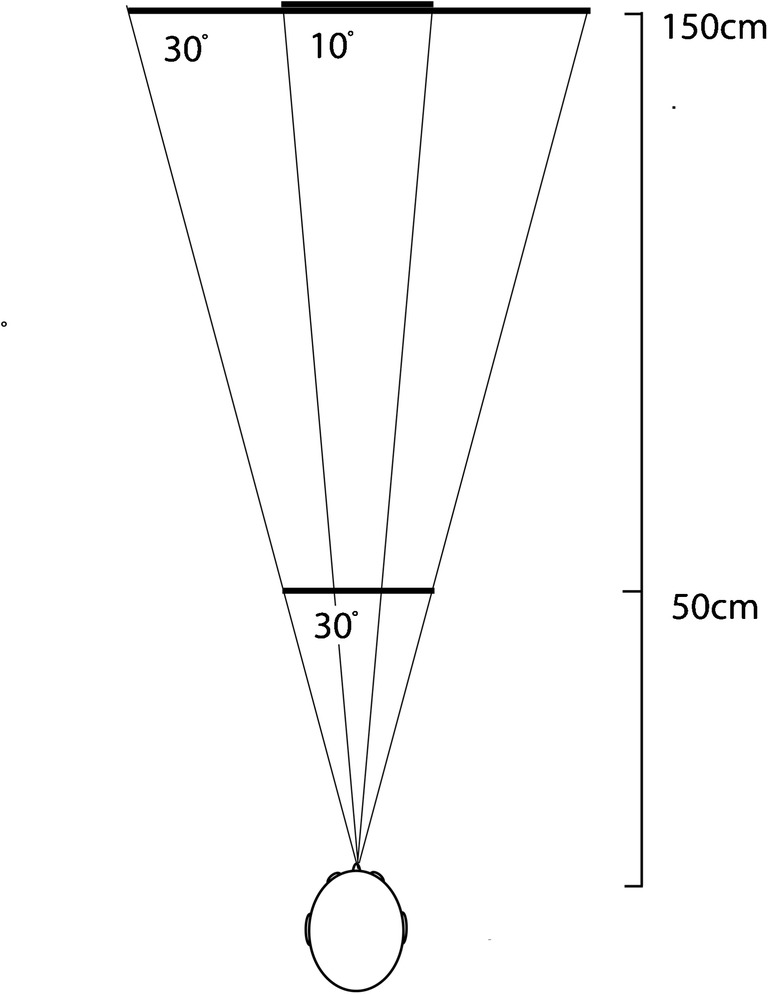
https://cdn.ncbi.nlm.nih.gov/pmc/blobs/0457/6797687/c73222663977/10162_2019_728_Fig5_HTML.jpg
https://cdn.ncbi.nlm.nih.gov/pmc/blobs/0457/6797687/f2bd2e96ea40/10162_2019_728_Fig1_HTML.jpg
https://cdn.ncbi.nlm.nih.gov/pmc/blobs/0457/6797687/6b68f98e7729/10162_2019_728_Fig2_HTML.jpg
https://cdn.ncbi.nlm.nih.gov/pmc/blobs/0457/6797687/e07f8f00387a/10162_2019_728_Fig3_HTML.jpg
https://cdn.ncbi.nlm.nih.gov/pmc/blobs/0457/6797687/cbf2e9f11ad4/10162_2019_728_Fig4_HTML.jpg
https://cdn.ncbi.nlm.nih.gov/pmc/blobs/0457/6797687/c73222663977/10162_2019_728_Fig5_HTML.jpg
https://cdn.ncbi.nlm.nih.gov/pmc/blobs/0457/6797687/f2bd2e96ea40/10162_2019_728_Fig1_HTML.jpg
https://cdn.ncbi.nlm.nih.gov/pmc/blobs/0457/6797687/6b68f98e7729/10162_2019_728_Fig2_HTML.jpg
https://cdn.ncbi.nlm.nih.gov/pmc/blobs/0457/6797687/e07f8f00387a/10162_2019_728_Fig3_HTML.jpg
https://cdn.ncbi.nlm.nih.gov/pmc/blobs/0457/6797687/cbf2e9f11ad4/10162_2019_728_Fig4_HTML.jpg
https://cdn.ncbi.nlm.nih.gov/pmc/blobs/0457/6797687/c73222663977/10162_2019_728_Fig5_HTML.jpg

相似文献

1
Human Click-Based Echolocation of Distance: Superfine Acuity and Dynamic Clicking Behaviour.人类基于点击的距离回声定位:超精细的感知能力和动态点击行为。
J Assoc Res Otolaryngol. 2019 Oct;20(5):499-510. doi: 10.1007/s10162-019-00728-0. Epub 2019 Jul 8.
2
Human echolocators adjust loudness and number of clicks for detection of reflectors at various azimuth angles.人类回声定位器会根据反射器的不同方位角调整声音的响度和点击次数以进行检测。
Proc Biol Sci. 2018 Feb 28;285(1873). doi: 10.1098/rspb.2017.2735.
3
Effects of type of emission and masking sound, and their spatial correspondence, on blind and sighted people's ability to echolocate.发射类型和掩蔽声及其空间对应关系对盲人和视力正常者回声定位能力的影响。
Neuropsychologia. 2024 Apr 15;196:108822. doi: 10.1016/j.neuropsychologia.2024.108822. Epub 2024 Feb 9.
4
Mouth-clicks used by blind expert human echolocators - signal description and model based signal synthesis.盲人专家回声定位者使用的口腔咔哒声——信号描述与基于模型的信号合成
PLoS Comput Biol. 2017 Aug 31;13(8):e1005670. doi: 10.1371/journal.pcbi.1005670. eCollection 2017 Aug.
5
People's Ability to Detect Objects Using Click-Based Echolocation: A Direct Comparison between Mouth-Clicks and Clicks Made by a Loudspeaker.人们使用基于点击的回声定位检测物体的能力:口腔点击与扬声器发出的点击之间的直接比较。
PLoS One. 2016 May 2;11(5):e0154868. doi: 10.1371/journal.pone.0154868. eCollection 2016.
6
Human Echolocators Have Better Localization Off Axis.人类回声定位者具有更好的离轴定位能力。
Psychol Sci. 2022 Jul;33(7):1143-1153. doi: 10.1177/09567976211068070. Epub 2022 Jun 14.
7
Increased emission intensity can compensate for the presence of noise in human click-based echolocation.人类基于点击的回声定位中,发射强度的增加可以补偿噪声的存在。
Sci Rep. 2021 Jan 18;11(1):1750. doi: 10.1038/s41598-021-81220-9.
8
Human click-based echolocation: Effects of blindness and age, and real-life implications in a 10-week training program.人类基于点击的回声定位:失明和年龄的影响,以及在为期 10 周的培训计划中的实际意义。
PLoS One. 2021 Jun 2;16(6):e0252330. doi: 10.1371/journal.pone.0252330. eCollection 2021.
9
A blind human expert echolocator shows size constancy for objects perceived by echoes.一位失明的人类专家回声定位者对通过回声感知到的物体表现出大小恒常性。
Neurocase. 2015;21(4):465-70. doi: 10.1080/13554794.2014.922994. Epub 2014 May 29.
10
Echolocation in humans: an overview.人类的回声定位:概述
Wiley Interdiscip Rev Cogn Sci. 2016 Nov;7(6):382-393. doi: 10.1002/wcs.1408. Epub 2016 Aug 19.

引用本文的文献

1
EchoSee: An Assistive Mobile Application for Real-Time 3D Environment Reconstruction and Sonification Supporting Enhanced Navigation for People with Vision Impairments.回声视觉:一款辅助移动应用程序,用于实时3D环境重建和可听化,支持视障人士增强导航功能。
Bioengineering (Basel). 2024 Aug 14;11(8):831. doi: 10.3390/bioengineering11080831.
2
Adaptive echolocation behavior of bats and toothed whales in dynamic soundscapes.蝙蝠和齿鲸在动态声景中的自适应回声定位行为。
J Exp Biol. 2023 May 1;226(9). doi: 10.1242/jeb.245450. Epub 2023 May 10.
3
Effectiveness of time-varying echo information for target geometry identification in bat-inspired human echolocation.

本文引用的文献

1
Human echolocators adjust loudness and number of clicks for detection of reflectors at various azimuth angles.人类回声定位器会根据反射器的不同方位角调整声音的响度和点击次数以进行检测。
Proc Biol Sci. 2018 Feb 28;285(1873). doi: 10.1098/rspb.2017.2735.
2
Mouth-clicks used by blind expert human echolocators - signal description and model based signal synthesis.盲人专家回声定位者使用的口腔咔哒声——信号描述与基于模型的信号合成
PLoS Comput Biol. 2017 Aug 31;13(8):e1005670. doi: 10.1371/journal.pcbi.1005670. eCollection 2017 Aug.
3
Echolocation in humans: an overview.
时变回波信息在基于蝙蝠启发的人类回声定位中对目标几何形状识别的有效性。
PLoS One. 2021 May 5;16(5):e0250517. doi: 10.1371/journal.pone.0250517. eCollection 2021.
4
Increased emission intensity can compensate for the presence of noise in human click-based echolocation.人类基于点击的回声定位中,发射强度的增加可以补偿噪声的存在。
Sci Rep. 2021 Jan 18;11(1):1750. doi: 10.1038/s41598-021-81220-9.
5
Perceptual constancy with a novel sensory skill.具有新颖感官技能的知觉恒常性。
J Exp Psychol Hum Percept Perform. 2021 Feb;47(2):269-281. doi: 10.1037/xhp0000888. Epub 2020 Dec 3.
6
Stimulus uncertainty affects perception in human echolocation: Timing, level, and spectrum.刺激不确定性会影响人类回声定位中的感知:时间、水平和频谱。
J Exp Psychol Gen. 2020 Dec;149(12):2314-2331. doi: 10.1037/xge0000775. Epub 2020 Apr 23.
7
Navigation and perception of spatial layout in virtual echo-acoustic space.虚拟回声声学空间中空间布局的导航与感知
Cognition. 2020 Apr;197:104185. doi: 10.1016/j.cognition.2020.104185. Epub 2020 Jan 15.
8
The flexible action system: Click-based echolocation may replace certain visual functionality for adaptive walking.灵活动作系统:基于点击的回声定位可能会替代某些自适应行走的视觉功能。
J Exp Psychol Hum Percept Perform. 2020 Jan;46(1):21-35. doi: 10.1037/xhp0000697. Epub 2019 Sep 26.
人类的回声定位:概述
Wiley Interdiscip Rev Cogn Sci. 2016 Nov;7(6):382-393. doi: 10.1002/wcs.1408. Epub 2016 Aug 19.
4
Depth Echolocation Learnt by Novice Sighted People.视力正常的新手学会深度回声定位。
PLoS One. 2016 Jun 3;11(6):e0156654. doi: 10.1371/journal.pone.0156654. eCollection 2016.
5
Object localization using a biosonar beam: how opening your mouth improves localization.使用生物声纳波束进行目标定位:张嘴如何提高定位能力。
R Soc Open Sci. 2015 Aug 26;2(8):150225. doi: 10.1098/rsos.150225. eCollection 2015 Aug.
6
Self-motion facilitates echo-acoustic orientation in humans.自我运动有助于人类进行回声声学定向。
R Soc Open Sci. 2014 Nov 12;1(3):140185. doi: 10.1098/rsos.140185. eCollection 2014 Nov.
7
Ranging in human sonar: effects of additional early reflections and exploratory head movements.人类声纳中的范围:额外早期反射和探索性头部运动的影响。
PLoS One. 2014 Dec 31;9(12):e115363. doi: 10.1371/journal.pone.0115363. eCollection 2014.
8
The role of head movements in the discrimination of 2-D shape by blind echolocation experts.头部运动在盲人回声定位专家对二维形状辨别中的作用。
Atten Percept Psychophys. 2014 Aug;76(6):1828-37. doi: 10.3758/s13414-014-0695-2.
9
A summary of research investigating echolocation abilities of blind and sighted humans.一项关于盲人和有视力的人回声定位能力的研究综述。
Hear Res. 2014 Apr;310:60-8. doi: 10.1016/j.heares.2014.01.010. Epub 2014 Feb 10.
10
Echolocation versus echo suppression in humans.人类的回声定位与回声抑制。
Proc Biol Sci. 2013 Aug 28;280(1769):20131428. doi: 10.1098/rspb.2013.1428. Print 2013 Oct 22.