Weill Institute for Cell and Molecular Biology, Cornell University, Ithaca, NY, 14853, USA.
Department of Microbiology, Cornell University, Ithaca, NY, 14853, USA.
Mol Microbiol. 2019 Oct;112(4):1100-1115. doi: 10.1111/mmi.14349. Epub 2019 Aug 8.
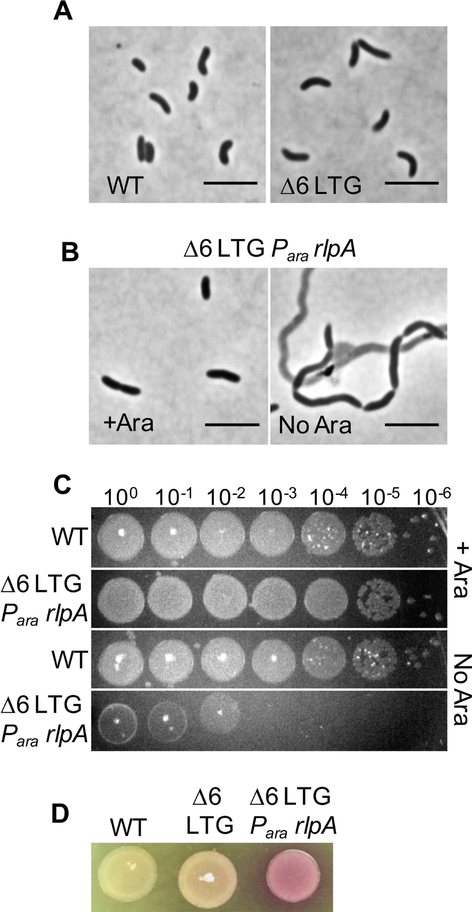
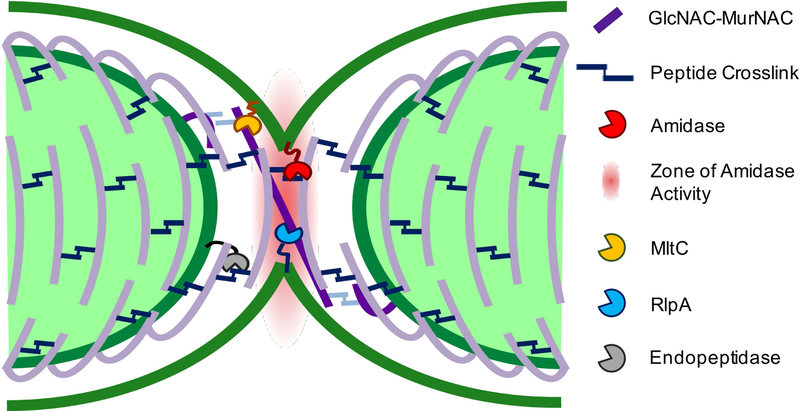
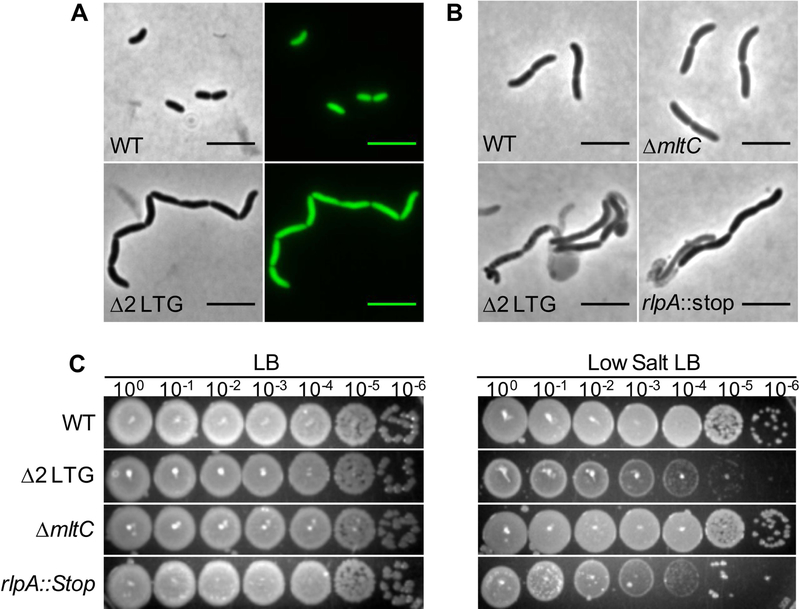
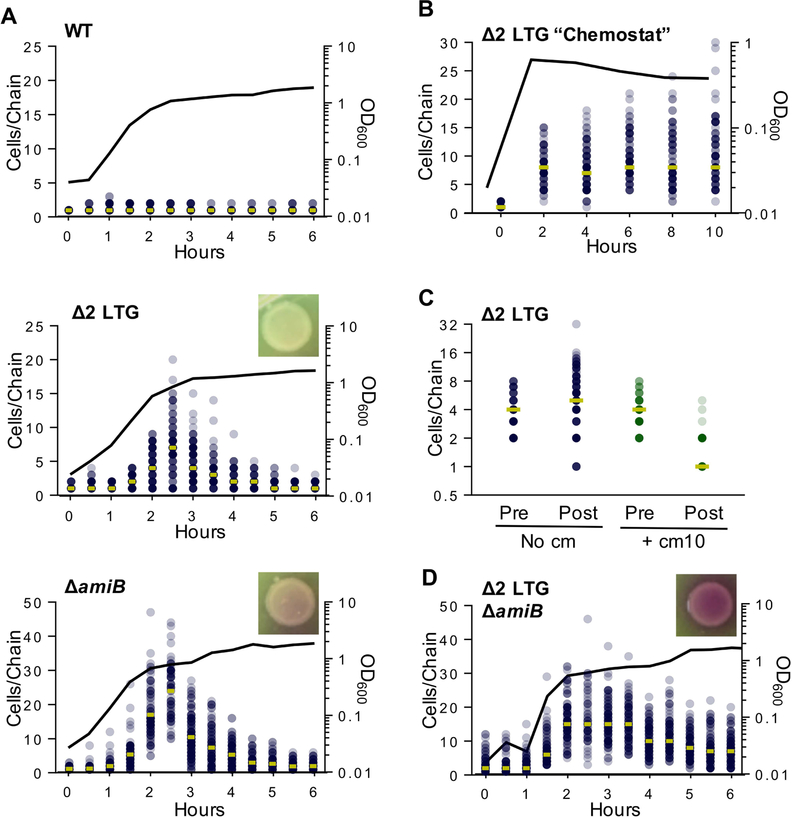
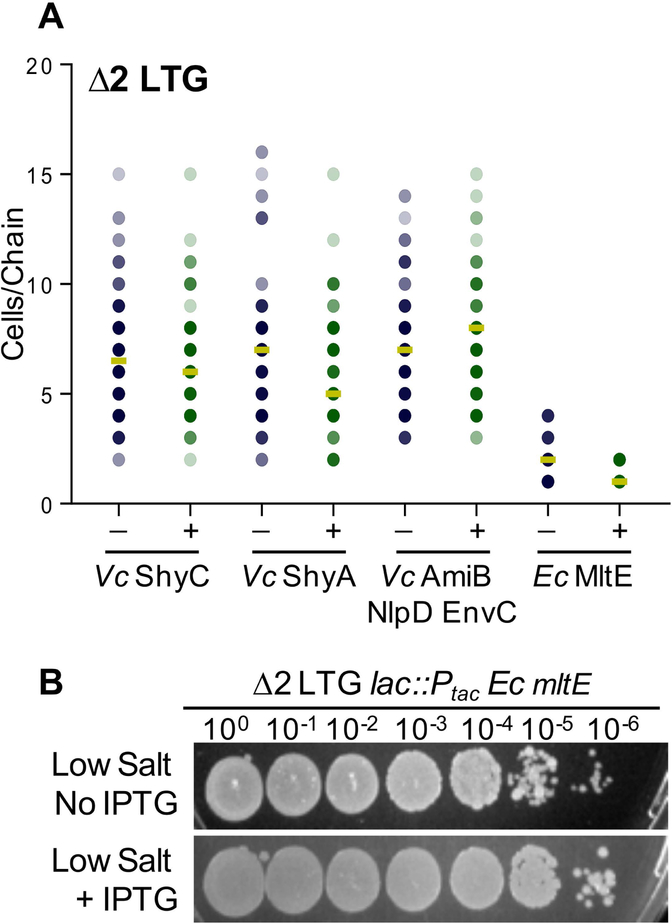
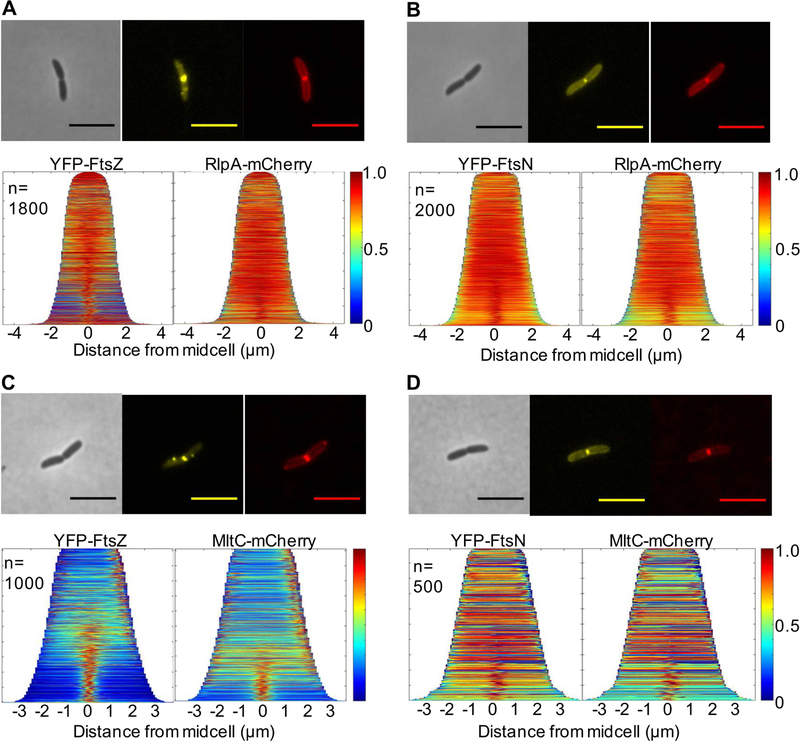
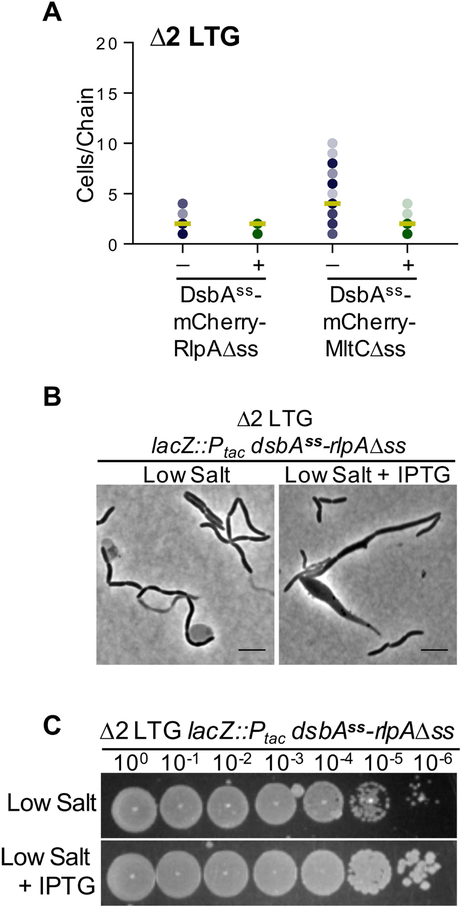
The cell wall is a crucial structural feature in the vast majority of bacteria and comprises a covalently closed network of peptidoglycan (PG) strands. While PG synthesis is important for survival under many conditions, the cell wall is also a dynamic structure, undergoing degradation and remodeling by 'autolysins', enzymes that break down PG. Cell division, for example, requires extensive PG remodeling, especially during separation of daughter cells, which depends heavily upon the activity of amidases. However, in Vibrio cholerae, we demonstrate that amidase activity alone is insufficient for daughter cell separation and that lytic transglycosylases RlpA and MltC both contribute to this process. MltC and RlpA both localize to the septum and are functionally redundant under normal laboratory conditions; however, only RlpA can support normal cell separation in low-salt media. The division-specific activity of lytic transglycosylases has implications for the local structure of septal PG, suggesting that there may be glycan bridges between daughter cells that cannot be resolved by amidases. We propose that lytic transglycosylases at the septum cleave PG strands that are crosslinked beyond the reach of the highly regulated activity of the amidase and clear PG debris that may block the completion of outer membrane invagination.
细胞壁是绝大多数细菌的重要结构特征,由共价封闭的肽聚糖(PG)链网络组成。虽然 PG 合成对许多条件下的生存很重要,但细胞壁也是一个动态结构,通过“自溶酶”(能够分解 PG 的酶)进行降解和重塑。例如,细胞分裂需要广泛的 PG 重塑,尤其是在子细胞分离期间,这在很大程度上依赖于酰胺酶的活性。然而,我们在霍乱弧菌中证明,仅酰胺酶活性不足以促进子细胞分离,并且裂解转糖基酶 RlpA 和 MltC 均有助于这一过程。MltC 和 RlpA 都定位于隔膜,在正常实验室条件下功能上是冗余的;然而,只有 RlpA 能够在低盐培养基中支持正常的细胞分离。裂解转糖基酶的分裂特异性活性对隔膜 PG 的局部结构具有影响,表明子细胞之间可能存在酰胺酶无法解决的糖链桥。我们提出,隔膜处的裂解转糖基酶可以切割交联程度超出酰胺酶高度调控活性范围的 PG 链,并清除可能阻碍外膜内陷完成的 PG 碎片。