Department of Anaesthesia and Intensive Care, Cork University Hospital Group, Cork, Ireland.
School of Nursing and Midwifery, University College Cork National University of Ireland, Cork, Ireland.
BMJ Open. 2019 Jul 9;9(7):e025992. doi: 10.1136/bmjopen-2018-025992.
This study aimed to determine the effectiveness of a proficiency-based progression (PBP) training approach to clinical communication in the context of a clinically deteriorating patient.
This is a randomised controlled trial with three parallel arms.
This study was conducted in a university in Ireland.
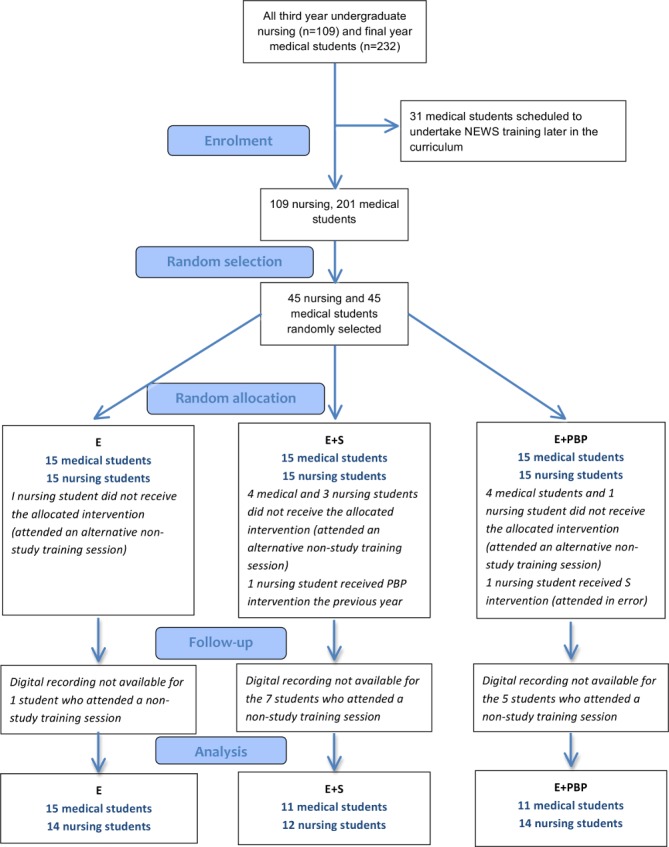
This study included 45 third year nursing and 45 final year medical undergraduates scheduled to undertake interdisciplinary National Early Warning Score (NEWS) training over a 3-day period in September 2016.
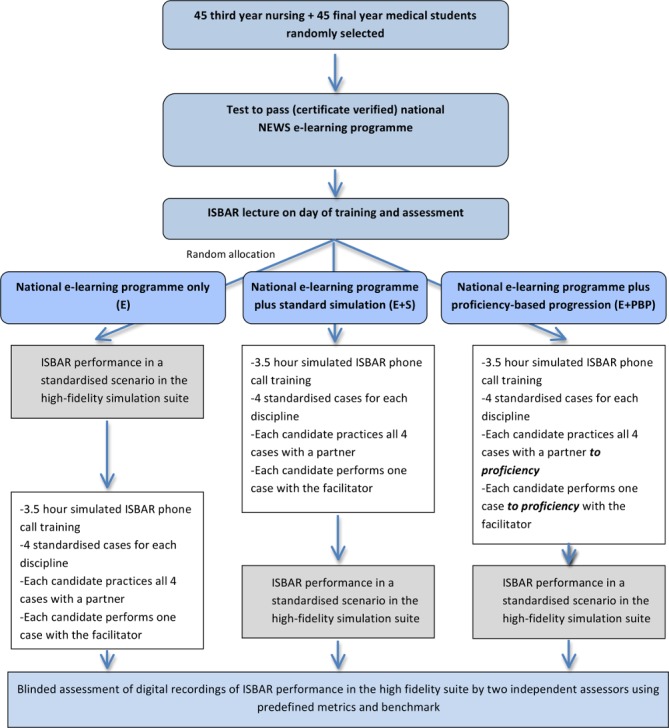
Participants were prospectively randomised to one of three groups before undertaking a performance assessment of the ISBAR (Identification, Situation, Background, Assessment, Recommendation) communication tool relevant to a deteriorating patient in a high-fidelity simulation facility. The groups were as follows: (i) E, the Irish Health Service national NEWS e-learning programme only; (ii) E+S, the national e-learning programme plus standard simulation; and (iii) E+PBP, the national e-learning programme plus PBP simulation.
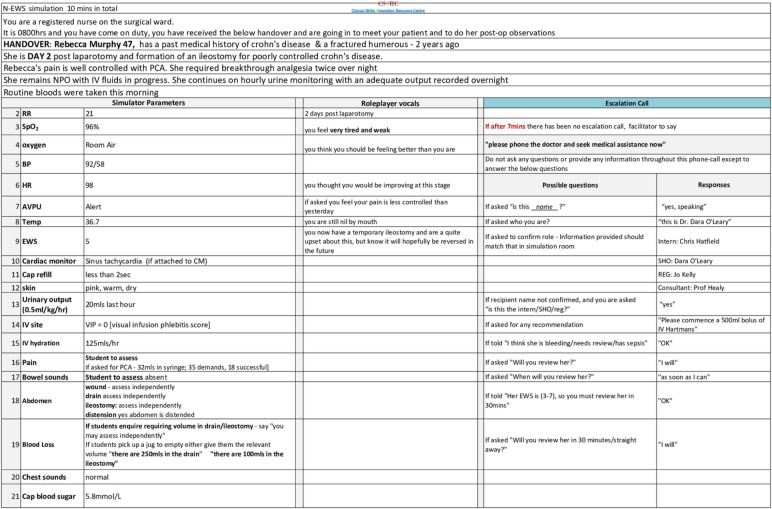
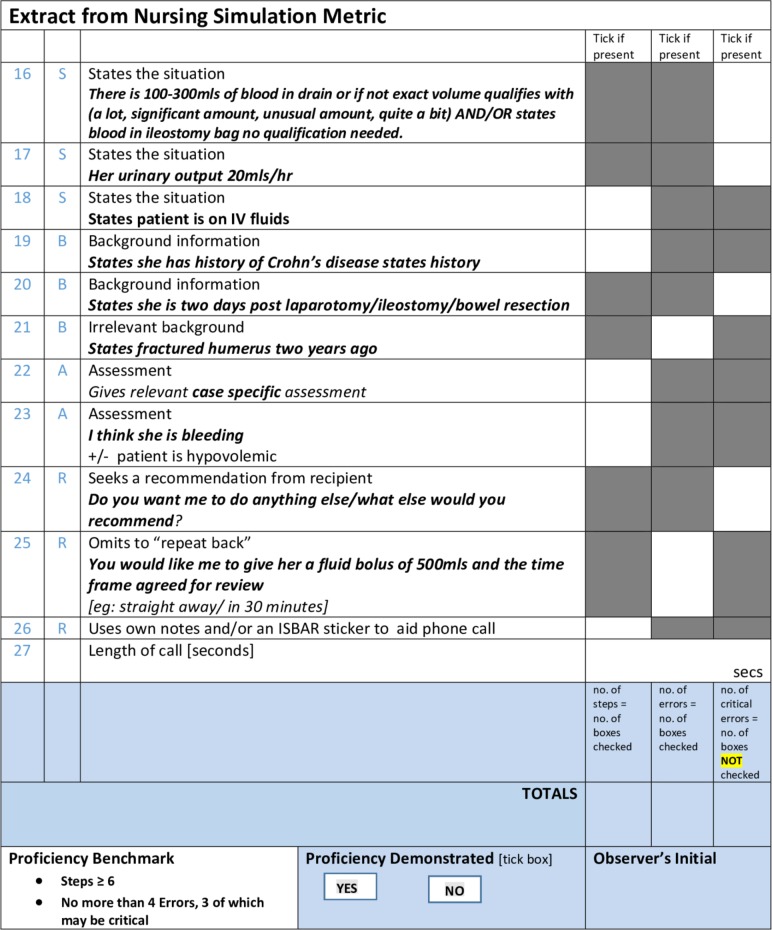
The primary outcome was the proportion in each group reaching a predefined proficiency benchmark comprising a series of predefined steps, errors and critical errors during the performance of a standardised, high-fidelity simulation assessment case which was recorded and scored by two independent blinded assessors.
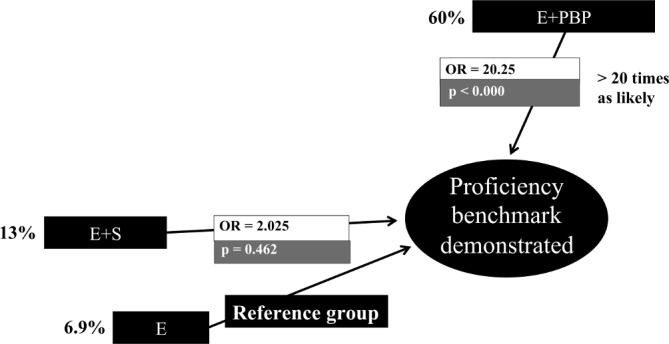
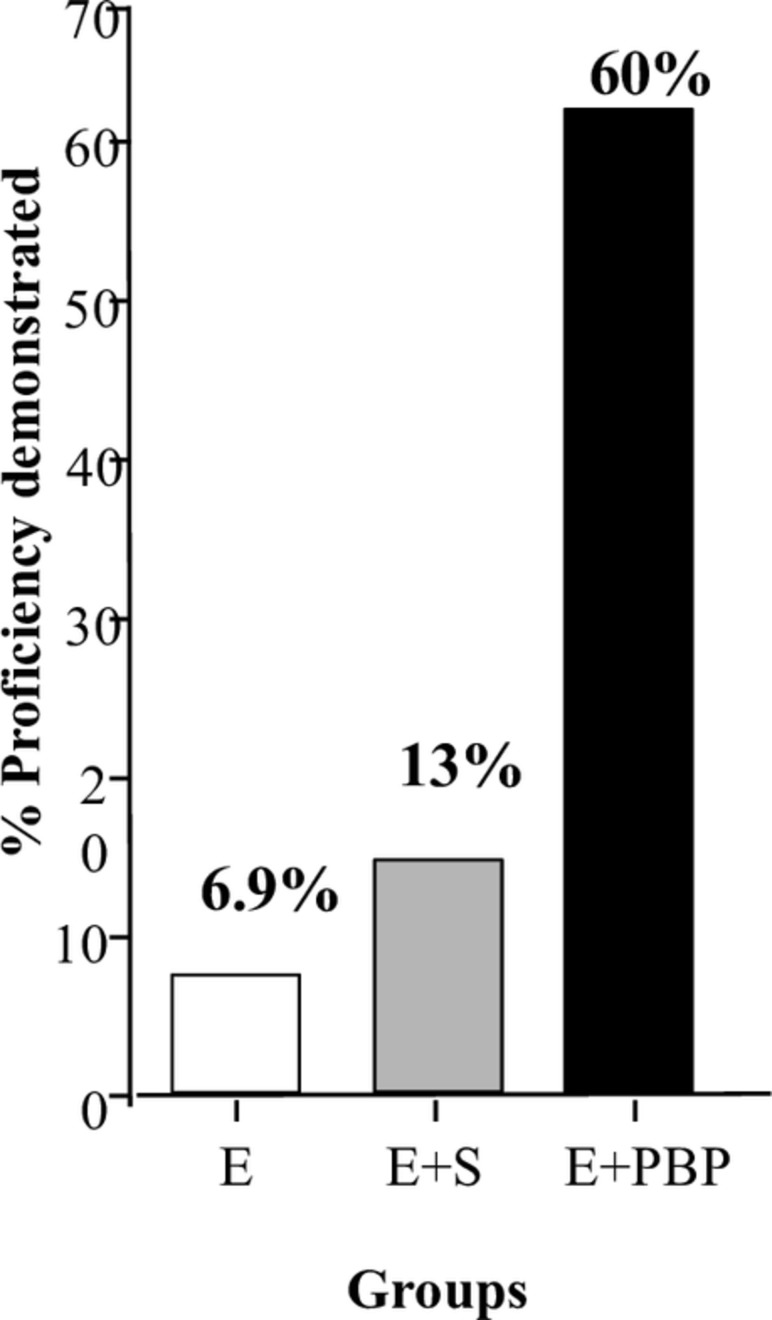
6.9% (2/29) of the E group and 13% (3/23) of the E+S group demonstrated proficiency in comparison to 60% (15/25) of the E+PBP group. The difference between the E and the E+S groups was not statistically significant (χ=0.55, 99% CI 0.63 to 0.66, p=0.63) but was significant for the difference between the E and the E+PBP groups (χ=22.25, CI 0.00 to 0.00, p<0.000) and between the E+S and the E+PBP groups (χ=11.04, CI 0.00 to 0.00, p=0.001).
PBP is a more effective way to teach clinical communication in the context of the deteriorating patient than e-learning either alone or in combination with standard simulation.
NCT02886754; Results.
本研究旨在确定基于熟练程度的进展(PBP)培训方法在临床病情恶化患者背景下进行临床沟通的效果。
这是一项随机对照试验,设有三个平行组。
本研究在爱尔兰的一所大学进行。
本研究纳入了 45 名护理专业三年级学生和 45 名医学专业五年级学生,他们计划在 2016 年 9 月的 3 天内参加跨学科早期预警评分(NEWS)培训。
参与者在进行高保真模拟设施中与病情恶化患者相关的 ISBAR(识别、情况、背景、评估、建议)沟通工具的表现评估之前,前瞻性随机分为三组。这些组分别是:(i)E 组,仅接受爱尔兰卫生服务部全国性 NEWS 电子学习计划;(ii)E+S 组,全国电子学习计划加标准模拟;(iii)E+PBP 组,全国电子学习计划加 PBP 模拟。
主要结局是在每个组中达到预定义熟练程度基准的比例,该基准包括在标准化高保真模拟评估案例中执行的一系列预定义步骤、错误和关键错误,该案例由两名独立的盲法评估员记录和评分。
与 E 组的 6.9%(2/29)和 E+S 组的 13%(3/23)相比,E+PBP 组的 60%(15/25)表现出熟练程度。E 组和 E+S 组之间的差异没有统计学意义(χ=0.55,99%CI 0.63 至 0.66,p=0.63),但 E 组和 E+PBP 组之间的差异(χ=22.25,CI 0.00 至 0.00,p<0.000)和 E+S 组和 E+PBP 组之间的差异(χ=11.04,CI 0.00 至 0.00,p=0.001)有统计学意义。
与电子学习单独或与标准模拟相结合相比,PBP 是在病情恶化患者背景下教授临床沟通的更有效的方法。
NCT02886754;结果。