Batista Chary M, Mariano Eric D, Dale Camila S, Cristante Alexandre F, Britto Luiz R, Otoch Jose P, Teixeira Manoel J, Morgalla Matthias, Lepski Guilherme
Department of Neurology, School of Medicine, University of São Paulo, São Paulo, Brazil.
Department of Anatomy, Institute of Biomedical Science, University of São Paulo, São Paulo, Brazil.
Neural Regen Res. 2019 Nov;14(11):2011-2019. doi: 10.4103/1673-5374.259624.
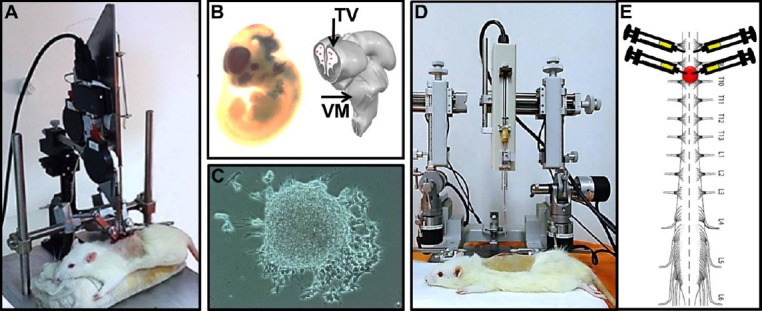
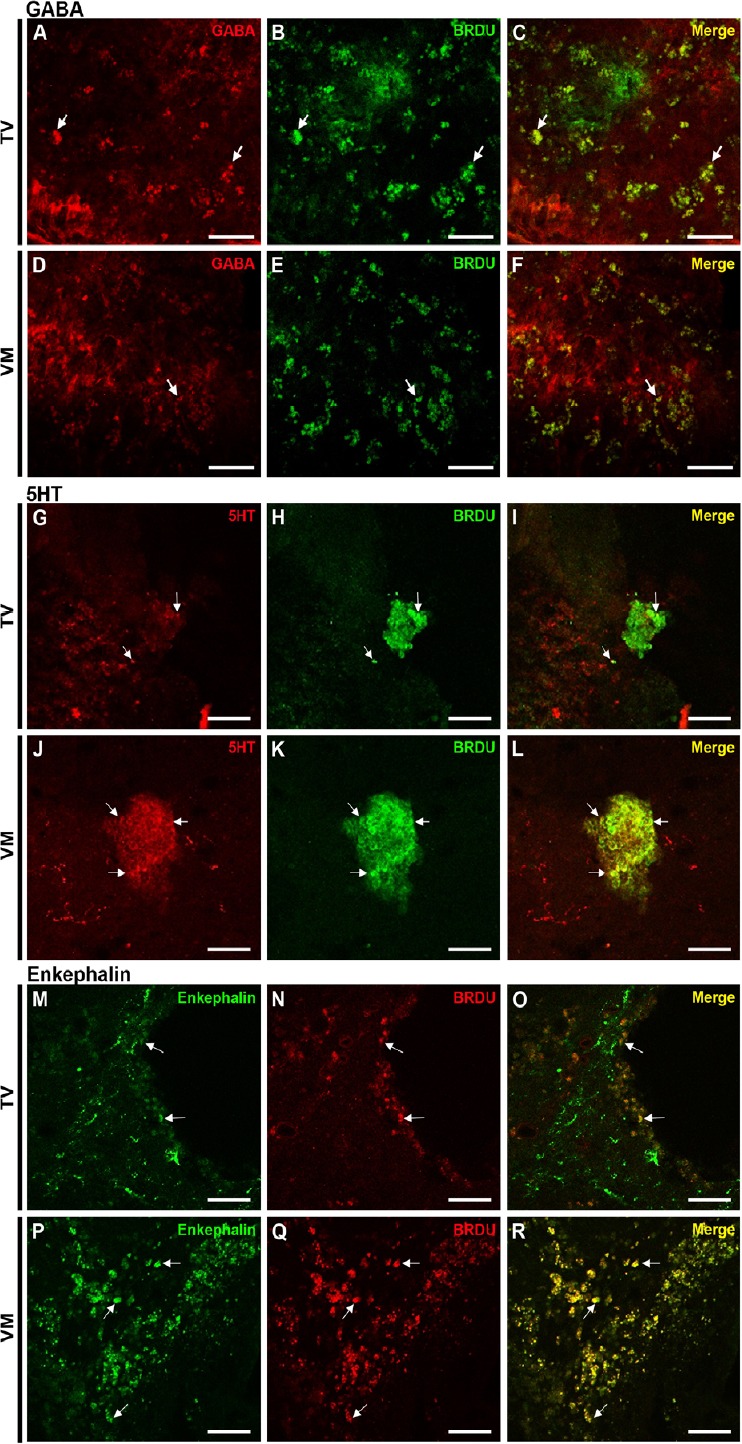
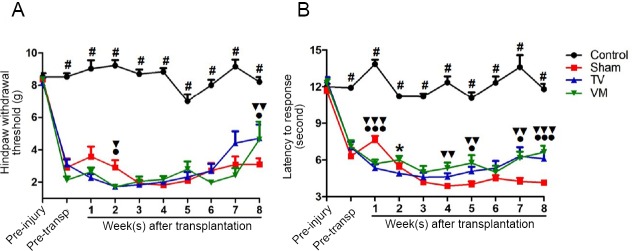
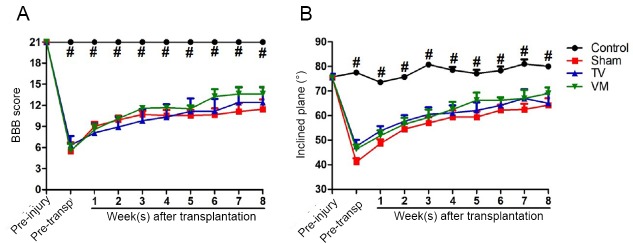
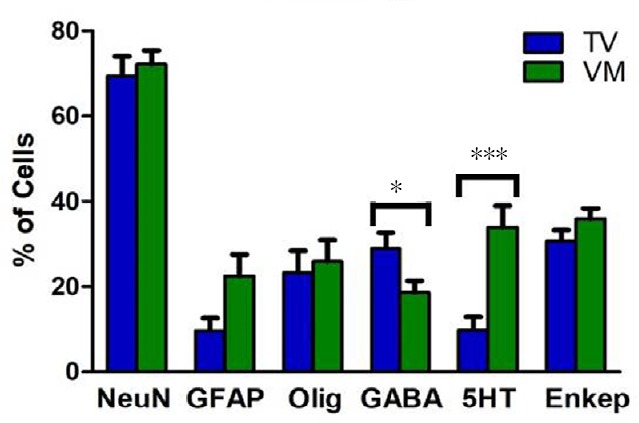
Neuropathic pain after spinal cord injury (SCI) is a complex condition that responds poorly to usual treatments. Cell transplantation represents a promising therapy; nevertheless, the ideal cell type in terms of neurogenic potential and effectiveness against pain remains largely controversial. Here, we evaluated the ability of fetal neural stem cells (fNSC) to relieve chronic pain and, secondarily, their effects on motor recovery. Adult Wistar rats with traumatic SCI were treated, 10 days after injury, with intra-spinal injections of culture medium (sham) or fNSCs extracted from telencephalic vesicles (TV group) or the ventral medulla (VM group) of E/14 embryos. Sensory (von Frey filaments and hot plate) and motor (the Basso, Beattie, Bresnahan locomotor rating scale and inclined plane test) assessments were performed during 8 weeks. Thereafter, spinal cords were processed for immunofluorescence and transplanted cells were quantified by stereology. The results showed improvement of thermal hyperalgesia in the TV and VM groups at 4 and 5 weeks after transplantation, respectively. Moreover, mechanical allodynia improved in both the TV and VM groups at 8 weeks. No significant motor recovery was observed in the TV or VM groups compared with sham. Stereological analyses showed that ~70% of TV and VM cells differentiated into NeuN neurons, with a high proportion of enkephalinergic and GABAergic cells in the TV group and enkephalinergic and serotoninergic cells in the VM group. Our study suggests that neuronal precursors from TV and VM, once implanted into the injured spinal cord, maturate into different neuronal subtypes, mainly GABAergic, serotoninergic, and enkephalinergic, and all subtypes alleviate pain, despite no significant motor recovery. The study was approved by the Animal Ethics Committee of the Medical School of the University of São Paulo (protocol number 033/14) on March 4, 2016.
脊髓损伤(SCI)后的神经性疼痛是一种复杂的病症,对常规治疗反应不佳。细胞移植是一种有前景的治疗方法;然而,就神经发生潜能和抗疼痛效果而言,理想的细胞类型在很大程度上仍存在争议。在此,我们评估了胎儿神经干细胞(fNSC)缓解慢性疼痛的能力,其次,评估了它们对运动恢复的影响。成年创伤性SCI的Wistar大鼠在损伤后10天接受治疗,通过脊髓内注射培养基(假手术组)或从E/14胚胎的端脑泡(TV组)或延髓腹侧(VM组)提取的fNSC。在8周内进行感觉(von Frey细丝和热板)和运动(Basso、Beattie、Bresnahan运动评分量表和斜面试验)评估。此后,对脊髓进行免疫荧光处理,并通过体视学对移植细胞进行定量。结果显示,TV组和VM组分别在移植后4周和5周时热痛觉过敏有所改善。此外,TV组和VM组在8周时机械性异常性疼痛均有所改善。与假手术组相比,TV组或VM组均未观察到明显的运动恢复。体视学分析表明,约70%的TV组和VM组细胞分化为NeuN神经元,TV组中脑啡肽能和GABA能细胞比例较高,VM组中脑啡肽能和5-羟色胺能细胞比例较高。我们的研究表明,来自TV组和VM组的神经元前体细胞一旦植入受损脊髓,就会成熟为不同的神经元亚型,主要是GABA能、5-羟色胺能和脑啡肽能,并且所有亚型均可缓解疼痛,尽管没有明显的运动恢复。该研究于2016年3月4日获得圣保罗大学医学院动物伦理委员会批准(协议编号033/14)。