DiamiR, LLC, Princeton, NJ, United States of America.
Albert Einstein College of Medicine, Montefiore Medical Center, New York, NY United States of America.
PLoS One. 2019 Jul 10;14(7):e0218623. doi: 10.1371/journal.pone.0218623. eCollection 2019.
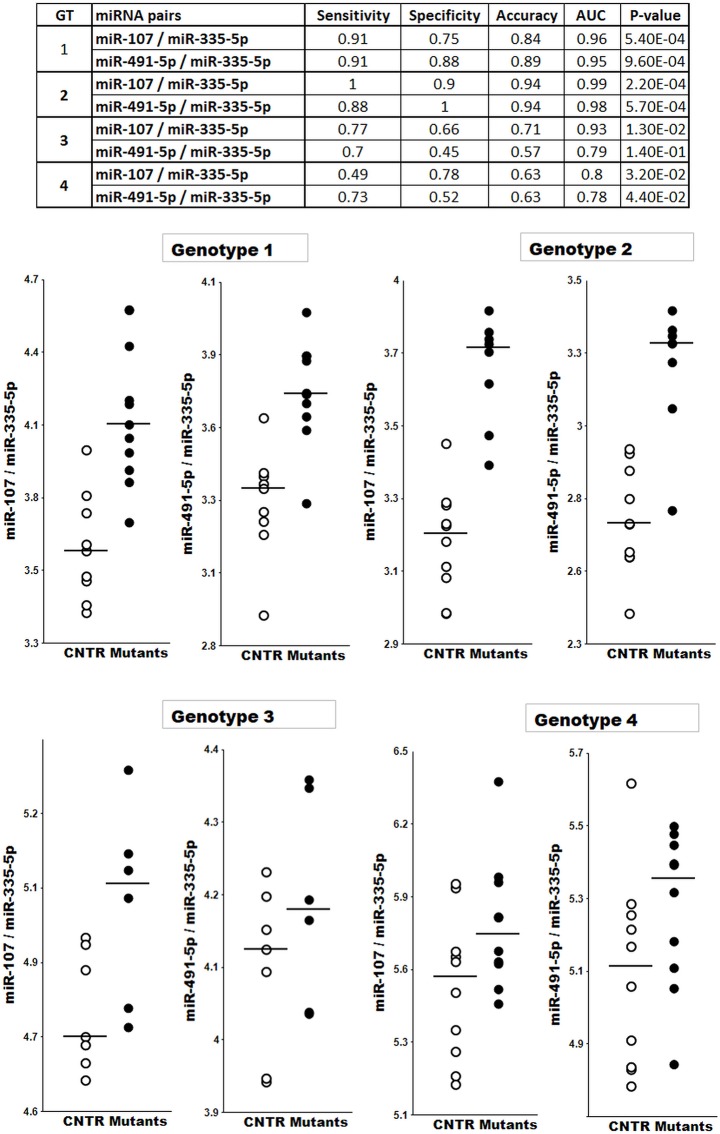
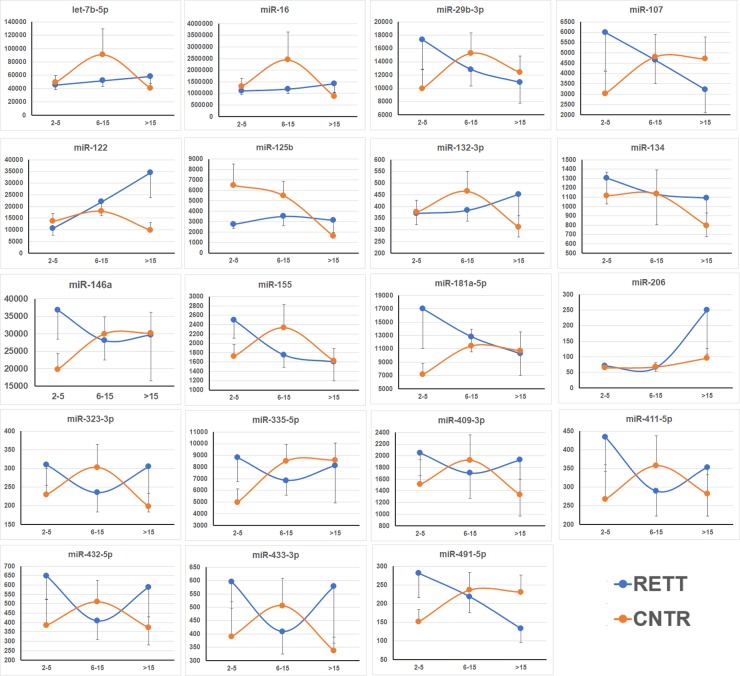
Rett syndrome (RTT) is a severe neurodevelopmental disorder caused by mutations in the X-linked gene MECP2 (methyl-CpG-binding protein 2). Minimally invasive and accurate biomarkers of disease progression and treatment response could facilitate screening of therapeutic compounds in animal models, enrollment of better-defined participants into clinical trials, and treatment monitoring. In this study, we used a targeted approach based on analysis of brain-enriched microRNAs (miRNAs) circulating in plasma to identify miRNA biomarkers of RTT using Mecp2-mutant mice as a model system and human plasma samples. An "miRNA pair" approach, i.e. the ratio between two miRNAs, was used for data normalization. Specific miRNA pairs and their combinations (classifiers) analyzed in plasma differentiated wild-type from Mecp2 male and female mice with >90% accuracy. Individual miRNA pairs were more effective in distinguishing male (homozygous) animals than female (heterozygous) animals, suggesting that disease severity correlated with the levels of the miRNA biomarkers. In the human study, 30 RTT patients were compared with age-matched controls. The results of this study showed that miRNA classifiers were able to differentiate RTT patients from controls with 85-100% sensitivity. In addition, a comparison of various age groups demonstrated that the dynamics in levels of miRNAs appear to be associated with disease development (involvement of liver, muscle and lipid metabolism in the pathology). Importantly, certain miRNA biomarker pairs were common to both the animal models and human subjects, indicating the similarity between the underlying pathological processes. The data generated in this feasibility study suggest that circulating miRNAs have the potential to be developed as markers of RTT progression and treatment response. Larger clinical studies are needed to further evaluate the findings presented here.
雷特综合征(RTT)是一种严重的神经发育障碍,由 X 连锁基因 MECP2(甲基-CpG 结合蛋白 2)突变引起。疾病进展和治疗反应的微创和准确的生物标志物可以促进在动物模型中筛选治疗化合物,更好地定义参与者进入临床试验,并进行治疗监测。在这项研究中,我们使用了一种基于分析富含大脑的 microRNAs(miRNAs)在血浆中循环的靶向方法,使用 Mecp2 突变小鼠作为模型系统和人类血浆样本来鉴定 RTT 的 miRNA 生物标志物。“miRNA 对”方法,即两个 miRNA 之间的比率,用于数据归一化。在血浆中分析的特定 miRNA 对及其组合(分类器)以>90%的准确度区分野生型和 Mecp2 雄性和雌性小鼠。个体 miRNA 对在区分雄性(纯合子)动物比雌性(杂合子)动物更有效,这表明疾病严重程度与 miRNA 生物标志物的水平相关。在人类研究中,将 30 名 RTT 患者与年龄匹配的对照组进行比较。该研究的结果表明,miRNA 分类器能够以 85-100%的灵敏度区分 RTT 患者与对照组。此外,对不同年龄组的比较表明,miRNA 水平的动态似乎与疾病发展相关(肝脏、肌肉和脂质代谢参与病理学)。重要的是,某些 miRNA 生物标志物对在动物模型和人类受试者中都很常见,表明潜在的病理过程相似。这项可行性研究产生的数据表明,循环 miRNA 有可能作为 RTT 进展和治疗反应的标志物。需要更大的临床研究来进一步评估这里提出的发现。