Massachusetts General Hospital Diabetes Center, 50 Staniford St, Suite 340, Boston, MA, 02114, USA.
Curr Diab Rep. 2019 Jul 10;19(8):55. doi: 10.1007/s11892-019-1169-7.
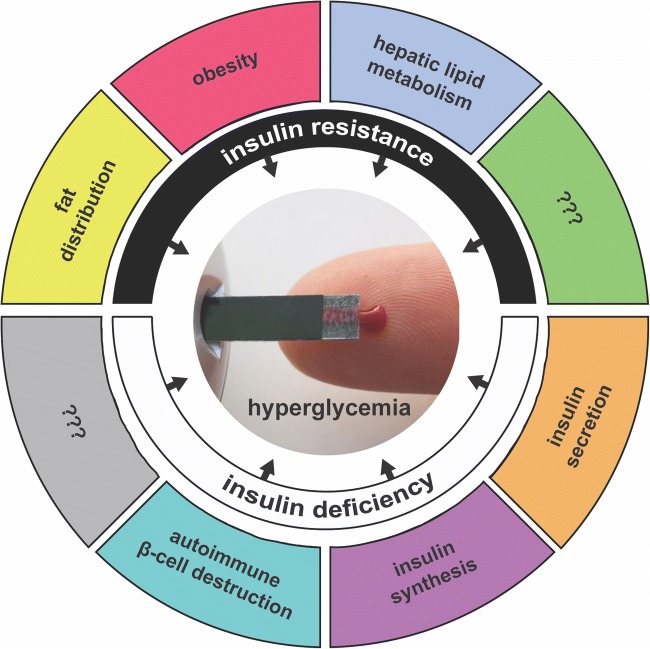
Type 2 diabetes (T2D), which accounts for the vast majority of diabetes cases, is essentially a diagnosis of exclusion in current clinical practice. Therefore, it is not surprising that T2D is heterogenous in terms of patients' clinical presentation, disease course, and response to treatment. This review summarizes published attempts to improve diabetes subclassification, with a particular focus on the role of genetics.
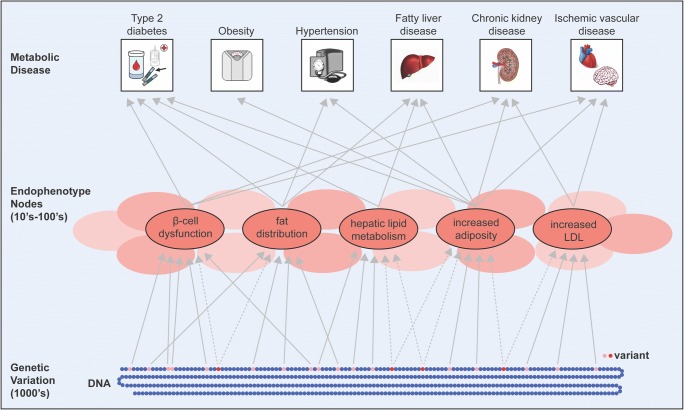
A handful of diabetes subclassification schemas have been proposed using clinical data (patient characteristics and laboratory values), with some subgroups associated with distinct management trends or complication risks. However, phenotypically driven classifications suffer from dependencies on time of variable measurement and are not readily linked to disease mechanism. Germline genetic data, in contrast, are essentially unchanged over a person's lifetime and rooted in mechanism. Clustering of T2D genetic loci has identified at least five groupings of loci representing mechanisms of disease that may aid in deconstructing heterogeneity of T2D, but further work is needed to determine clinical utility. Exciting progress in subclassification of diabetes has demonstrated initial steps in deconstructing disease heterogeneity. Incorporation of genetics into classification schemas will require additional research but has the potential to improve our understanding and management of T2D, both as a single disease and as a part of an integrated metabolic disease network.
2 型糖尿病(T2D)在当前临床实践中基本上是一种排除性诊断,占糖尿病病例的绝大多数。因此,T2D 在患者临床表现、疾病过程和治疗反应方面存在异质性并不奇怪。本文综述了已发表的旨在改善糖尿病分类的尝试,特别关注遗传因素的作用。
已经使用临床数据(患者特征和实验室值)提出了少数几种糖尿病分类方案,其中一些亚组与不同的管理趋势或并发症风险相关。然而,表型驱动的分类存在对变量测量时间的依赖性,并且不易与疾病机制相关联。相比之下,种系遗传数据在人的一生基本保持不变,并且与机制相关。T2D 遗传位点的聚类已经确定了至少五个代表疾病机制的位点分组,这些分组可能有助于分解 T2D 的异质性,但需要进一步的工作来确定临床应用价值。糖尿病分类的令人兴奋的进展表明,在分解疾病异质性方面已经迈出了初步的步骤。将遗传学纳入分类方案需要进一步的研究,但有可能改善我们对 T2D 的理解和管理,无论是作为一种单一疾病还是作为综合代谢疾病网络的一部分。