Kim Su-Jeong, Miller Brendan, Mehta Hemal H, Xiao Jialin, Wan Junxiang, Arpawong Thalida E, Yen Kelvin, Cohen Pinchas
Leonard Davis School of Gerontology, University of Southern California, Los Angeles, CA.
Physiol Rep. 2019 Jul;7(13):e14171. doi: 10.14814/phy2.14171.
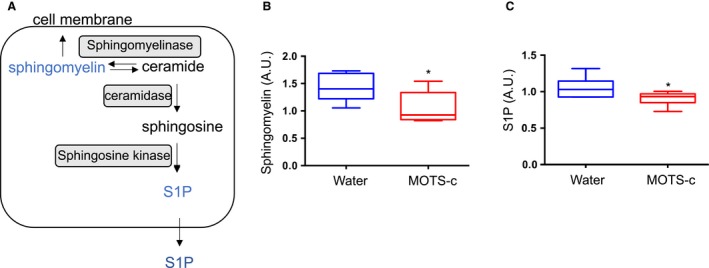
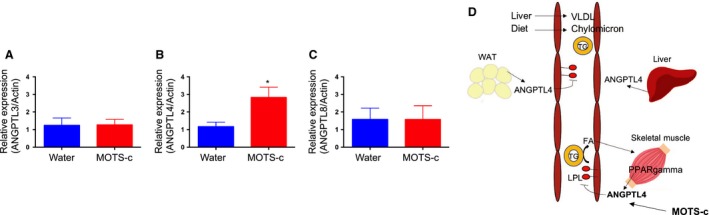
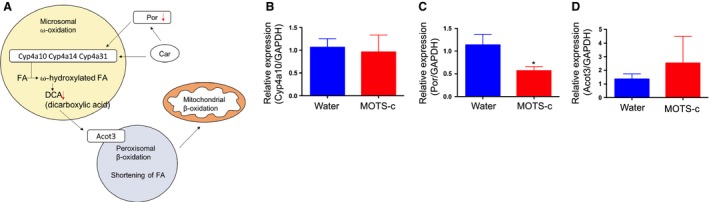
MOTS-c is an exercise mimetic and improves insulin sensitivity in aged and diet-induced obese mice. Although plasma markers are good markers for the metabolic condition, whether MOTS-c changes plasma markers in diet-induced obese mice has not been examined. Here, we used an unbiased metabolomics approach to examine the effect of MOTS-c on plasma markers of metabolic dysfunction. We found that three pathways - sphingolipid metabolism, monoacylglycerol metabolism, and dicarboxylate metabolism - were reduced in MOTS-c-injected mice. Interestingly, these pathways are upregulated in obese and T2D models. MOTS-c improves insulin sensitivity and increases beta-oxidation to prevent fat accumulation in DIO mice through these pathways. These results provide us a better understanding of the mechanism of how MOTS-c improves insulin sensitivity and reduces the body weight and fatty liver and opens a new venue for further study.
MOTS-c是一种运动模拟物,可改善老年和饮食诱导肥胖小鼠的胰岛素敏感性。尽管血浆标志物是代谢状况的良好指标,但尚未研究MOTS-c是否会改变饮食诱导肥胖小鼠的血浆标志物。在此,我们采用无偏向代谢组学方法来研究MOTS-c对代谢功能障碍血浆标志物的影响。我们发现,在注射MOTS-c的小鼠中,三种途径——鞘脂代谢、单酰甘油代谢和二羧酸代谢——有所减少。有趣的是,这些途径在肥胖和2型糖尿病模型中上调。MOTS-c通过这些途径改善胰岛素敏感性并增加β-氧化,以防止饮食诱导肥胖小鼠体内脂肪堆积。这些结果使我们能更好地理解MOTS-c改善胰岛素敏感性、减轻体重和脂肪肝的机制,并为进一步研究开辟了新途径。