Shah Fawad Ali, Kury Lina Al, Li Tao, Zeb Alam, Koh Phil Ok, Liu Fang, Zhou Qiang, Hussain Ishtiaq, Khan Arif Ullah, Jiang Yuhua, Li Shupeng
State Key Laboratory of Oncogenomics, School of Chemical Biology and Biotechnology, Shenzhen Graduate School, Peking University, Shenzhen, China.
Riphah Institute of Pharmaceutical Sciences, Riphah International University, Islamabad, Pakistan.
Front Pharmacol. 2019 Jun 26;10:663. doi: 10.3389/fphar.2019.00663. eCollection 2019.
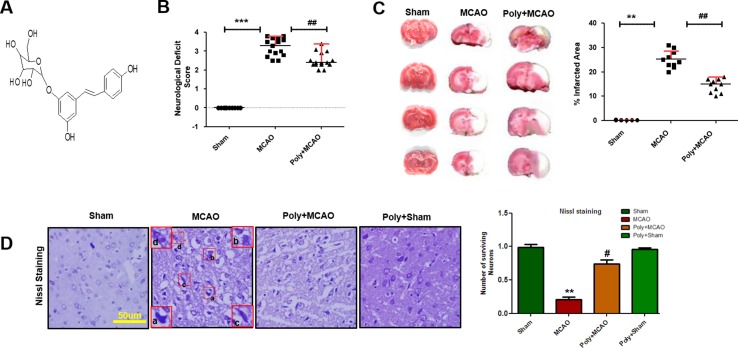
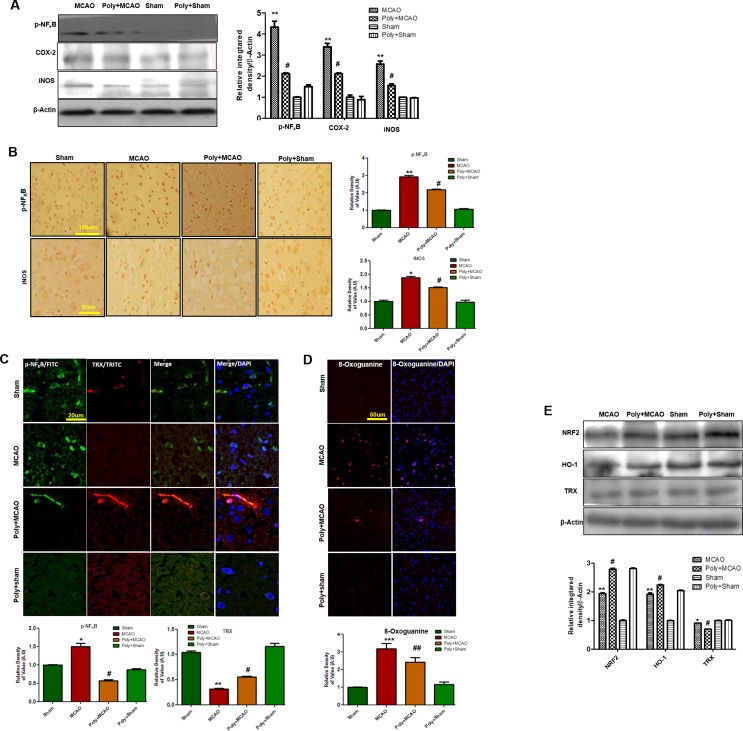
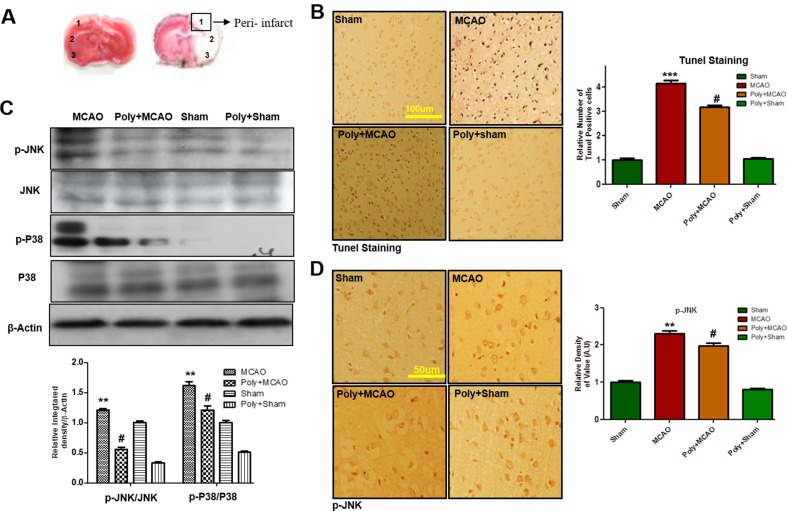
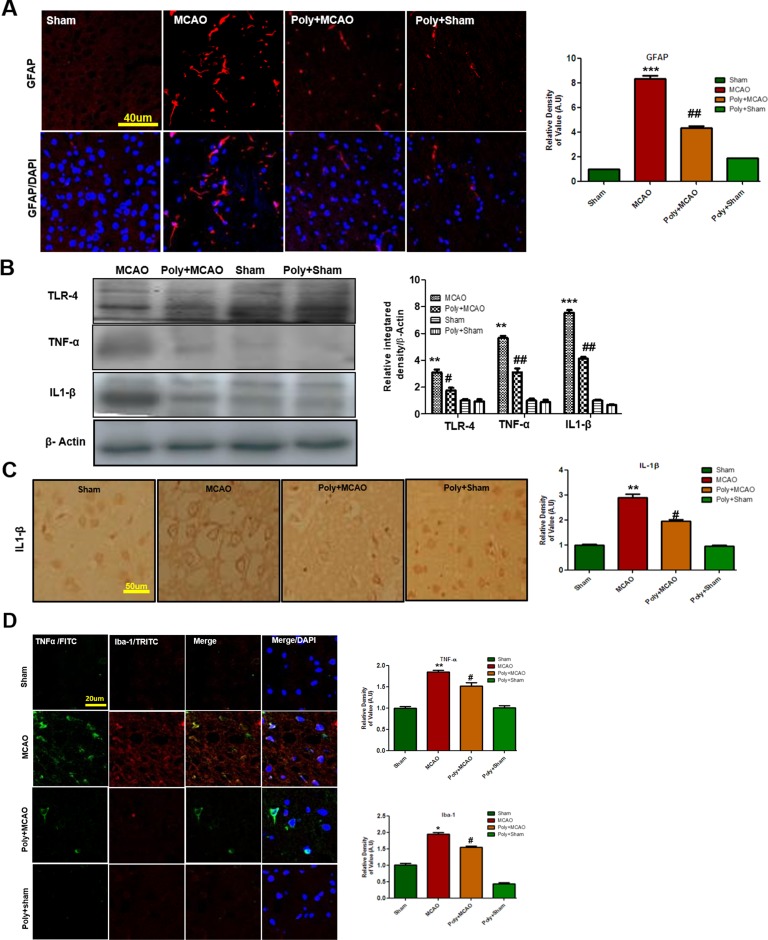
Ischemic stroke is characterized by permanent or transient obstruction of blood flow, which initiates a cascading pathological process, starting from acute ATP loss and ionic imbalance to subsequent membrane depolarization, glutamate excitotoxicity, and calcium overload. These initial events are followed by neuroinflammation and oxidative stress, eventually causing neuronal neurosis and apoptosis. Complicated interplays exist between these steps happening across various stages, which not only represent the complicated nature of ischemic pathology but also warrant a detailed delineation of the underlying molecular mechanisms to develop better therapeutic options. In the present study, we examined the neuroprotective effects of polydatin against ischemic brain injury using a rat model of permanent middle cerebral artery occlusion (MCAO). Our results demonstrated that polydatin treatment reduced the infarction volume and mitigated the neurobehavioral deficits, sequentially rescued neuronal apoptosis. Ischemic stroke induced an elevation of neuroinflammation and reactive oxygen species, which could be attenuated by polydatin the reduced activation of p38 mitogen-activated protein kinase and c-Jun N-terminal kinase. In addition, polydatin upregulated the endogenous antioxidant nuclear factor erythroid 2-related factor 2, heme oxygenase-1, the thioredoxin pathway, and eventually reversed ischemic-stroke-induced elevation of ROS and inflammation in ischemic cortical tissue. The diverse and broad actions of polydatin suggested that it could be a multiple targeting neuroprotective agent in ameliorating the detrimental effects of MCAO, such as neuroinflammation, oxidative stress, and neuronal apoptosis. As repetitive clinical trials of neuroprotectants targeting a single step of stroke pathological process have failed previously, our results suggested that a neuroprotective strategy of acting at different stages may be more advantageous to intervene in the vicious cycles in MCAO.
缺血性中风的特征是血流永久性或短暂性阻塞,这引发了一系列级联病理过程,从急性ATP丧失和离子失衡开始,随后是膜去极化、谷氨酸兴奋性毒性和钙超载。这些初始事件之后是神经炎症和氧化应激,最终导致神经元病变和凋亡。在各个阶段发生的这些步骤之间存在复杂的相互作用,这不仅代表了缺血性病理的复杂性,也需要详细描述潜在的分子机制以开发更好的治疗方案。在本研究中,我们使用永久性大脑中动脉闭塞(MCAO)大鼠模型研究了虎杖苷对缺血性脑损伤的神经保护作用。我们的结果表明,虎杖苷治疗可减少梗死体积并减轻神经行为缺陷,依次挽救神经元凋亡。缺血性中风诱导神经炎症和活性氧升高,而虎杖苷可减轻这种情况,其通过降低p38丝裂原活化蛋白激酶和c-Jun氨基末端激酶的激活来实现。此外,虎杖苷上调内源性抗氧化剂核因子红细胞2相关因子2、血红素加氧酶-1、硫氧还蛋白途径,并最终逆转缺血性中风诱导的缺血皮质组织中ROS和炎症的升高。虎杖苷多样而广泛的作用表明,它可能是一种多靶点神经保护剂,可改善MCAO的有害影响,如神经炎症、氧化应激和神经元凋亡。由于此前针对中风病理过程单个步骤的神经保护剂的重复临床试验均告失败,我们的结果表明,作用于不同阶段的神经保护策略可能更有利于干预MCAO中的恶性循环。