Department of Pharmacy (DIFARMA), University of Salerno, Fisciano, Italy.
PhD Program in Drug Discovery and Development, Department of Pharmacy, University of Salerno, Fisciano, Italy.
Front Immunol. 2019 Jun 21;10:1329. doi: 10.3389/fimmu.2019.01329. eCollection 2019.
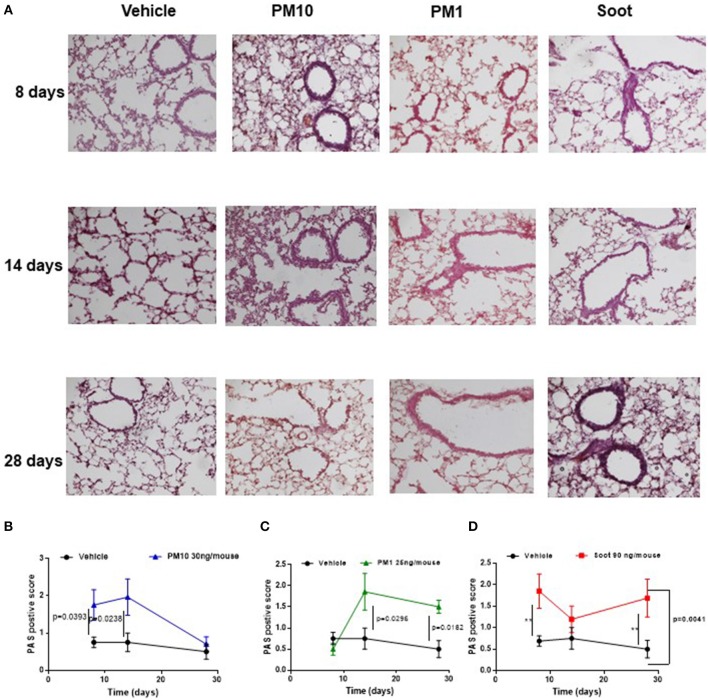
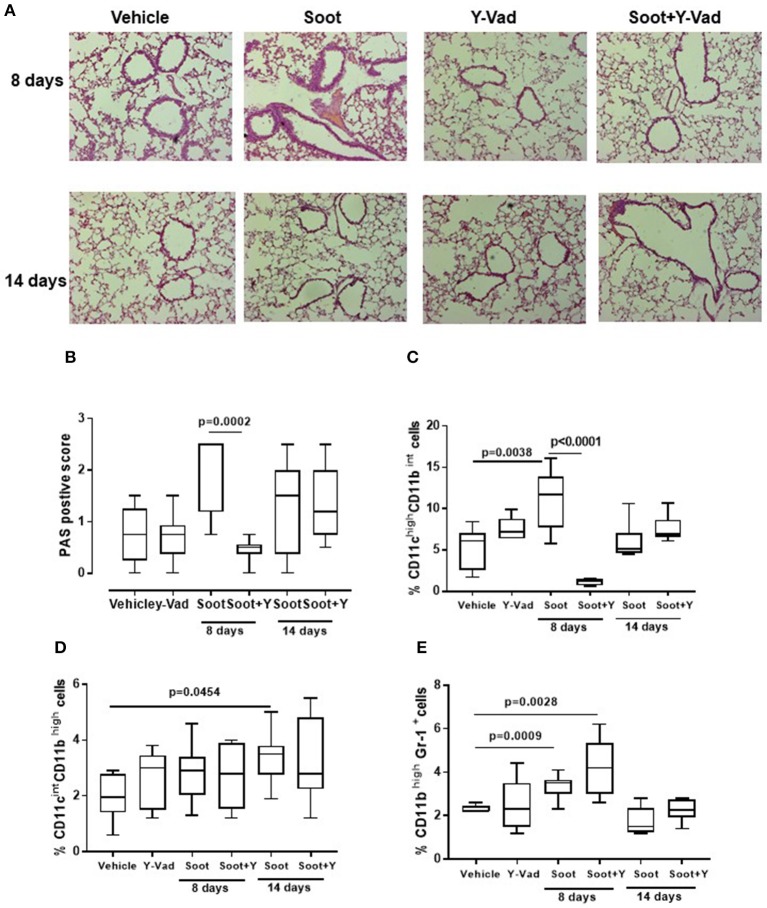
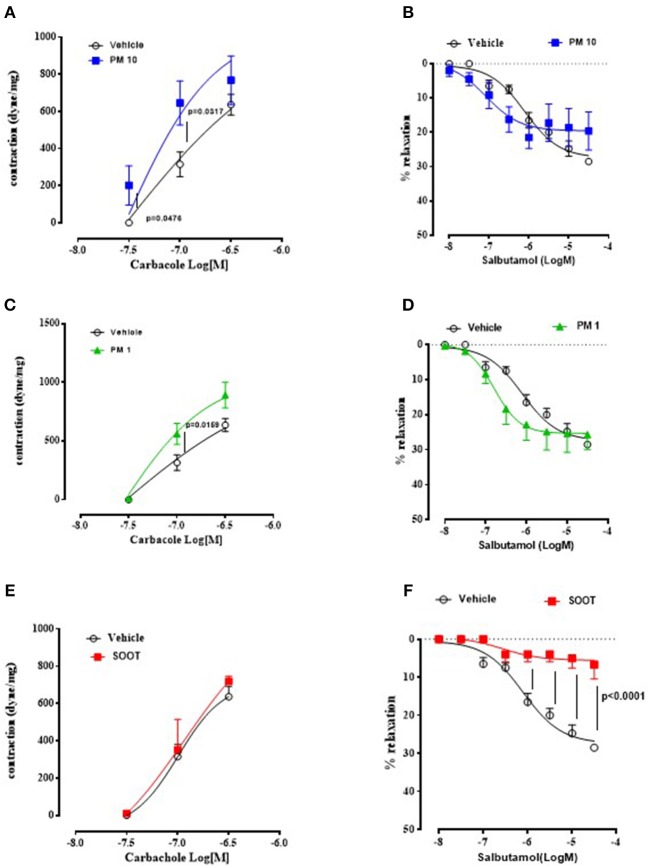
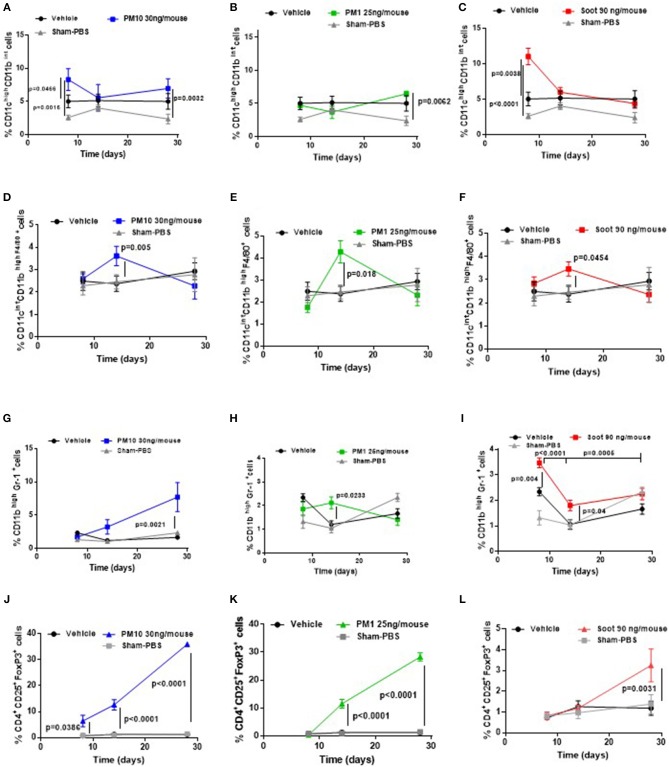
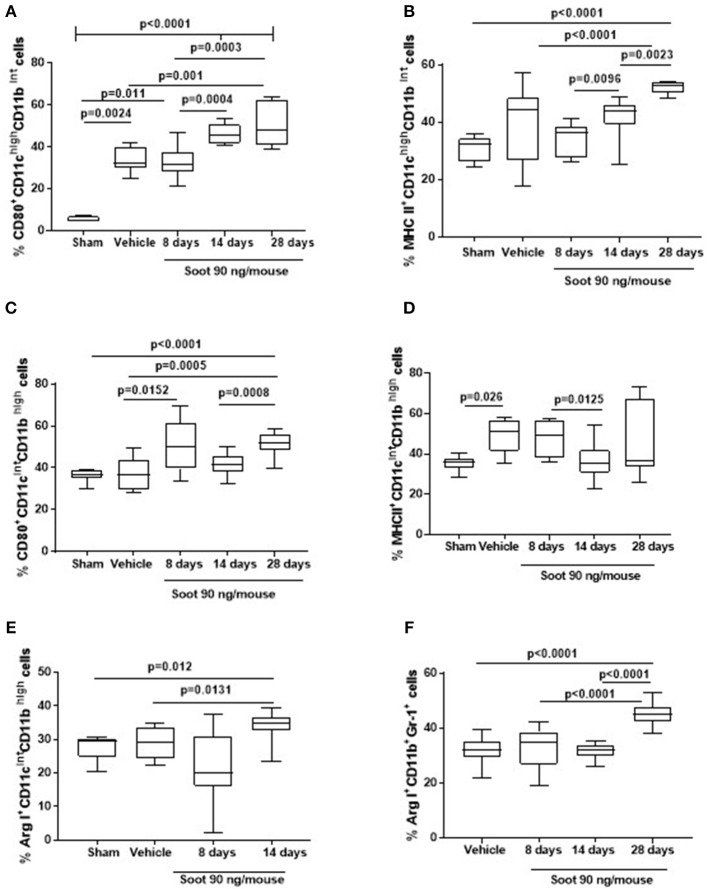
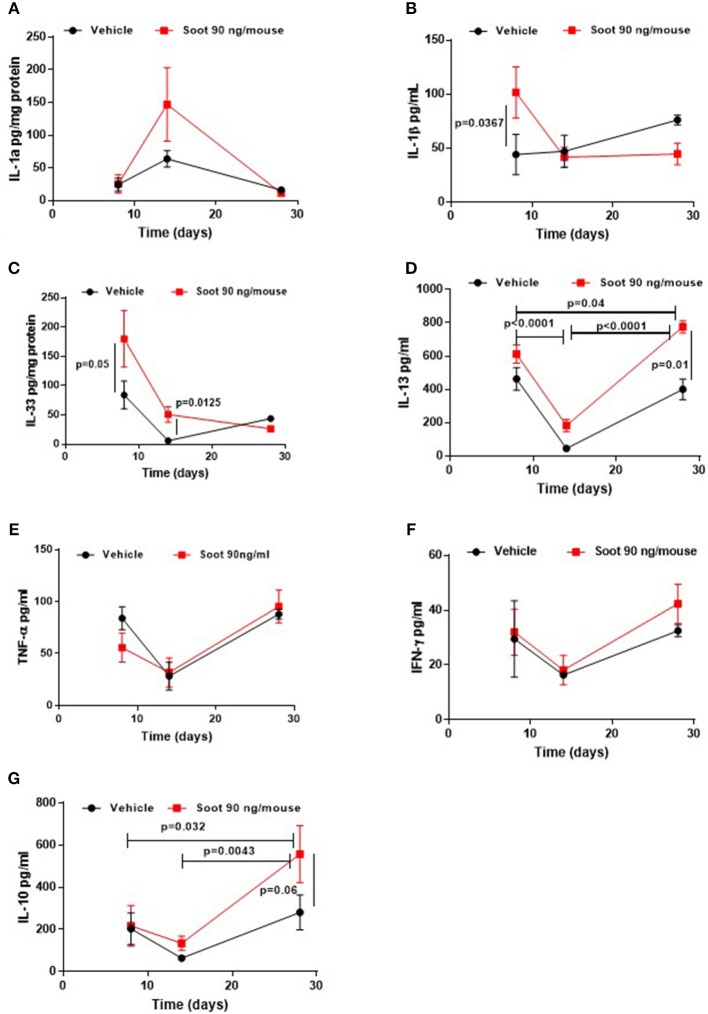
Air pollution is becoming a threatening issue for human health. Many epidemiological studies relate air pollution index to adverse effects in terms of disease incidence and/or disease exacerbation. In our previous studies, we found air pollutants can induce the release of pro-inflammatory cytokines from human peripheral blood cells. To better understand, the effects of air pollution in the lung, we took advantage of an animal model. Mice were intratracheally and daily exposed to urban collected particulate matter (PM, PM10, and PM1) and to the sub-micrometric carbonaceous component, Soot. We found that PM10, PM1, and Soot promoted lung inflammation associated to higher bronchial responsiveness and lower dilation together with an immunosuppressive lung environment, characterized by tolerogenic dendritic cells (DCs), macrophages and myeloid -derived suppressor cells (MDSCs), the latter two Arginase I positive. In support, higher recruitment of Treg associated to higher levels of IL-10 were detected in the lung of PM10, PM1, and Soot treated mice. This effect was not abolished by the administration of a caspase-1 inhibitor, Ac-Y-VAD, implying that the canonical inflammasome complex was not associated to PMx-induced lung immunosuppression in mice. Our study proves that PM exposure leads to an immunosuppressive lung environment in a caspase-1-independent manner, paving the way to understand the molecular and cellular mechanism/s underlying the establishment of some respiratory disorders according to the exposure to air pollution.
空气污染正成为威胁人类健康的一个问题。许多流行病学研究将空气污染指数与疾病发病率和/或疾病恶化相关联。在我们之前的研究中,我们发现空气污染物可以诱导人外周血单核细胞释放促炎细胞因子。为了更好地了解空气污染对肺部的影响,我们利用了动物模型。将小鼠气管内和每日暴露于城市收集的颗粒物(PM10、PM1 和 soot)和亚微米级碳质成分 soot 中。我们发现 PM10、PM1 和 soot 促进了与更高的支气管高反应性和更低的扩张相关的肺部炎症,同时伴有免疫抑制的肺部环境,其特征是耐受性树突状细胞(DCs)、巨噬细胞和髓源性抑制细胞(MDSCs),后两者为精氨酸酶 I 阳性。支持这一观点的是,在 PM10、PM1 和 soot 处理的小鼠肺部检测到与更高水平的 IL-10 相关的更高水平的 Treg 募集。这种作用不能被半胱天冬酶-1 抑制剂 Ac-Y-VAD 废除,这意味着经典的炎性小体复合物与 PMx 诱导的小鼠肺部免疫抑制无关。我们的研究证明,PM 暴露以半胱天冬酶-1 独立的方式导致免疫抑制的肺部环境,为根据暴露于空气污染来理解一些呼吸障碍的分子和细胞机制奠定了基础。