Department of Immunology, School of Basic Medicine, Tongji Medical College, Huazhong University of Science and Technology, Wuhan, China.
Department of Transfusion Medicine, Shandong Provincial Hospital Affiliated to Shandong University, Jinan, China.
Front Immunol. 2019 Jun 21;10:1396. doi: 10.3389/fimmu.2019.01396. eCollection 2019.
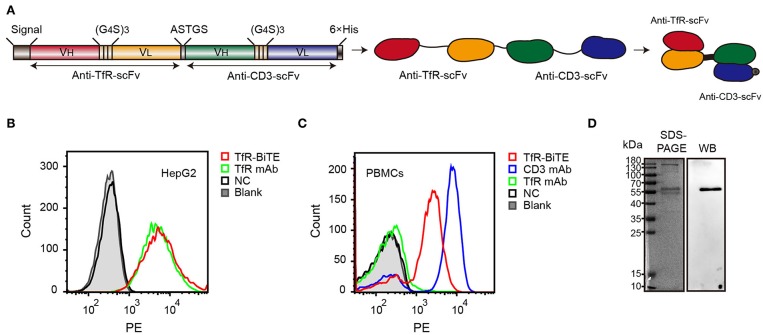
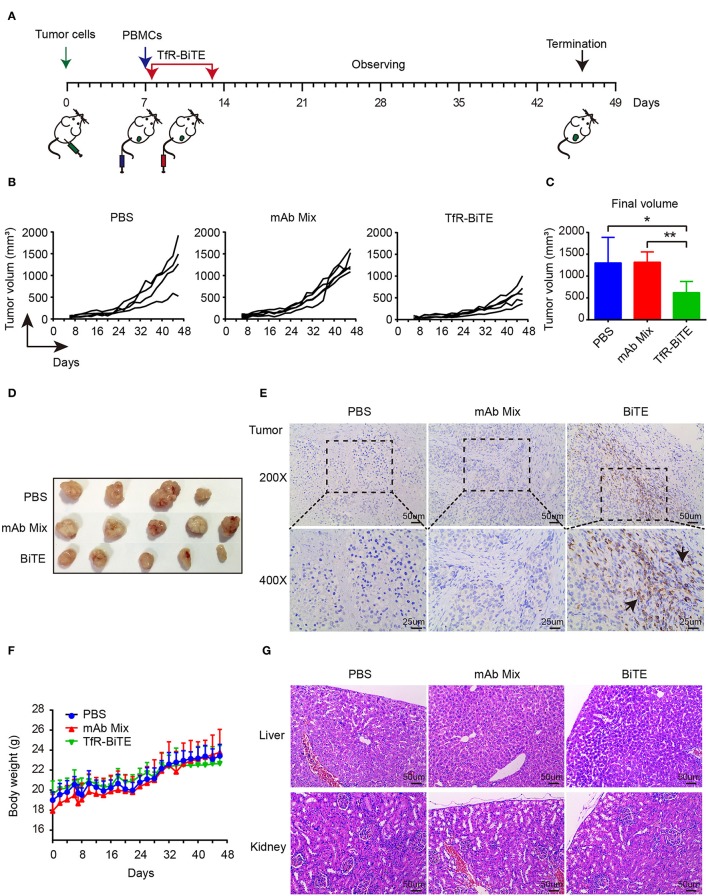
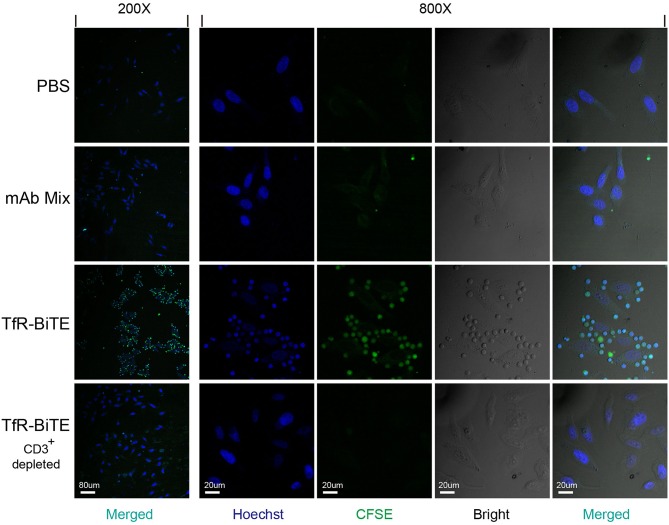
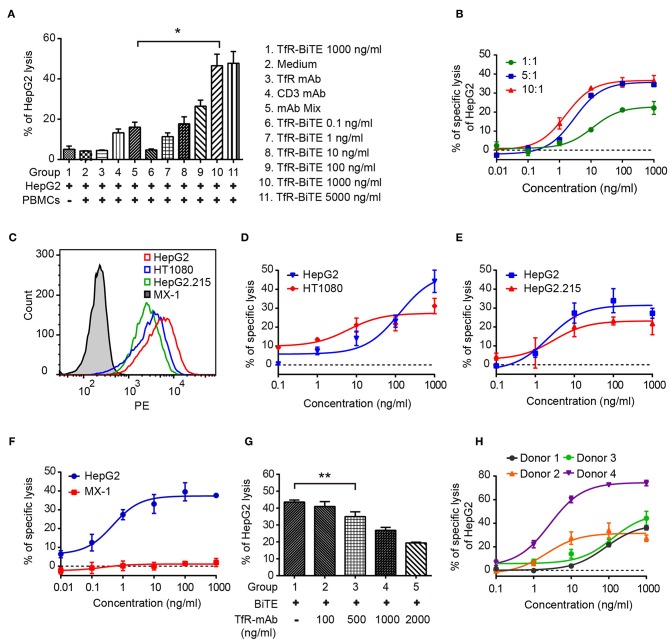
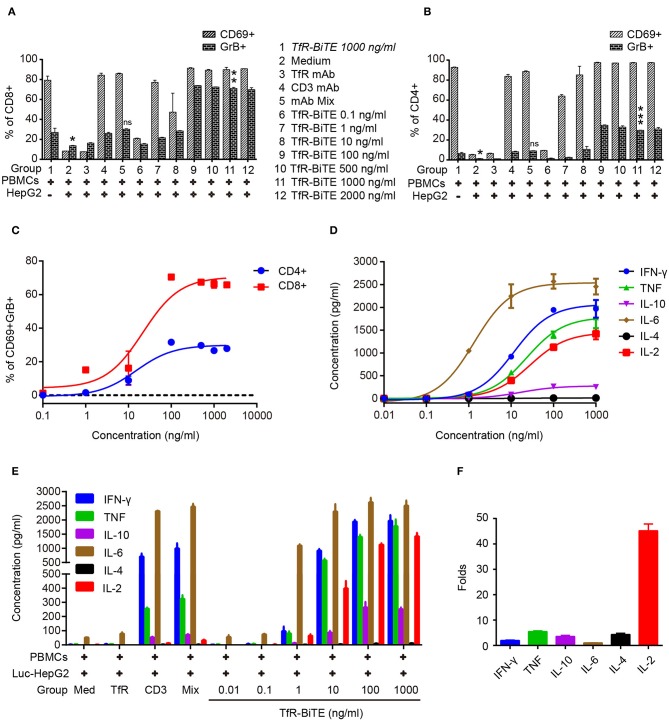
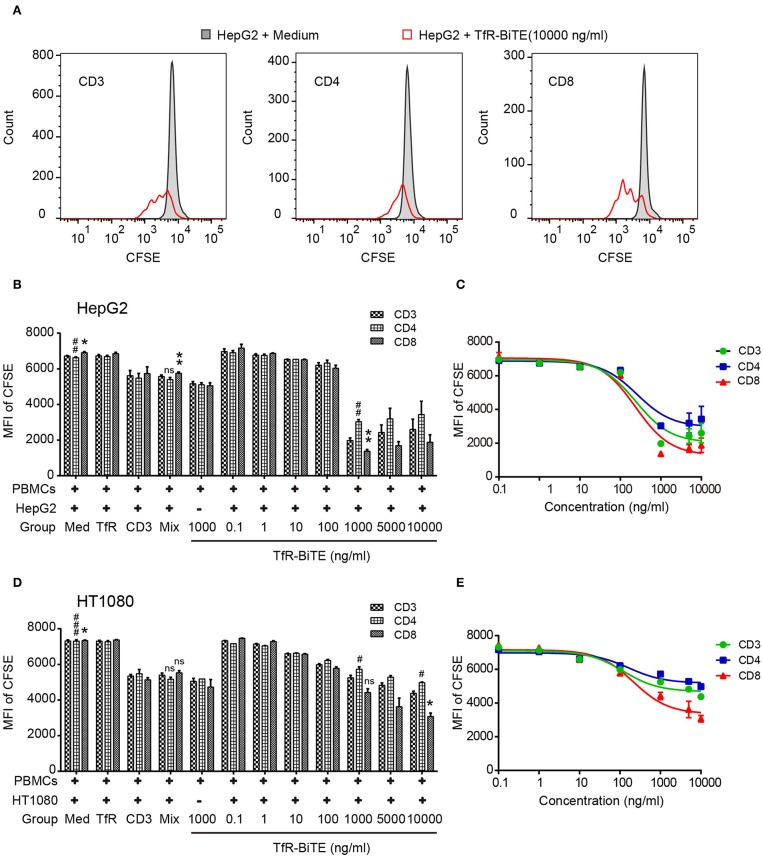
Bispecific T-cell engager antibodies (BiTE) have been explored as a means to recruit cytolytic T cells to kill tumor cells. The transferrin receptor (TfR) is highly expressed on the surface of rapidly proliferating tumor cells. Therefore, it holds great potential in T cell redirecting therapies. In this research, we developed a BiTE targeting TfR and CD3 (TfR-BiTE) and studied its therapeutic impact on TfR-positive cancer. TfR-BiTE had the ability to induce the selective lysis of various TfR-positive cancer cells through the activation of T cells, the release of cytokines, and then the coming proliferation of T cells, whereas TfR-negative cells were not affected. In a subcutaneous HepG2 xenograft model, low concentrations of TfR-BiTE inhibited tumor growth. Overall, these results reveal that TfR-BiTE can selectively deplete TfR-positive HepG2 cells; hence, it represents a novel immunotherapeutic approach for the treatment of hepatocellular carcinoma.
双特异性 T 细胞衔接抗体(BiTE)被探索用于招募细胞毒性 T 细胞来杀死肿瘤细胞。转铁蛋白受体(TfR)在快速增殖的肿瘤细胞表面高度表达。因此,它在 T 细胞重定向治疗中有很大的潜力。在这项研究中,我们开发了一种靶向 TfR 和 CD3 的 BiTE(TfR-BiTE),并研究了它对 TfR 阳性癌症的治疗影响。TfR-BiTE 通过激活 T 细胞、释放细胞因子,然后促使 T 细胞增殖,从而具有诱导选择性裂解各种 TfR 阳性癌细胞的能力,而 TfR 阴性细胞不受影响。在皮下 HepG2 异种移植模型中,低浓度的 TfR-BiTE 抑制肿瘤生长。总的来说,这些结果表明 TfR-BiTE 可以选择性地耗竭 TfR 阳性 HepG2 细胞;因此,它代表了一种治疗肝细胞癌的新型免疫治疗方法。