Panchal Anand, Seto Pui, Wall Russell, Hillier Brian J, Zhu Ying, Krakow Jessica, Datt Aakash, Pongo Elizabeth, Bagheri Andisheh, Chen Tseng-Hui T, Degenhardt Jeremiah D, Culp Patricia A, Dettling Danielle E, Vinogradova Maia V, May Chad, DuBridge Robert B
Research and Discovery, Maverick Therapeutics , Brisbane, CA, USA.
Research and Development, Maverick Therapeutics , Brisbane, CA, USA.
MAbs. 2020 Jan-Dec;12(1):1792130. doi: 10.1080/19420862.2020.1792130.
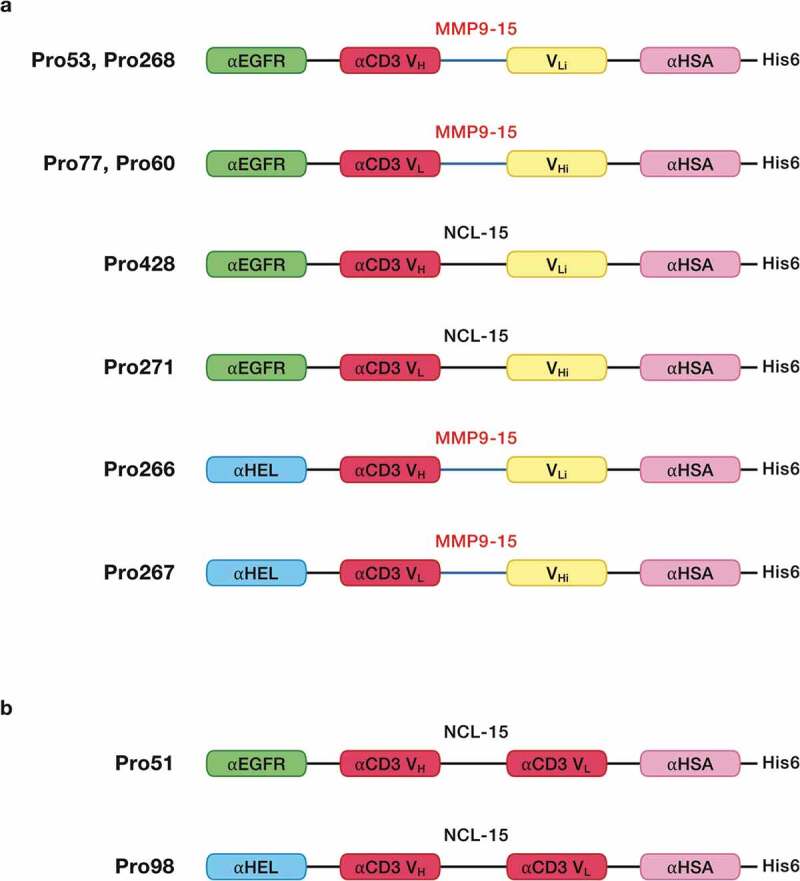
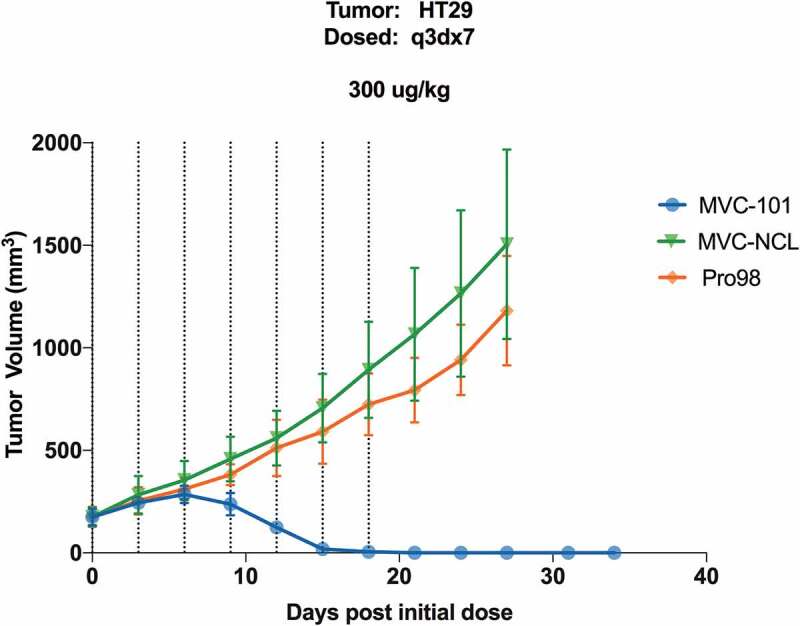
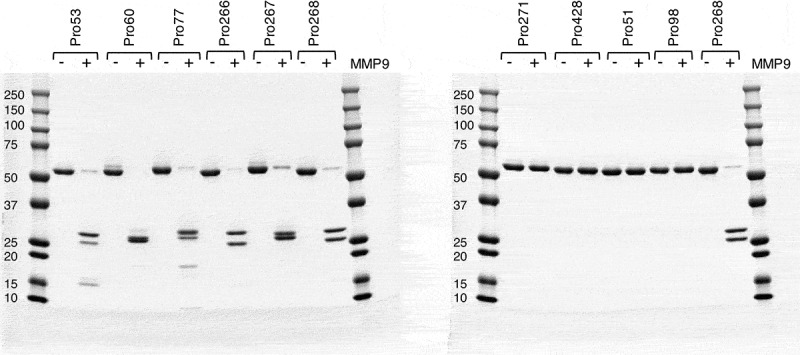
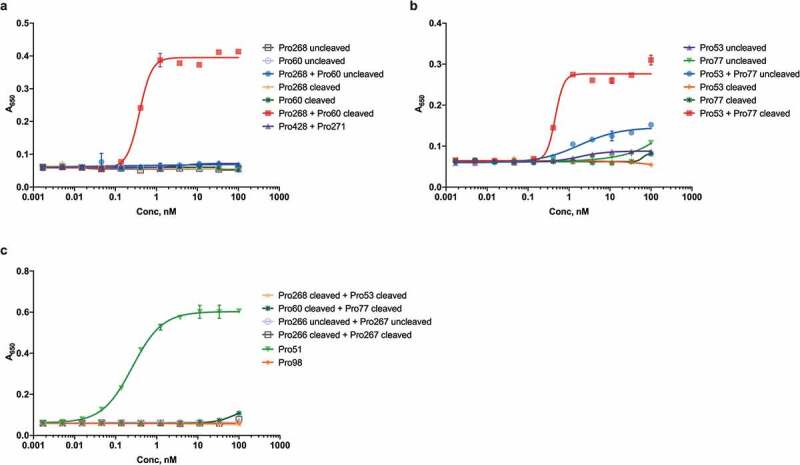
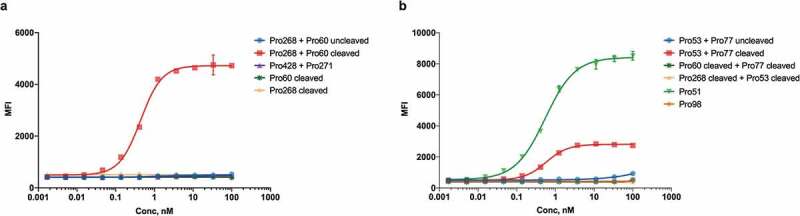
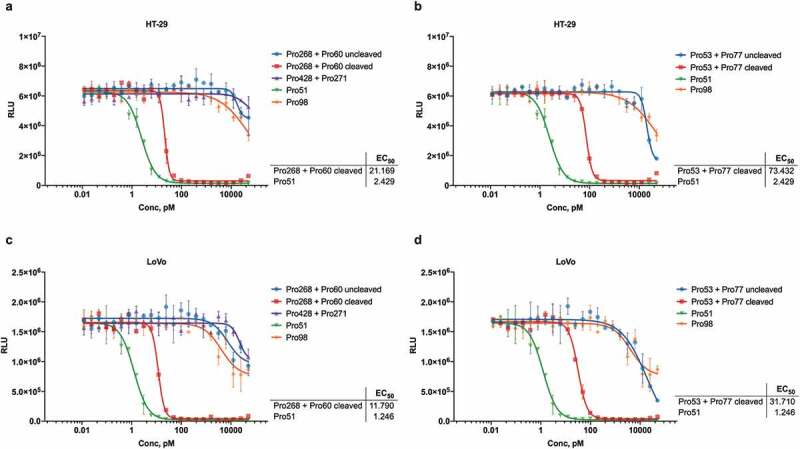
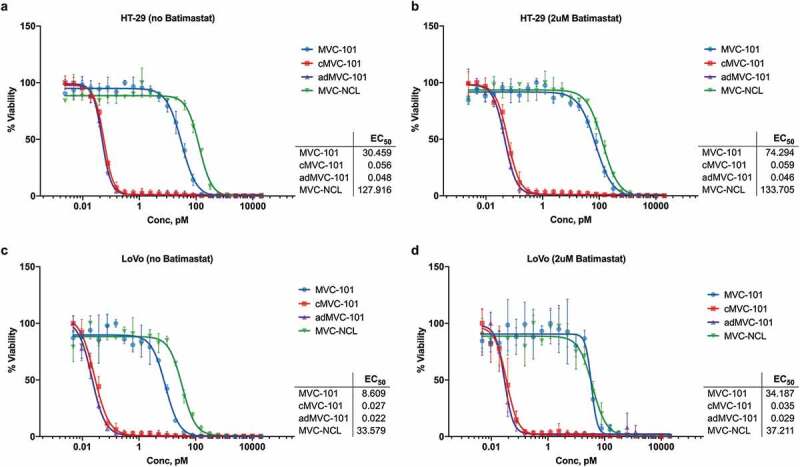
Conditionally active COBRA™ (COnditional Bispecific Redirected Activation) T cell engagers are engineered to overcome the limitations of inherently active first-generation T cell engagers, which are unable to discern between tumor and healthy tissues. Designed to be administered as prodrugs, COBRAs target cell surface antigens upon administration, but engage T cells only after they are activated within the tumor microenvironment (TME). This allows COBRAs to be preferentially turned on in tumors while safely remaining inactive in healthy tissue. Here, we describe the development of the COBRA design and the characterization of these conditionally active T cell engagers. Upon administration COBRAs are engineered to bind to tumor-associated antigens (TAAs) and serum albumin (to extend their half-life in circulation), but are inhibited from interacting with the T cell receptor complex signaling molecule CD3. In the TME, a matrix metalloproteinase (MMP)-mediated linker cleavage event occurs within the COBRA construct, which rearranges the molecule, allowing it to co-engage TAAs and CD3, thereby activating T cells against the tumor. COBRAs are conditionally activated through cleavage with MMP9, and once active are highly potent, displaying sub-pM ECs in T cell killing assays. Studies in tumor-bearing mice demonstrate COBRA administration completely regresses established solid tumor xenografts. These results strongly support the further characterization of the novel COBRA design in preclinical development studies.
条件性激活的COBRA™(条件性双特异性重定向激活)T细胞衔接器经过工程改造,以克服固有活性的第一代T细胞衔接器的局限性,第一代T细胞衔接器无法区分肿瘤组织和健康组织。COBRA设计为作为前药给药,给药后靶向细胞表面抗原,但仅在肿瘤微环境(TME)中被激活后才与T细胞结合。这使得COBRA能够在肿瘤中优先被激活,而在健康组织中安全地保持无活性。在此,我们描述了COBRA设计的开发以及这些条件性激活的T细胞衔接器的特性。给药后,COBRA经过工程改造,可与肿瘤相关抗原(TAA)和血清白蛋白结合(以延长其在循环中的半衰期),但被抑制与T细胞受体复合物信号分子CD3相互作用。在TME中,COBRA构建体内发生基质金属蛋白酶(MMP)介导的连接子切割事件,该事件使分子重新排列,使其能够同时结合TAA和CD3,从而激活T细胞对抗肿瘤。COBRA通过MMP9切割而被条件性激活,一旦激活则具有高效力,在T细胞杀伤试验中显示出亚皮摩尔的半数有效浓度(EC)。在荷瘤小鼠中的研究表明,给予COBRA可使已建立的实体瘤异种移植物完全消退。这些结果有力地支持了在临床前开发研究中对新型COBRA设计进行进一步表征。