Couto Gabriela Klein, Segatto Natália Vieira, Oliveira Thaís Larré, Seixas Fabiana Kömmling, Schachtschneider Kyle M, Collares Tiago
Research Group in Molecular and Cellular Oncology, Postgraduate Program in Biochemistry and Bioprospecting, Cancer Biotechnology Laboratory, Center for Technological Development, Federal University of Pelotas, Pelotas, Brazil.
Biotechnology Graduate Program, Molecular and Cellular Oncology Research Group, Laboratory of Cancer Biotechnology, Technology Development Center, Federal University of Pelotas, Pelotas, Brazil.
Front Oncol. 2019 Jun 24;9:512. doi: 10.3389/fonc.2019.00512. eCollection 2019.
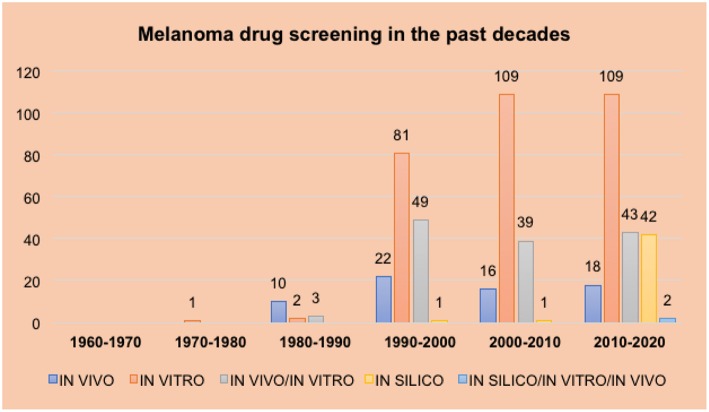
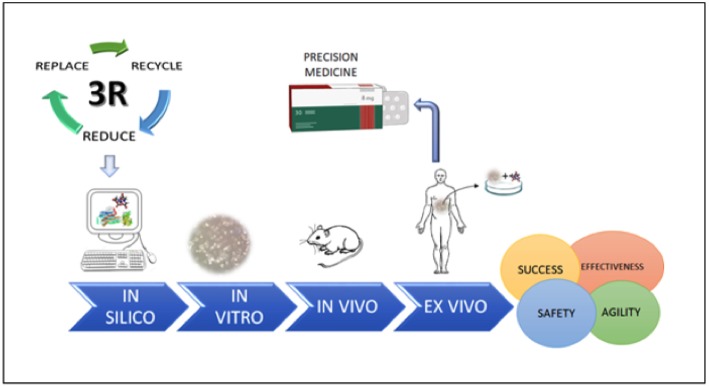
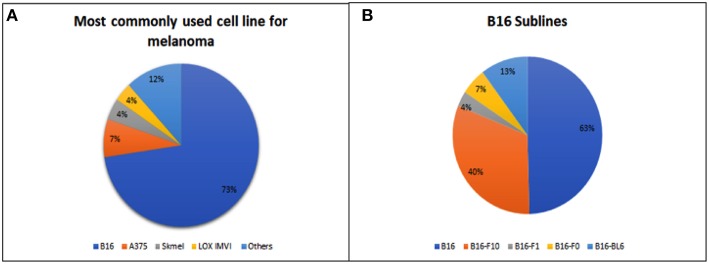
The global incidence of cancer is rising rapidly and continues to be one of the leading causes of death in the world. Melanoma deserves special attention since it represents one of the fastest growing types of cancer, with advanced metastatic forms presenting high mortality rates due to the development of drug resistance. The aim of this review is to evaluate how the screening of drugs and compounds for melanoma has been performed over the last seven decades. Thus, we performed literature searches to identify melanoma drug screening methods commonly used by research groups during this timeframe. and tests are essential for the development of new drugs; however, incorporation of analyses increases the possibility of finding more suitable candidates for subsequent tests. techniques, such as molecular docking, represent an important and necessary first step in the screening process. However, these techniques have not been widely used by research groups to date. Our research has shown that the vast majority of research groups still perform and tests, with emphasis on the use of enzymatic tests on melanoma cell lines such as SKMEL and tests using the B16 mouse model. We believe that the union of these three approaches (, and ) is essential for improving the discovery and development of new molecules with potential antimelanoma action. This workflow would provide greater confidence and safety for preclinical trials, which will translate to more successful clinical trials and improve the translatability of new melanoma treatments into clinical practice while minimizing the unnecessary use of laboratory animals under the principles of the 3R's.
全球癌症发病率正在迅速上升,并且仍然是全球主要死因之一。黑色素瘤值得特别关注,因为它是增长最快的癌症类型之一,晚期转移性黑色素瘤由于耐药性的产生而具有很高的死亡率。本综述的目的是评估在过去七十年中如何进行黑色素瘤药物和化合物的筛选。因此,我们进行了文献检索,以确定在此期间研究小组常用的黑色素瘤药物筛选方法。 试验和 试验对于新药开发至关重要;然而,纳入 分析增加了为后续试验找到更合适候选药物的可能性。 技术,如分子对接,是筛选过程中重要且必要的第一步。然而,迄今为止这些技术尚未被研究小组广泛使用。我们的研究表明,绝大多数研究小组仍在进行 试验和 试验,重点是对SKMEL等黑色素瘤细胞系进行 酶促试验,以及使用B16小鼠模型进行 试验。我们认为,这三种方法( 、 和 )的结合对于发现和开发具有潜在抗黑色素瘤作用的新分子至关重要。这种工作流程将为临床前试验提供更大的信心和安全性,这将转化为更成功的临床试验,并提高新的黑色素瘤治疗方法转化为临床实践的可转化性,同时在3R原则下尽量减少实验动物的不必要使用。